Tag Archives: Science Fiction

A Review of Ode to the Half-Broken 

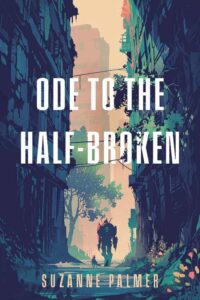
Book cover for Ode to the Half-Broken by Suzanne Palmer. Image on cover is a drawing of a large robot walking down an abandoned street in a decaying city while a cyborg dog accompanies them. Title: Ode to the Half-Broken

Author: Suzanne Palmer

Publisher: DAW

Publication Date: May 26, 2026

Genres: Science Fiction

Length: 416 pages

Source: I borrowed it from my local library.

Rating: 3 Stars

Blurb:

Forty years ago, the world nearly ended.

Be is an old robot who was there, and doesn’t want to think about what happened, or what role they played in that conflict. They have settled into a life of isolation in the abandoned ruins of an old mill in the former New York Botanical Gardens, disinterested in what has happened in the outside world since they stepped away from the war. Someone out there, though, has not forgotten about them, and when they are attacked, their person vandalized, and one of their leg stolen, they set out to find the thief accompanied by a cyborg dog and a human mechanic.

The world has changed, but the recovery from the war is uneven and faltering, and Be begins to suspect a malicious hand trying to rekindle the old conflict and finish what was started. In order to stop them, Be needs to come to terms with both their own past and who they have become, and how everything and everyone else they knew has changed in their absence. Being left alone is no longer an option, and peace may be impossible.

This is a story about coming to terms with your past, with who you’ve become and who you still want to be: a tale of resilence and hope, an ode to those struggling to become whole in a world half-broken.

Content Warning: War, multiple pandemics, references to mass graves (mostly from disease).

Review:

Some things are too precious to part with.

Be’s backstory was a true highlight of this tale. This character didn’t’ identify as any gender or with any set of pronouns, but I will be using they and them to discuss them for the sake of making this review as easy to comprehend as possible given this character’s unique personality. While I can’t go into any detail about their past without sharing spoilers, what I can say is that it was well written and gave me fresh insight into many of their quirks that were shown from the beginning but not explained at that point. If every scene was written this way, I would have happily gone with a much higher rating as I was immersed in Be’s unique way of thinking about the world and genuinely thought of them as a robot who was filled with secrets.

As excited as I was about the premise, I struggled with the slow pacing of this novel. Every step along Be’s quest to retrieve their stolen leg unfolded slowly, and action sequences were few and far between.  This is something I’m saying as someone who loved the Monk and Robot duology and originally decided to read this due to the numerous references other readers made to those books while reviewing this one. There were similarities between them, of course, but I found myself wishing for more character development in order to tide me over until the next round of exciting events as the protagonist travelled around.

The world building was complex and memorable. Some of the best scenes in my opinion were the ones that explored the myriad of ways both robots and humans have adapted to a world several decades from now in which disease, war, and global warming have upended many of the old rules about what society, nature, and the weather are supposed to be like. There was a wide range of responses to these overlapping crises that included communities I might like to live if given a choice in this universe as well as highly dangerous areas where even robots couldn’t travel safely. Sharing too many details about these topics would give away spoilers, but do keep an eye out for the breadth of possibilities as you read.

Ode to the Half-Broken was thought provoking.


2 Comments

Filed under Science Fiction and Fantasy

A Review of Planeta

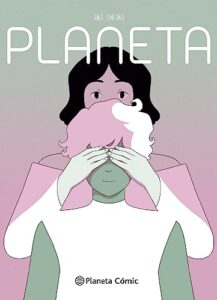
Book cover for Planeta by Ana Oncina. Image on cover is a drawing of a Spanish woman who is standing behind a green-skinned person, possibly an alien, who is covering their eyes with their hands. Title: Planeta

Author: Ana Oncina

Publisher: LoveLove

Publication Date: February 18, 2025

Genres: Science Fiction, Mystery, LGBTQ+, Romance, Contemporary, Futuristic

Length: 224 pages

Source: I borrowed it from the library.

Rating: 3 Stars

Blurb:

Welcome to Planeta.For months, Valentina has been dreaming of a strange world and a beautiful girl.In her dreams, she’s Val3, and she and An3 live together on a lonely planet in a distant future, entirely unlike the picturesque village where Valentina resides in her waking life. One fateful day, Val’s world gets turned upside down when the girl from her dreams appears in front of her as Anne.While Valentina and Val3 grapple for control of their respective realities, the question of which is real threatens to derail the course of both their love stories. In either world, can anyone really be made for each other…?

Content Warning: Depression.

Review:

Who wouldn’t want their dreams to come true?

The romance between Valentina (Val3) and Anne (An3) was sweet and gentle. I loved seeing them interact with each other and wondered what their future(s) might hold together. These were among my favorite scenes in this graphic novel, and I would have enjoyed having even more of them. They added depth to the plot and helped me get to know both of these characters much better than I would have otherwise. It was a good example of how the romance and science fiction genres can be blended together in natural ways that can appeal to fans who might otherwise not pick up a book from one of those genres.

I struggled to understand the ending and thought what was shared in those last few scenes didn’t match the tone of everything that had come before. It felt like the storyline was foreshadowing a conclusion that never ended up happening.  For example, the dual timelines were written in way that made me think one of them was the real one and the other was a dream world, but this mystery was never really solved. As much as I wanted to give this one a higher rating, my confusion and disappointment at how this wrapped up prevented me from doing so.

With that being said, this story did capture the feeling of waking up from a hyper-realistic dream and being momentarily confused and disappointed that none of those events actually took place. This isn’t something that’s easy to explain in fiction, so kudos to Ms. Oncina for making it feel so realistic and relatable. I can’t think of many other authors who have pulled it off, and it makes me want to read more from her in the future.

Planeta was creative.

1 Comment

Filed under Science Fiction and Fantasy

A Review of The Parched Lands

Book cover for The Parched Lands by N.A. Ratnayake. Image on cover is a black and white photo of several people sitting in an airport waiting room. There is not enough light in the room to make out their individual features, just to see the silhouette of their tired, slumped-over bodies against the massive windows behind them. Title: The Parched Lands 

Author: N.A. Ratnayake

Publisher: Self-Published

Publication Date: May 14, 2018

Genres: Science Fiction

Length: About 18 pages.

Source: I received a free copy from the author.

Rating: 4 Stars

Blurb:

Amanthi is a teenage student in a not-so-distant future school system of hyper-testing and top-down control. In this world, creativity is a liability — but Amanthi is not deterred from dreaming. THE PARCHED LANDS delves into the tangled issues of race, tracking, high-stakes testing, and creativity starvation that run through America’s public school systems. This short story was published as a part of Crossed Genres Magazine 2.0, Issue 7: Expectations.

Review:

Knowledge is power.

Amanthi was a brave and likeable protagonist who I wish I could have spent more time with. It takes courage to stand up against a system that one has never lived outside of, especially for a teenager who also wishes to fit in with her peers and reach her academic goals. Some of my favourite scenes involving her were the ones that showed what she was like when she wasn’t trying to remain at the top of her class. While academics are important, they are only one piece of the puzzle that can be used to describe what someone is like, and they cannot be used to explain someone’s heart and soul.

I found myself wishing for more levels of meaning in this short story. The premise was straightforward, and its criticisms of modern educational culture, while completely justified in my opinion, followed that same path. This could have easily been a five-star read for me if the author had dug more deeply into the themes to reach the centre of what is wrong with things like large language models and the incessant focus on testing  at the expense of creativity and lifelong learning in many schools.

Despite this, I did enjoy the world building in this piece. The educational system in this vision of the future was so focused on pushing up grade point averages and test results that it was overlooking the many other ways someone can find success not only in life but also in their personal development. I nodded along as I read the descriptions of the body modifications that students underwent in order to get as much out of them as possible in the classroom. While it was obviously an exaggeration of what actually happens in the classroom, the emotions connected to the commodification of learning were eerily similar in real life and in fiction.

The Parched Lands made me wish for a sequel.

Leave a Comment

Filed under Science Fiction and Fantasy

A Review of Afterglow: Climate Fiction for Future Ancestors

Book cover for Afterglow - Climate Fiction for Future Ancestors by Grist. Image on cover is a drawing of an alien with a small, curled snout who is holding a shovel and standing on a pink, blue, and yellow surface that seems to have vegetation of those colours, too. Title: Afterglow – Climate Fiction for Future Ancestors

Author: Grist (Editor)

Publisher: The New Press

Publication Date: February 7, 2023

Genres: Science Fiction, Paranormal, LGBTQ+

Length: 169 pages

Source: I borrowed it from the library.

Rating: 3 Stars

Blurb:

Afterglow is a stunning collection of original short stories in which writers from many different backgrounds envision a radically different climate future. Published in collaboration with Grist, a nonprofit media organization dedicated to telling stories of climate solutions, these stirring tales expand our ability to imagine a better world. Inspired by cutting-edge literary movements, such as Afrofuturism, hopepunk, and solarpunk, Afterglow imagines intersectional worlds in which no one is left behind—where humanity prioritizes equitable climate solutions and continued service to one’s community. Whether through abundance or adaptation, reform, or a new understanding of survival, these stories offer flickers of hope, even joy, as they provide a springboard for exploring how fiction can help create a better reality. Afterglow welcomes a diverse range of new voices into the climate conversation to envision the next 180 years of equitable climate progress. A creative work rooted in the realities of our present crisis, Afterglow presents a new way to think about the climate emergency—one that blazes a path to a clean, green, and more just future.

Content Warning: Drug use. Pregnancy. Grief. I will briefly mention the last two items in my review.

Review:

There are many different ways to imagine a better future for humanity.

Augusta decided to begin a worm swap with other communities to improve everyone’s soil in “A Worm to the Wise.” This angle surprised me a little, and I was curious to discover what life was like in her version of the future where fuel costs had grown so high that most people could no longer travel long distances. There were layers of conflict and meaning in this tale that made me wish it had been expanded to something full-length. It had so much information to share with the audience, and I was eager to learn more about her world.

Some of these twelve tales felt uneven to me, and I struggled to connect to them due to the limited information they shared about what the future might be like. “The Tree in the Back Yard” was one such example of it, especially given Mariska’s response to her first visit to her father’s grave. It was completely understandable to see how difficult this experience was for her, but I found myself wishing for more information about why she didn’t keep trying to visit him and pay her respects given how important those things were to her and how much effort she put into selecting the right resting place for him. Having more details would have made this a more satisfactory read, and this was repeated often enough in this collection that I did feel the obligation to mention it in my review.

“El, The Plastotrophs, and And Me” followed a family who had just been approved to conceive their second child. The society they lived in limited births for ecological reasons, so they were thrilled to have the chance to become co-parents again. I was fascinated by how the protagonist explained the difference between wanting a romantic partner and wanting a child as these two concepts were not necessarily linked in this universe.  There were some plot twists that only made the protagonist’s life plans more complicated as well, and I wished I could have followed them for a longer period of time.

Afterglow – Climate Fiction for Future Ancestors was thought provoking. 

Leave a Comment

Filed under Science Fiction and Fantasy

A Review of Beach House on the Moon

Book cover for Beach House on the Moon by Leigh Kimmel. Image on cover shows a young white woman with long, straight blonde hair sitting on a rock at the beach while wearing a black jacket. She’s watching the waves crash against the shore. Title: Beach House on the Moon

Author: Leigh Kimmel

Publisher: Self-Published

Publication Date: May 16, 2023

Genres: Science Fiction

Length: 13 pages

Source: I received a free copy from the author.

Rating: 3 Stars

Blurb:

The Moon is a dead world, airless and desolate. Emmaline Waite has known this fact since childhood, when she watched the Apollo landings. But here she sits on the shores of the Sea of Tranquillity, looking up at the gibbous Earth as the waves roll in. What madness can this be? She gets no time to contemplate that question, for she is not alone. She is about to enter a realm of love and fear, of mindbending secrets that change her understanding of human history, and of self-sacrifice. Her life will never be the same.

Review:

A little science goes a long way.

The dreamlike themes made me wonder what would happen next. Ms. Kimmel did a good job of capturing what it feels like to not be sure if you’re dreaming or if something incredible has just happened. This was particularly true as one scene would drift slowly into the next one without always explaining what had happened in the intervening moments. That’s not an easy mental state to portray with the written word, so kudos to her for accomplishing it so nicely. Truly, I could not have predicted the ending.

I struggled with the plot holes, especially as they pertained to Emmaline’s relationship with someone she met on the moon. Sometimes it felt like those scenes were an outline of something that hadn’t been fully written yet instead of the finished product due to how quickly everything happened and how some key details were glossed over. As much as I wanted to give this a higher rating, my confusion about what was going on there prevented me from doing that.

There aren’t enough science fiction or other types out tales set on the moon these days. In fact, I don’t think I’ve ever read one that included an ocean there, so exploring how that came to be was of high interest to me. While I don’t want to give away any spoilers in this review, I can say that these descriptions were nicely written and made me want to learn more about what was going on there.

Beach House on the Moon piqued my curiosity.

Leave a Comment

Filed under Science Fiction and Fantasy

A Review of Technosphere

Book cover for Technosphere by George Saoulidis. Image on cover shows a planet covered in impossibly large skyscrapers. It has a ring around it that is light blue and glowing, perhaps to signify some sort of ship that is orbiting it? That planet I just described is hovering over - and looks like it’s going to crash into - the planet at the bottom of this cover that is also covered in cities, albeit not ones that are quite so tall. Title: Technosphere

Author: George Saoulidis

Publisher: Self-Published

Publication Date: November 6, 2019

Genres: Science Fiction

Length: 5 pages

Source: I received a free copy from the author.

Rating: 5 Stars

Blurb:

A hoarder planet is not feeling so well. Must have been something it collected. Will the AI tasked to repair the technosphere manage to find what’s causing the quakes?

Content Warning: Hoarding, but portrayed in a funny way.

Review:

A little spring cleaning goes a long way.

I loved the humour in this short story. So much of the science fiction I’ve read these past few years has contained dark themes that I really needed to switch things up a bit and be reminded of the lighthearted possibilities in this genre. While I can’t go into much detail about what, exactly, was funny about a planet that was hoarding resources without giving away spoilers, it was important to keep a playful approach to the characters as they revealed what they’d been up to.

There were a few fantastic references to other science fiction universes here that made me smile as well. The storyline did still make sense without them, but readers who know what the author is talking about will have some wonderful Easter Eggs to look forward to. That is exactly how these things should be written in my opinion as it leaves room for everyone to enjoy what is happening instead of closing certain passages off to those who might have not read certain older works yet.

The last page or two was what convinced me to give this a full five-star rating due to how Mr. Saoulidis struck the right balance between answering some of the reader’s questions while leaving other ones up to our imaginations. Would I have loved to have even more closure? Yes, of of course, but I was left with enough information to imagine what would probably happen next as well as having a decent understanding of how this planet ended up in such a predicament in the first place. 

Technosphere was a refreshing break from the serious matters in life.

Leave a Comment

Filed under Science Fiction and Fantasy

A Review of Cosmophobia

Book cover for Cosmophobia by George Saoulidis. Image on cover shows a computer-generated drawing of the sort of probe scientists have been sending to places like Jupiter. It’s gold-coloured, oblong shaped, and has two wings that look like they also double as solar panels. Title: Cosmophobia

Author: George Saoulidis

Publisher: Self-Published

Publication Date: December 26, 2018

Genres: Science Fiction

Length: 24 pages

Source: I received a free copy from the author.

Rating: 4 Stars

Blurb:

Who is watching the stars, every second of every day, so we can better understand the universe? This short story was awarded the 2nd place in the Science Fiction category, in the Athens Fantasticon 2016 competition. Inspired by the James Webb Space Telescope which will be launched and deployed in 2020. It will hopefully be as invaluable as Hubble was, opening our eyes to the cosmos.

Review:

Eternity is a matter of perspective.

The first scene was momentarily confusing, but as soon as I figured out what was going on I was hooked on the storyline. There’s definitely something to be said for playing around with the audience’s expectations in any genre, and this was a good example of how to do just that. I’d recommend other readers avoid spoilers as much as they possibly can so that they, too, can have the chance to be surprised about exactly what was going on here.

I would have loved to see the last scene expanded by a page or two. The twist in it was what really brought everything together for this reader, and it would have been even better had it been given more time to develop. It’s difficult to go into detail here without sharing exactly what it was, but it made me smile and wish I could keep reading about this universe. This is a minor criticism of something I thought was otherwise well done.

Stargazing is something I like to do on occassion, and I was intrigued by how this topic could be turned into a science fiction story. There were elements of hard science fiction here that I found intriguing and would have loved to read more about. With that being said, I also liked the creative flair the author added to it and had plenty of questions about how that change happened and what a sequel might entail if such a thing were ever written.

Cosmophobia made me want to go observe the stars again.

4 Comments

Filed under Science Fiction and Fantasy

A Review of Marginal Worlds

Book cover for Marginal Worlds by Alfred Bekker. Image on cover shows a realistic drawing of a space ship sailing past a streak of light in outer space. There are no planets or suns in the picture, so the source of the light remains mysterious. Title: Marginal Worlds

Author: Alfred Bekker

Publisher: Self-Published

Publication Date: May 28, 2025

Genres: Science Fiction

Length: 46 pages.

Source: I received a free copy from the author.

Rating: 3 Stars

Blurb:

After a long period of tension and enmity between the Inner Planets and the Rim Worlds, a terraforming specialist travels to the end of the settled universe – and experiences wonders and horrors on a distant world populated by human colonists. Their world is to be made habitable – but strangely enough, the colonists have no interest in doing so.

Content Warning: Brief references to rape, murder, and violence. None of these topics were described in detail.

Review:

An open mind is essential for journeys such as these. .

This was an immersive tale that did an excellent job of drawing me into an unfamiliar world and showing me both the beautiful and the ugly sides of it. There were times when I genuinely felt as though I was learning about an alien planet. This isn’t something that’s easy to accomplish, especially with only a few dozen pages to work with, so kudos to Mr. Bekker for putting so much effort into it. He’s someone I will keep an eye out for as he hopefully releases more stories in the future. 

While I liked reading the beginning and middle, the ending felt abrupt to me. There seemed to be themes that were never fully explored and some plot lines involving the protagonist that were left dangling. For example, I struggled to understand why N’Gaba’s behaviour was shifting so rapidly when he had previously been a character I would have described as steadfast. The explanation given for this certainly helped, but I wished it would have been given more time to develop so that I as a reader could understand him better.

I liked the plot twist that gave some reasons why the people who lived on Rand were so hesitant to allow outsiders into their culture and traditions. While I didn’t at all agree with their reasoning, this was an interesting way to explore how differently certain customs are experienced by people who grew up with them when compared to how someone who was first exposed to that tradition well into adulthood would think of it. There is something to be said for thinking critically about such things and accepting that there are multiple ways to interpret them.

Marginal Worlds was thought provoking. 

2 Comments

Filed under Science Fiction and Fantasy

A Review of Mendala

Book cover for Mandela  By Rudolph Kohn. Image on cover shows a white, slightly square-shaped dodo egg sitting on the floor of a forest filled with ferns and trees. Title: Mendala

Author: Rudolph Kohn

Publisher: Self-Published

Publication Date: July 13, 2023

Genres: Science Fiction

Length: About 8 pages.

Source: I received a free copy from the author.

Rating: 3 Stars

Blurb:

A day in the life of a chronocourier, one of the few people who can travel through time without debilitating consequences. What the job lacks in security it makes up for in pay. Today’s mission is to go back in time and retrieve a single, fertile Dodo’s egg. Yet the path of timeslipping is a tricky one, and the effects of jumping into nearby timelines can be unpredictable, and dangerous.

Review:

How much trouble could one little egg be?

Dodos are one of those extinct species that I’m quite sorry I’ll never have the opportunity to meet, so this tale automatically caught my attention when I read the blurb. I wondered what the client wanted with one of these eggs and why they chose this species in particular out of all of the other options. It also seemed curious to me that only one egg was requested when one would need far more individuals than that if they were to, say, want to breed more dodos in the future. Wondering about these issues was always at the forefront of my mind as I read, and I would have happily checked out a much longer work on this topic if such a thing were available.

The world building in this story felt underdeveloped to me. I would have loved to learn more about how time travel worked in this universe as well as how the protagonist ended up in such a profession. These details were important due to a twist in the final scene that was revealed but never fully explained. So much time was spent explaining all of the precautions the protagonist took earlier on that the ending didn’t quite makes sense to me as a reader, especially given how little was explained about the mechanics of the missions. It could have been a genuine oversight on the main character’s part, of course, but I simply didn’t have enough information to say for certain due to how rushed the world building was earlier on. This is something I’m saying as a reader who was excited to read this short story and was hoping to give it a much higher rating.

With that being said, I did enjoy that last plot twist in and of itself. It left plenty of room for possible sequels if the author ever decides to write them, and it made me pause and wonder about everything I’d already learned about this universe and the chronocourier who went on this mission. These sorts of reactions are one of the reasons why I enjoy science fiction so much, so I was glad to have that opportunity. Yes, I know I’m being a bit vague here, but I think it’s better for other readers to discover that surprise for themselves.

Mendala was intriguing.

Leave a Comment

Filed under Science Fiction and Fantasy

A Review of Refuge

Book cover for Refuge
 by N.A. Ratnayake. Image on cover is a drawing of a pink cloud that looks like a humanoid face. It is in the dark blue sky and peering down at a green humanoid face floating in an ocean. The green face has a pink flower in its mouth. Title: Refuge

Author: N.A. Ratnayake

Publisher: Self-Published

Publication Date: October 29, 2025

Genres: Science Fiction

Length: 6 pages

Source: I received a free copy from the author.

Rating: 5 Stars

Blurb:

A weary traveler coming from Earth discovers a new form of consciousness on an alien world and finds hope despite climate change.

Content Warning: Brief references to climate change.

Review:

A better world is possible.

I review a lot of short stories, and this particular tale is an excellent example of why a few pages can be more than enough space to make a difference. The author placed memorable characters into a challenging environment and threw in a thought-provoking plot twist into less space that most storytellers would use to write the opening chapter of a full-length novel. Pulling this off is a skill that should be acknowledged and celebrated, and it has only deepened my resolve to see what else this author has written and hopefully review it in the near future.

Climate change is a common theme in this genre, of course, but it’s generally not approached from such a hopeful perspective. While I can’t go into much detail about how it affected the plot without sharing spoilers, I can say that I loved what this writer did to make this topic feel fresh again and I would have happily read a whole novel or series of short stories about this protagonist’s quest if such things existed. There were some interesting ideas being played around with here that, while they worked perfectly well as gentle nudges, would have also provided plenty of material for conflict and plot advancement had space allowed for deeper explorations of these possibilities.

Xenofiction is something that isn’t covered in modern science fiction as often as I’d prefer to see, so I looked forward to finding out what the non-human intelligence was like and how its thought processes might differ from the way you or I would approach the same conflict or conversation. Exactly who or what is featured here is something that other readers should discover for themselves, but what I can say is that this character was creatively written and genuinely felt like something that, while incredibly smart, had never been and will never be human.

Refuge was the perfect introduction to this universe, and it made me yearn for more.

Leave a Comment

Filed under Science Fiction and Fantasy