Author Archives: lydias

About lydias

I'm a sci-fi writer who loves lifting weights and hates eating Brussels sprouts.

Mindfulness and Summer Allergies

What’s the first thing that comes to mind when you think about summer?

For me it’s seasonal allergies.

Now don’t get me wrong. There are many things I enjoy about this time of the year. Those of you who follow me on Twitter have probably noticed my tweets about enjoying the sunshine and all of the local fruits and vegetables that are ripening now. It’s definitely not all bad news.

With that being said, this is still a pretty sniffly season for me. A field of flowers might look picturesque to someone who isn’t allergic to them, but I’d sneeze my way through that sort of experience if I were to go wander around in that meadow. Breathing in that much pollen isn’t exactly my idea of a good time.

Unfortunately, this has been a particularly bad year for my seasonal allergies so far. Whether it was the unusually warm periods of this past winter we had or some other factor, the plants in Ontario have been growing wildly since spring began.   I’ve been taking medication for my allergies as often as possible for the last couple of months, and I don’t see that ending anytime soon.

The beautiful thing about mindfulness is how it changes my approach to these itchy, sneezy days.

Acknowledgement without Judgement

Right now my nose is congested, my eyes are itchy, and I have a mild headache.

It took me a long time to learn how to acknowledge the things my body was feeling without immediately putting negative labels on them and jumping to conclusions about what would happen with them next. Honestly, I didn’t see how doing such a thing could possibly make a difference when I first heard of it.

The transition was so gradual that the only thing I can say about how it happened is that it started when I began to compare my assumptions about the future with what actually occurred.

Often, I was completely wrong about how a particular situation would turn out. A mild headache would fade away instead of becoming more painful. One particular itchy day didn’t necessarily mean that the entire week would pass by under a haze of sneezing fits.

This isn’t to say that acknowledging discomfort without jumping to conclusions is easy. There are still times I struggle with noticing molehills without assuming they’re going to turn into mountains any second now, but the more I practice this the easier it does become.

No Such Thing as a Perfect Time of the Year

My seasonal allergies activate during some points of the year and (obviously) cause few if any symptoms during those times when it’s cold and snowy outside.

Strawberries, one of my favourite foods, are in season and on sale at the grocery store from May to July. Other fruits and vegetables make appearances on my dinner plate when they’re in season. I relish the chance to eat as much of them as I can before the local supplies of those crops end for the year. As grateful as I am for the opportunity to eat fresh produce year-round, there is something special about the taste of a fruit or vegetable that was grown much closer to home.

Thunderstorms, snowstorms, and other types of weather appear and disappear throughout the year. If I can stay home and watch them subtly – or not so subtly – change the landscape, I can find a lot of beauty in the ways they soften the edges of a building, illuminate the sky with a bolt of lightning,  or wash away the small bits of trash that accumulate in every city eventually.

There’s no such thing as a perfect time of the year. Every season has its benefits and drawbacks. The more you can remain in the moment, the easier it is to see this.

This, too, Shall Pass
A few months ago, I was impatiently* awaiting the true beginning of spring. Toronto continued to receive snowstorms and cold weather long after the spring equinox had technically already occurred, and I was dreadfully tired of the short days and icy sidewalks.

Now that we’ve had a few days where the temperatures soared well into the 30s Celsius (90s Fahrenheit, for my American readers), it’s getting a little more difficult to remember what those  chilly times were like back in April.

Sometimes the world seems to change both slowly and all at once.

But this, too, shall pass.

*See! I told you haven’t completely mastered acknowledging sensations without judging them.

What helps you to remember to remain mindful? If you have seasonal allergies, how they are doing this year?


2 Comments

Filed under Mindfulness and Meditation

My Favourite LGBT Books

Happy Pride month! Today I thought it would be fun to share some of my favourite LGBT-themed books in honour of all of the Pride festivities that have been and are still going on here in Toronto. Rainbow flags are popping up everywhere, and that’s always a heart-warming thing to see at this time of the year.

This list spans the range of everything from children’s stories to a biography to a historical novel. I’m the kind of reader who seeks out a well-told tale no matter what genre it’s from, so you’d be hard-pressed to get me to stick to one particular genre for this sort of post.

Feel free to share your favourite LGBT books in the comments below. I’d love to know which ones have caught your eye.

Tipping the Velvet by Sarah Waters.

Honestly, I could have spent this entire post talking about nothing but Sarah Waters’ books. She’s one of those authors whose stories are a must-buy for me, so I had to restrict myself to only mentioning one of the things she’s written today.

What I loved the most about Tipping the Velvet was the character development. Nancy, the main character, lived at a time when it wasn’t possible for a woman who was a lesbian to live her life openly and honestly. She didn’t even know the word to describe who she was until she became an adult. Eventually having a word for it didn’t make her identity any more accepted, and yet still she persevered.

The Kind of Girl I Am by Julia Watts.

The only reason why I discovered this book is because I happened to be browsing in the W section of the fiction shelves at my local library years ago and found myself intrigued by what sort of girl the protagonist might turn out to be. (Don’t you love it when that happens?)

Like Tipping the Velvet, The Kind of Girl I Am followed a character from her sheltered, rural upbringing to a life as an adult that she could have never imagined when she was a child.

I liked the fact that the storyline followed Vestal from the time she was a teenager until she was a senior citizen. There’s something rewarding about watching a character grow and change over the course of multiple decades.

My favourite part of this book can’t be discussed in detail due to how many spoilers it will give you about the ending, but I deeply enjoyed seeing how Vestal reframed and eventually came to peace with certain parts of her life in her final years. Her character development was excellent.

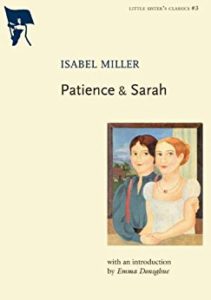
Patience and Sarah by Isabel Miller.

As I’ve said before, I was one of those kids who generally enjoyed the classic novels we were assigned to read in English class. It was always interesting to see what our teacher had to say about the meaning of a blue curtain in a scene or why a character kept talking about something that eventually actually happened to them.

If I’d been born a few decades later, Patience & Sarah might have been an assigned read in one of my high school English classes. It had the same serious themes and foreshadowing of many of the other books we read and discussed in class when I was a teenager.

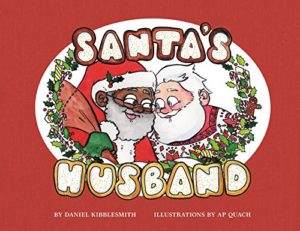
Santa’s Husband by Daniel Kibblesmith.

I loved this picture book’s cheeky approach to the Santa Claus myth. It clearly explained why it was reimagining Santa as a man who was in a same-sex, interracial relationship, although I can’t go into any more details about that without giving away the ending.

Should this be read by kids or adults? I’d say that it will appeal to readers of all ages.

Missed Her by Ivan E. Coyote.

Ivan E. Coyote is one of the best contemporary Canadian authors I’ve discovered so far. Not only does she have a beautiful writing style, her anecdotes are among the funniest ones I’ve ever read. She grew up in a small, rural community.* A lot of her stories are about what happens when she goes back for a visit and well-meaning, heterosexual friends and neighbours try to make conversations about LGBT topics with her without knowing what they’re talking about at all.

*Yes, this does seem to be something I gravitate towards when reading LGBT books. I suspect it’s because they’re similar to my own childhood.

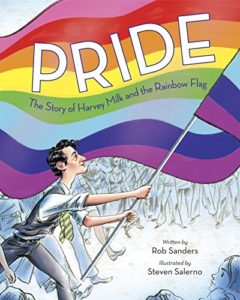
Pride: The Story of Harvey Milk and the Rainbow Flag by Rob Sanders

If you don’t know the story of the gay activist Harvey Milk, this is the perfect place to get a quick overview of his life and everything he accomplished for the LGBT community. We wouldn’t even have something as simple as the Pride flag without him.

This is the sort of thing that I wish could have been covered in my public school history classes growing up. While we still have a long way to go, the world has changed for the better so much over the past few decades. Children – and honestly many adults, too – don’t always realize what their society used to be like or what it really takes to improve it.

Sometimes I think about Harvey Milk when I’m feeling discouraged about certain current, dangerous trends in the North American political climate. It’s easy to feel like you’re too small and ordinary of a person to possibly make any different at all over the longterm.

As Harvey Milk once said, “you have to give them hope.” I believe that knowing about the lives of ordinary people who did manage to make our world a better place is one of the best ways to give people hope when they need it.


3 Comments

Filed under Personal Life

Suggestion Saturday: June 16, 2018

Happy Father’s Day! Here is this week’s list of comic strips, poems, and other links from my favourite corners of the web.

I’m Not a Father, so Stop Acknowledging Me on Father’s Day via AmberLeventry. Humans sure are strange sometimes. I can’t imagine making this mental leap. Can you?

Why Scientists Once Used Taste Tests as Paternity Tests. I honestly thought this was a joke when I first read the title. Humans sure are creative.

Why I Celebrate My Uncles on Father’s Day via theotherblair. This was a touching tribute to this blogger’s uncles.

Two Dads Adopt a Son with Autism. I love a happy ending. Don’t you?

How to Be a Caring Father via 04fsbryntin. Bryntin is a blogger I discovered a few months ago after a friend of mine retweeted something he said. He has a tongue-in-cheek writing style that I think is hilarious. I hope you like it, too.

A Father’s Duties via notquiteold. Being a parent doesn’t end when your child turns 18. It was interesting to see how this blogger’s relationship with her dad evolved in an emotionally healthy way well into adulthood.

From My Father’s Hats:

Sunday mornings I would reach

high into his dark closet while standing

on a chair and tiptoeing reach

Comments Off on Suggestion Saturday: June 16, 2018

Filed under Suggestion Saturday

Characters Who Would Have Made Great Dads

After publishing a similar list for characters who would have made great moms in a Saturday Seven post last month, I simply had to repeat the idea for male characters now that Father’s Day is nearly here.  If the Saturday Seven meme was still around, this is what I would have written for it for this week.

Like I said last month, in no way do I think having kids is the right decision for every person, fictional or otherwise. I’m happily childfree myself, but I still wonder how the lives of these characters would have changed if they could have become fathers.

Some of the people on this list died before they were old enough to have children. Others simply never found the right time to become a dad. All of them would have been good at it if the circumstances in their lives had been different, though.

1. Fred Weasley from the Harry Potter series.

Fred and his twin brother George provided a lot of the comic relief in J.K. Rowling’s Harry Potter stories. They were intelligent, mischievous and energetic teens who embraced the playful side of life.

While their antics irritated Professor McGonagall and many of the other adults in their lives at times, I think a grown-up version of Fred would have made an excellent father. He spent his entire lifetime soaking up every bit of joy he could find in the world.

Any child would have been lucky to grow up with such a positive role model in life, especially if they inherited his rambunctious and needed to be shown how to use that energy without annoying the more proper members of wizarding society too much.

2. Albus Dumbledore from the Harry Potter series.

Wizards in the Potterverse generally live much longer than humans do. Dumbledore seemed to spend most of his adulthood focusing on his career. I completely understand why someone would want to do that, but a small part of me does wonder what his life would have been like if he’d found a nice man to settle down with and raise a few children.

If he could protect and help to educate hundreds of teenagers at work for all of the years he was at Hogwarts, I’d like to think he’d be just as patient with a few baby wizards at home.

3. Gandalf from Lord of the Rings.

One of the things I occasionally like to do when my spouse is in a quiet mood is ask him questions about parts of classic science fiction and fantasy novels that were never really explained by the original authors.

For example, I spent lost of time talking to him about the Ents in J.R.R. Tolkien’s Lord of the Rings series this past spring and winter. Where did the Entwives go? Will the Ents ever find them again? How did Ents reproduce? When did or will the last Ent die? The more I thought about this species, the more questions I had about all of the parts of their lives that weren’t revealed by the plot.

My newest obsession with this series these days has to do with the wizards. There were so few of them that I never got a strong sense of how their society worked when they weren’t fighting against Sauron. The legends about them made them seem bigger than life. I’m not even entirely sure that a wizard could have a child if he wanted one, but I do think Gandalf would have had the patience and love needed to be a good dad if he could.

I mean, he did come to care about the hobbits quite a bit, and they were about as un-wizard-like as a mortal creature could be.

4. Bilbo Baggins from Lord of the Rings.

Unlike the wizards in this series, I do know for sure that hobbits could reproduce. They didn’t seem to do it as often as humans do on average, but I think Bilbo would have made a good dad if he’d been one of the members of his people who decided to go down that route.

He loved food, music, and dancing. Storytelling was important to him, too. I’ve never met a child who didn’t find happiness in at least one of those activities, especially if their parents raise them to enjoy the simple things in life.

Also, just think of all of the stories he could tell his children about his adventures traveling to and back from the Lonely Mountain.

5. Shepherd Book from the Firefly television show and graphic novels.

For those of you who aren’t familiar with Firefly, it followed the motley crew of a space ship whose members included a sex worker, fugitives, former soldiers from a failed revolution, and other folks who lived on the margins of society.  The cargo they shipped was often stolen or illegal.

Yet they also had a Shepherd – or what we’d call a pastor – travelling with them. He lived with people whose values were radically different from his own, and he loved them all the same.

If every father had the same sort of unconditional love and acceptance for his children, our world would be a far better place.

6. Jonas from Lois Lowry’s The Giver.

The concept of parenthood – and marriage, for that matter –  in this universe wasn’t the same as you or I think of it. Jonas was born into a highly regimented society where your spouse would be selected for you based on your personalities and interests. When a couple felt ready to become parents, they applied to a committee for a baby.

The members of this society who created the children were never the same ones who raised them. Once a year, all of the healthy babies born over the last twelve months would be given to families who had been waiting for an infant. It was a cold, efficient process that I only wish had been explained in greater detail.

Due to all of this, it came as a surprise to me to see just how paternal Jonas was as a 12-year-old boy. His family was temporarily assigned to care an infant whose fate was still up in the air, and Jonas bonded with that baby quickly.

7. Captain Picard from Star Trek: The Next Generation.

(Some of the Star Trek novels were about this character. I say that’s enough to count him on this list).

When I first started watching TNG, I wondered if Captain Picard was childfree as opposed to childless. He wasn’t the sort of person who would coo over a baby, for example, and he seemed to relish sticking to the same routine each day. His demanding but rewarding job was the focus of his life. There was precious little time for anything else.

There were a few subtle hints about this character’s regrets in life later on in the series, though. “The Inner Light” showed him experiencing 40 years of life on a planet that was about to be destroyed by a nova. His four decades of experiences there included him becoming a father and grandfather.

This was a side of Captain Picard I’d never seen before. As confused as he was by how he’d managed to slip away from his current life as the captain of the Enterprise, he genuinely loved his family. Their safety and happiness meant the world to him. It was in those scenes that I realized just how much this character would have loved to have the chance to raise a child or two of his own if he could meet the right woman who was also willing to let his career take precedence over where they lived and how often they moved.

That’s a lot to ask of someone. I understand why no one ever took him up on that offer, but I also think he would have been a doting dad if his circumstances had been different.

Which of your favourite male characters do you wish could have had the chance to be someone’s father?

Leave a Comment

Filed under Blog Hops, Science Fiction and Fantasy

What Are the Best Forms of Exercise for People Who Dislike Sports?

As I’ve mentioned here before, I’ve never been into team sports. My interest in fitness didn’t develop until adulthood because all of the physical education classes I took in school were almost exclusively focused on basketball, football, volleyball, kickball, and baseball.

Since I wasn’t an athletic or coordinated kid by any stretch of the imagination, gym class wasn’t a useful or fun experience for me. Every year we played the same sports, and every year I reconfirmed my lifelong disinterest in those forms of exercise.

I’m not going to make assumptions about why – or even if –  anyone who reads this might also dislike sports, but my reasons for feeling that way could be summed up as such:

  1. Competition does nothing to encourage me to run faster or play harder. In fact, it has the exact opposite effect on me.
  2. As someone who didn’t (and honestly still doesn’t) have great eye-hand coordination, I was injured in gym class often enough that I began to negatively associate exercise with the pain I experienced every time I got hurt even though those injuries were always pretty mild.
  3. Sports, and especially team sports, are mind-numbingly boring to me. No offence to anyone who enjoys them, but I’d seriously rather watch paint dry.

One of the nicest parts of graduating college and becoming a full-fledged adult was realizing that I’d never again have to play any type of sport or participate in other athletic competitions.

Luckily, neither of these things are required in order to stay in shape. There are many cooperative and/or solo forms of exercise out there that I won’t be able to cover all of them in this post. What I am hoping to do is give a nice overview of things someone can try if they want to improve their fitness but have no interest at all in individual or team sports of any kind.

I’ve decided to split this list into two categories. The first one can be done without the need to buy, borrow, or otherwise gain access to any special equipment other than the clothing you might need to wear during it.

The items in the second one do require some sort of equipment.

No Equipment Needed

  • Walking (without or without a dog or other furry companion).
  • Jogging
  • Walking or running up stairs
  • Bodyweight exercises
  • Dancing
  • Hiking
  • Martial arts
  • Parkour
  • Housework (scrubbing the floors or tub, etc).
  • Yoga
  • Pilates
  • Tai Chi
  • Arm wrestling

Equipment Needed

  • Swimming
  • Horseback riding
  • Obstacle courses
  • Skateboarding
  • Weightlifting
  • Gymnastics
  • Rowing
  • Roller blading
  • Geocaching 
  • Gardening and other yard work.
  • Hula hooping
  • Canoing
  • Skipping rope
  • Trampolining
  • Orienteering 
  • Freeze tag and other active childhood games
  • Laser tag
  • Rock climbing
  • LARPing

Ultimately, the “best” options will vary from one person to the next based on your interests and current level of physical fitness, of course, but I think these lists are a great place to start. I know I’m curious to try geocaching and Tai Chi one of these days. LARPing sounds like it might be interesting, too.

Respond

Are you a competitive person? What forms of exercise do you prefer to do? What does your current workout routine look like?

2 Comments

Filed under Fitness

Suggestion Saturday: June 9, 2018

Here is this week’s list of comic strips and other links from my favourite corners of the web.

Fairy Scapegoats: A History of the Persecution of Changeling Children. Trigger warning: this article includes descriptions of what we would consider to be physical and emotional abuse. At the time, they were thought to be the only ways to convince the fairies to take the “changelings” they’d left with the humans and  bring back the children they’d stolen. This is an ugly part of European history, but it’s also an interesting one. I struggle to imagine what it would be like to be so unaware of uncommon genetic diseases that one would assume a child who was born with one of these illnesses was actually a fairy.

A Human. To be fair, this is probably exactly how sentient but non-primate aliens would react to us if they ever discovered Earth.

Reflections on Cross-Cultural Living via Fushiee_. The world would be a better place if more people were able to experience moving to a different country and/or becoming immersed in a new culture. Canada and the United States are incredibly similar to each other in many ways, but I still had a minor period of adjustment when I moved up north. There are important differences between those countries. Learning to navigate a different set of rules changed me for the better.

I’m the Sun. As silly as this was, it still made me laugh.

Auto-Correcting Linguistics via isthismundane. This is one of the most interesting things I’ve read this week. The human mind is such a complex thing.

The Pattern of Friendship via bardicacademic. One of the things I like the most about spending time on Twitter is learning about stuff I’d never heard of before. For example, earlier this week I read this post about a painter named Eric Ravilious who made some really beautiful stuff.

Leave a Comment

Filed under Suggestion Saturday

Remaining Mindful on Social Media

Social media is a double-edged sword. On the positive side, I’ve met a lot of incredible people on Twitter and other sites that I never would have otherwise crossed paths with. I’m grateful for the opportunity to make friends from so many different parts of the world. They’ve opened my eyes to everything from social customs to tasty snacks that I would have probably never heard of if I hadn’t decided to sign up for accounts on those sites.

However, there are times when I’ve grow tired of the argumentative and dramatic cultures that have arisen on these platforms. There’s something about typing words out on keyboard that removes some people’s filters. They have the urge to say things online that most folks would never say out loud in front of everyone.

Some of my friends who are also interested in mindfulness have reduced their time spent on social media because of this. Honestly, I don’t blame them. I’ve cut back certain aspects of my social media usage, too. The gap between what these sites could be and what they actually are is simply too big to ignore in certain cases.
With that being said, something interesting has been happening to me on the various social media sites I use now that I’ve been practicing mindfulness regularly for a while.

For one, I’ve started to become hyper-aware of how I feel before, during, and after I use each one of these sites. When a particular leader of one of the most powerful countries in the world goes off on yet another prejudiced, incoherent rant online, my timelines fill up with people arguing over, joking about, and attempting to decipher what that person was really trying to say.

It’s not my place to tell others how to react to the things he says, of course. That’s not what this post is about at all.

What I am talking about is focusing on that moment when my body and mind begin to react to what I’m seeing or hearing. I feel conflicting needs to always know what terrible thing he’s planning to do next while simultaneously wanting a long, quiet break from all of that foolishness. It’s difficult at times to know when to lean in for more information and when to pull back and watch cute animal videos or take a walk instead.

This isn’t even to mention all of the other destructive things happening on various social media sites: mass outrage over something someone said or did; harassment; bullying; doxxing; pictures and stories about things that either never actually happened or that are so heavily edited it’s impossible to tell what’s really going on in them.

Filtering

The beautiful thing about mindfulness is that it doesn’t always have to be something that comes from within. There is definitely something to be said for learning how to focus in a noisy or distracting environment, of course, but there is also value in filtering out certain types of stimuli when such things are possible.

To give you another example of what I’m talking about, Ontario is having a provincial election today. (If you live here, go vote as soon as you finish reading this post!)

Many of my friends from this province have been talking about election issues and which party they think they’ll be supporting this time around.

I’ve been playing around with my filters during this election cycle. Sometimes I want to follow every hashtag and account related to the four major parties in Ontario. On other days, I only want the highlights or maybe even nothing at all. I decided who I’m voting for so long ago that there’s really no need for me to continue entertaining the various options.

Saying No

Sometimes saying no to certain hashtags, websites, groups, or users is the best possible response to something that is such contradictory mixture of helpful and harmful content.
I used to have a harder time letting go of stuff that

One of the beautiful things I’ve learned through the practice of mindfulness is how to say “no, thanks” without making a value judgement on a particular thing.

I’m not saying that everyone should mute that hashtag or stop visiting that site. If others find them useful, good for them.

They’re simply not things that work for me right now, anymore, or ever again.

Trimming the Excess

Yes, this means that I’m visiting fewer social media sites than I used to.

I’m no Luddite, but I do see the value in trimming away the things in life that no longer bring you joy. Why balance four or five accounts if they pull you out of what is happening at this very moment and make you worry about what might happen in all of the moments to come?

This isn’t something that makes sense to me, especially for ordinary people who aren’t celebrities or public figures. Again, this isn’t a guide on how everyone should live. I don’t judge others for updating Facebook, Pinterest, LinkedIn, Youtube, Google+, and a half-dozen other accounts every day.

Some people are content doing that.

It’s simply not something that brings peace to my life, however.

Respond

What have your experiences with the various social media sites been like? How do you remain mindful while using them?

Related posts:

What Twitter Taught Me About Mindfulness.

2 Comments

Filed under Mindfulness and Meditation

No More Dystopias: A Hopeful Science Fiction Reading Challenge

 I don’t know about you, but I’m getting pretty tired of the bleak, dystopian themes in a lot of modern science fiction.

For example, I used to be a huge fan of The Walking Dead. The idea of struggling to keep   one’s children alive in such a dangerous setting was appealing when I first began reading the original graphic novels before the television show was created.

Most previous zombie movies and novels I’d heard of had killed off their child characters pretty early on, so I was curious to see how Rick, the protagonist, and the other parents in this universe would break with this tradition.

While there were many things I enjoyed about The Walking Dead early on, the graphic, relentless violence and catastrophic loss of hope for key characters eventually lead me to stop watching and reading it. It was all too much for me.

I do read recaps of what is currently going on in that universe every so often. If it eventually ends on an uplifting note, I might even go back and catch up on everything I’ve missed.

For now, though, I need a very long break from these kinds of tales. The news is already overflowing with stories about miserable things happening to good people through no fault of their own. When I read fiction these days, I’m now looking for an escape from injustices that are never made right again.

One of my goals for 2018 is to find, read, and then eventually compile a long list of science fiction tales that end on a hopeful note. This post is the beginning of that journey, and I’m tentatively planning to write an entire series of posts on this topic as I find books, TV shows, and other forms of entertainment that belong in it.

What It Won’t Be

When I say I want hopeful science fiction, I don’t mean that I want to avoid serious or difficult subject matter altogether.

There may very well be wars, battles, or other violent scenes in the stuff I read for this series.

The beginnings could include descriptions of places that are no one’s idea of a pleasant place to live. I won’t necessarily be turned off by an opening scene that sounds dystopian so long as the narrator doesn’t dwell there for every single scene from that point until the end.

The good guys might not always make the right decisions. It’s okay with me if they occasionally say or do things that deeply irritate me. In fact, I strongly prefer characters who are rough around the edges as long as they’re not antiheroes.

An occasional moment of despair is completely understandable, but I don’t want to read about or watch anyone be dragged from one traumatic event or response to the next with no end in sight.

Some of the stuff I add to this list could very well include themes related to any number of different types of prejudice, from homophobia to racism to sexism.

If a key main character must die at some point to further the plot or fulfill his or her destiny, I will accept it. (See also: Harry Potter).

What It Will Be

What I will require from these books, though, is hope.

They definitely don’t have to act Pollyannaish, but the characters should have a optimistic approach to their quest or mission most of the time.

When something terrible happens, it should be written into the plot for a specific reason that will be revealed to the audience sooner rather than later.

The good guys should win in the end.

The storylines should end on a positive note.

Will You Join Me?

You might have noticed that I haven’t listed any specific titles yet here.
That was done on purpose because:

  1. I’m still researching titles that will fit my criteria, and
  2. I wanted to get reader feedback first without influencing your suggestions for me.

There are some very knowledgable and well-read people who follow this blog. If you have any suggestions of what to add to this list, will you share them?

If you’re ready for some hopeful stories, will you join me? I can’t wait to share my ideas with you as well!

7 Comments

Filed under Science Fiction and Fantasy

Suggestion Saturday: June 2, 2018

Here is this week’s list of comic strips and other links from my favourite corners of the web.

Why Do Fantasy Novels Have So Much Food? Who else has wondered the same question? I found the answer as practical as it was interesting.

On the Edge.This honestly isn’t something I’ve ever thought about ghosts doing, but it made me giggle.

Meghalaya Beyond the Living Root Bridge via NomadicThunker. The pictures this blogger took of Meghalaya were beautiful. I hadn’t known anything about it other than the existence of the living root bridge before I discovered this post.

What Not to Say to a Cancer Survivor via SusieLindau. Readers who have had cancer, what else would you add to this? I took a lot of mental notes while reading this post.

Adventures in Allergy Season via JamesLEtoile. On a lighter note, I adored this post about surviving allergy season. My pollen, mold, ect. allergies have been pretty bad this spring.

Summer Lovin’: Research Finds That We Have More Sex In The Summer. I find it amusing that researchers study stuff like this.

We Don’t Need Nearly As Much Protein As We Consume. This isn’t surprising at all.

You Can’t Just Put Homeless People in Tiny Houses. But this is. I would have assumed such a thing would be helpful for many people who are homeless.

Leave a Comment

Filed under Suggestion Saturday

My Review of the Challenging Chair Cardio Workout

Disclaimer: I am not a doctor, and this post is in no way intended to give out medical advice. Please seek the advice of a qualified medical professional before beginning this or any other type of exercise. 

A couple of years ago, I tripped on a slippery set of stairs and sprained my ankle. Luckily, it was a pretty mild sprain that healed well with home treatments, but I remember how bored and frustrated I was with the very limited number of things I could do to burn off energy while it was healing.

This story popped into my mind when I first stumbled across the Challenging Chair Workout a few weeks ago. The vast majority of the workouts out there assume that everyone will at least be able to stand firmly on both of their feet. When such activities aren’t possible due to an injury, it’s so nice to know that there are other options for people who want to keep training to the best of their abilities while they heal.

Before I dive into my review of this workout, let me also note that there is never affiliate marketing in this or any other post on my site. I’m sharing this routine simply because I found it useful and encouraging for the times when it isn’t possible for me to do a regular workout. Hopefully, you’ll think the same thing!

If the embedded link doesn’t work, click here for an alternative link to this workout.

About the Chair Cardio Workout

The video is 27 minutes and 40 seconds long. That time includes a short warmup in the beginning and a cool down at the end, so I’d estimate that it contains about 20 minutes of actual cardio exercise and abdominal work.

You don’t need any special equipment to do this workout. As long as you have a chair, bed, or other sturdy and comfortable place to sit, you’ll be set.

My Review

I believe in being honest and descriptive when you review something. It’s always nice to read other people’s reviews of products or services when they take the time to explain specifically what it was about it that stood out to them. That is equally true for positive as well as negative feedback. Everyone has different tastes, so what was a highlight – or a dealbreaker – for one person might have a completely different connotation for someone else.

The only vaguely negative thing I have to say about this workout is subjective. It simply wasn’t challenging enough for me. I was able to do all of the moves quite well the first time they were introduced, and I had barely broken out into a sweat at all by the time it ended. If I were looking for a replacement for my regular routine while healing from an injury, I’d need to find something more vigorous for my particular needs unless I’d been out of commission for quite a while.

With that being said, this is an excellent choice for beginners or people who have not been able to exercise at all in a long time in my opinion. Everything else I say about it will be positive from this point on.

Caroline Jordan, the woman who created this workout, really knows her audience well. She reminded her viewers multiple times that it was perfectly okay to take breaks, skip certain moves, or change the way they participated for anything that was painful for them. There were several times when she gave specific suggestions on how to modify certain moves to accommodate issues with injuries or flexibility in general. That gave this workout an added layer of depth that made me want to share it with my readers even more.

I adored Caroline’s upbeat attitude. She was positive and encouraging from the beginning to the end. I especially liked the fact that she talked her audience through the faster portions of the routine. She also had all kinds of friendly tips for how to stay motivated when you feel like you’re never going to recover or worry that a certain movement is too hard to do right now.

The lack of background music was a refreshing touch as well. Unless I’m practicing a dance routine or watching a TV show while I do a workout that I’ve already memorized, I prefer silence as much as possible. It’s so much nicer to only be able to focus on the trainer’s voice while I’m trying to copy their movements.

Speaking of movements, there was a decent amount of repetition in this video. Caroline guided her viewers through all of the moves twice. I sure do like it when fitness experts do this. While this routine was a simple one, it’s always nice to try the same thing more than once while you’re getting used to it.

The balance between cardio and abdominal strengthening exercises was handled nicely. I prefer routines that offer a mixture of activities like this. They make it easier for me to remain interested in them as well as to keep going if I find a certain section challenging.

In short, I liked this workout quite a bit. It’s not something I’ll be adding to my current rotation of videos right now because of my current level of fitness, but I will be saving it for reference if or when I ever injure one of my feet again. While I hope that never happens, I’m really glad that I’ll have something to fall back on if I need to stay off of my feet for medical reasons.

Readers, have you ever sprained or broken your ankle? Have you ever done a chair workout? I’d love to hear your stories about those topics.

Leave a Comment

Filed under Fitness