Long and Short Reviews, my favourite book review site, is celebrating their 11th anniversary this week.
They’re publishing special guest posts every day between now and Friday. They will also be giving away dozens of prizes, including a $100 Amazon gift card.
I hope you’ll all check out their celebration this week and enter into the contest. Good luck!
Disclaimer: I am not a doctor, and this post is in no way intended to give out medical advice. Please seek the advice of a qualified medical professional before beginning this or any other type of workout routine.
Before I dive into this review, let me also note that I’m not receiving any kind of compensation for this post, I don’t know Ms. Basu personally, and there is never affiliate marketing of any sort on my site. I’m reviewing this workout simply because I loved it and think some of you might, too.
Now that we have the disclaimers out of the way, let’s talk about dancing.
When I was a kid, I was a member of a church dance team for a little while. The style of dancing we did was much slower than the one I’m about to share with you, but I loved every second of learning the various moves we did together. There’s something so energizing and exciting about practicing this sort of routine over and over again until everyone is moving in perfect sync with each other.
That experience ignited a lifelong love of this form of exercise. While I’ve yet to join any other dance groups, I still smile every time I get the chance to learn a new move.
About the 30 Minute Aerobic Dance Workout
This Bollywood dance routine includes warmup and cool-down sections, so I’d estimate that it’s closer to a 20-minute workout without those things added in. Nearly all of the moves in the warmup were repeated and combined in different ways later on, so there was a lot of overlap between one section and the next. There was also a short water break included a little over 20 minutes into the session before the dancers put everything they’d been practicing together into a fun, fast-paced routine at the very end.
I’d especially recommend this video to anyone who doesn’t have a lot of experience with dancing in general. Since all of the moves were repeated multiple times and in various combinations,there were plenty of opportunities to practice anything that might have seemed complicated at first.
However, this doesn’t mean that more advanced viewers won’t enjoy it as well. The music made me want to jump up and keep dancing long after the 30-minute session ended. This is still something I fall back on when I have one of those days when I don’t feel like exercising at all. That’s how much fun it is!
No special equipment is needed for this workout. All you’ll need is a flat, even area to dance in that has been cleared of any tripping hazards.
If the embedded link above doesn’t work, click here instead.
My Review
Bipasha Basu
I originally discovered this dance workout about four years ago. During that time in my life, I had recently begun exercising regularly again. I’d never been the sort of person who thought of myself as athletic, so I was still figuring out what I did and didn’t enjoy as I attempted to get back into shape.
Bipasha Basu’s dance routine quickly became my favourite way to get moving on days when I honestly didn’t want to do anything at all. As I mentioned above, I still feel the same way about it.
First of all, dancing is a great deal of fun. There were times when I forgot I was technically exercising at all because of what a good time I was having learning the moves and enjoying the cheerful music everyone was moving their bodies to. This was especially true during the warmup and cool-down portions due to how nicely the background music was matched to them.
Speaking of warmups and cool-downs, I appreciated the fact that they were built into this workout. To be honest with you, I get awfully tempted to skip this kind of stuff when I need to do it on my own even though I know how important it is. The more vigorous portions of any exercise session generally appeal to me more, so it’s nice to be encouraged to remember to stretch, breathe deeply, and ease myself into and out of a workout as well.
Basu’s friendly and encouraging reminders throughout this routine made me smile. She did everything from talk about what moves were coming up to cheering her audience on to reminding us to love ourselves at the very end of the workout once the cool-down was finished.
Ms. Basu even reminded everyone to pause and drink a little water if and when they felt thirsty. I appreciated all of her kind words and good advice. It almost felt as though she was standing in the room next to her audience while gently cheering us on on to do our best and not worry if every single move was perfect the first time.
I don’t know about you, but I respond really well to this form of “coaching.” There’s something to be said for framing exercise as a cooperative experience instead of a competition for those of us who want to worry about winning or losing while getting fit. (Kudos to those of you who are energized by competition, but I’m simply not wired that way at all…..well, unless we’re talking about certain board games).
It sure isn’t easy to determine how difficult a workout is. If only there were some sort of universal scale for such things! I did find the last ten minutes challenging when I first began doing it, but the earlier sections were easy once I memorized all of the different moves. Obviously, your experiences of the same routine could be quite different from mine based on what kinds of activity you’re currently used to.
If you’re brand new to working out in general, I would recommend giving the first ten minutes a try and seeing how challenging you find it.
One Minor Criticism
There was only one thing I would have liked to see being done a little differently with this video, and it had to do with what Basu’s female backup dancers were wearing. While her male backup dancers wore loose, comfortable clothing, nearly all of her female dancers wore much tighter and ab-revealing clothing that honestly didn’t look ideal for all of the shimmying and moving around they were doing.
Bipasha and her backup dancers
This has nothing to do with modesty or body shaming. I would have preferred to see all of the dancers wearing loose and comfortable clothing for this routine from a purely practical point of view given how much bending and twisting was involved in it.
Yes, I know that sex sells, but I don’t think it’s necessary to mix that into what was otherwise a wonderful workout. This is even more true since only the women were expected to wear such skimpy outfits. If everyone had been wearing more or less the same types of clothing, I wouldn’t have had the same feelings about it.
Don’t let this discourage you from trying it, though. Everything else about it was really well done.
Have you all ever tried a dance workout? if so, what did you think of it?
One Church, Twenty-Five ‘Witches” and a Thousand Skeletons via pk_adams. As grisly as this chapter in history was, I like the fact that these remains are going to be reburied and commemorated. It gives me hope that humanity is gradually learning from our past mistakes and will eventually stop doing this to each other at all.
If you have recommendations for future instalments of this series, I’d sure like to hear them. Leave a comment below or send me message about it on Twitter.
As I mentioned last month, the books I include in this series don’t have to start off in a hopeful place, and I don’t require them to shy away from difficult topics. I’m including a trigger warning for today’s review because The Lovely Bones does begin with a teenage girl being raped and murdered by someone who lived in her neighbourhood.
The story briefly discussed the end of this character’s life without going into any graphic details about it, and I will be talking about it even less than the narrator did. However, I want everyone who reads the rest of this post or check outs this book for themselves to be fully aware of those potentially upsetting references ahead of time.
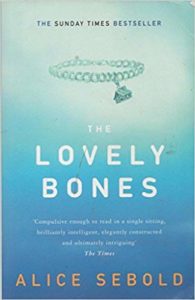
The Lovely Bones
Alice Sebold’s The Lovely Bones was first published in 2002. The story it told began in the 1970s with the disappearance and violent death of the protagonist, a fourteen-year-old girl named Susie. Her parents and siblings struggled to move on with their lives without knowing for sure what had happened to her, and the main character found it equally difficult to say goodbye to a life that had only just begun for her.
Interestingly enough, the plot had much less to do with how Susie died than what she decided to do with her time after her death.
The afterlife Susie was welcomed into was everything anyone could hope for. There were no harsh judgements awaiting her or anything like that. She was loved, cared for, and reassured in a safe, happy place as she adjusted to the thought of a future she could have never predicted ahead of time.
Yet she still wanted to return to the life she’d once had. This yearning that Susie felt to reconnect with her loved ones was overwhelming at times, and it made her an incredibly sympathetic character. Anyone would have felt the same way in her shoes. I wanted her to find a way back home more than anything, but I couldn’t imagine how the plot could ever bend in that direction.
Grief
One of the things I wish I could change about western culture is the way it reacts to grief. There’s an expectation in many western societies that one should grieve quietly, briefly, and in private. I’d like to make it clear that there’s nothing wrong with this kind of grief, but it’s not the only way to respond to loss.
The Lovely Bones showed characters who grieved in many different ways. Some of them spent years trying to figure out what happened to Susie. Others moved as far away from the town where Susie had lived as they possibly could or buried themselves in various projects as a way to cope with the past. Even Susie herself had to figure out how to say goodbye to the life she expected to have so she could embrace the (after)life she was experiencing instead.
There’s no shortcut through grief. As hard as it was at times to watch the characters mourn everything they’d lost, I appreciated their realistic responses to the days, weeks, months, years, and decades that followed after the heartbreaking opening scene. These were some of the best portions of the book. I’m not embarrassed to admit that they occasionally brought a tear to my eye.
Acceptance
Pain is unfortunately a part of life for every living thing. While some know more of it than others do, no one that I’ve ever met has been able to escape it entirely.
What The Lovely Bones did exceptionally well was to show how someone can accept what has happened to them without anyone making excuses for the perpetrators or calling those experiences good ones by any stretch of the imagination.
It’s been my experience that some well-meaning people will do both of those things in an attempt to help the person who was hurt begin to heal. They almost always have no idea they’re actually making the problem worse, but it was still refreshing to read about characters who tried to find acceptance without downplaying what happened or pretending like it had some mystical or uplifting purpose that Susie needed to discover in order to move on with her (after)life.
One of the few criticisms I have of this tale has to do with Susie’s multiple attempts to accept what had happened to her. The plot went into a lot of detail about her resistance to this idea early on, but it wasn’t quite as thorough in later chapters once her siblings grew up and began to find their own sense of peace. I can’t say much else about this without giving away spoilers, but the ending would have been even better if the audience could have seen more examples of Susie’s later reactions to this topic.
Hope
The hope in this story arrived gradually. Don’t look too hard for it in the first few scenes or chapters. Just like what often happens in real life, it will take time for everyone to adjust to their new reality and for certain parts of the plot to be set into motion before you begin to realize what will await Susie and everyone who loved her.
You see, hope isn’t something you get one dose of and then are set for life. There’s nothing delicate or whimsical about this emotion. It also won’t magically appear and make every problem in your life disappear in a puff of smoke. (If only life worked that way!)
To see the true effects of hope over a long period of time, one often has to look at the longterm evolution of a person, memory, idea, or wish. What will happen to this individual in ten years? How does someone live with decades of unanswered questions? What might be waiting for you on the other side of unimaginable grief?
The beauty of this tale comes in how it defines and describes this concept for people who aren’t interested in pat answers or ignoring the types of pain that make hope so meaningful for those who seek it.
Last January I blogged about the winter worlds I wish I could visit. Now that we’re well into the month of August and temperates are soaring, I thought it would be a good time to revisit this topic from a summery perspective.
One of the differences between this list and the one I did for winter is how loosely I’m defining a summer world. Some of the places I’ll be mentioning in this post never get cold or snowy at all. Others have seasonal changes that don’t necessarily match up perfectly with Ontario’s yearly weather cycle. A couple of them are places that aren’t so much “worlds” as they are countries (or parts of countries) that really exist.
It’s the presence of hot, often humid weather and everything that comes along with such a forecast that I’m looking for in these tales regardless of where they are set. I hope you’ll understand why I loosened the definition of this label and have a few ideas of your own of summer or summer-like settings that might be interesting to visit.
The Congo
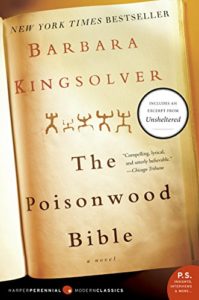
The Poisonwood Bible by Barbara Kingsolver
Caveat: I’d pack plenty of practical items like bug spray and I’d spend very little time with the main characters of this tale.
The setting, though, tickled my imagination. I wish the audience could have seen the Congo’s fight for independence from Belgium from the perspective of someone who was born and raised in the Congo. The parts of this struggle that the main characters witnessed were fascinating. They made me wish it were possible to see the beginning of this movement for myself, and they were the highlight of the storyline for me.
The Deep South
Dead Until Dark by Charlaine Harris
While I’ve only been to Louisiana once, I did spend about a year of my childhood living in a different southern state. It wasn’t enough time for me to think of myself as a southerner by any means, but it was a period of my life when I developed some of my earliest memories that I am pretty certain are accurate and genuine.
The warm, humid evenings down there are something I’ll never forget. There’s no way to escape them. Like getting through snowstorms up north, you simply have to learn to adjust the rhythms of your day to what the weather is like. Assuming I could avoid the vampires running around there in this universe, it would be interesting to see if my memories of southern evenings are as accurate as I hope they are.
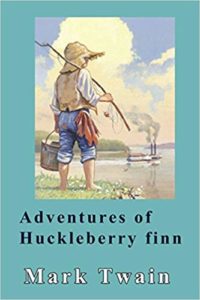
Any River That Huck Finn Paddles Down
The Adventures of Huckleberry Finn by Mark Twain
Huck was a character I liked a lot when I was a kid. The thought of a child deciding to leave home and go on an adventure without telling any of the adults in his or her life where they were headed made my heart skip a beat. I didn’t actually catch onto the satirical elements of the plot until I was older, but I do remember being envious of how much freedom this character had to design his own idea of a good time over the summer.
Also, I love bodies of water in almost any form. There are few things more soothing to me than spending time as close to a lake, river, pond, or ocean as possible. The sound of water lapping against the shore (or a seaworthy vessel) can lull me to sleep in minutes.
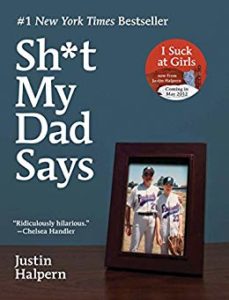
The House Where Justin’s Dad Lives
Sh*t My Dad Says by Justin Halpern.
How is that for a vague title? About seven or eight years ago there was a popular Twitter account that quoted all of the odd, funny, and sometimes disturbing things the author’s dad said without necessarily realizing that he was embarrassing his son. Eventually those quotes were compiled into a book.
As someone who has my own fair share of relatives who are known for putting their feet in their mouths over and over again without no signs of learning from their pasts, I’d know exactly how to respond to the cringeworthy stuff Justin’s dad said back in the day (and maybe still does).
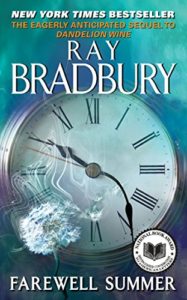
A Summer That Refuses to End
Farewell Summer by Ray Bradbury
Raise your hand if you feel like this summer is going to last until the end of time.
This book is part of a series that is still on my TBR list, so I can’t give out any specific details about it yet. What I can say is that I, too, feel as though autumn is a decade or two away. It’s funny how some parts of the year speed by while others drag on forever, isn’t it?
What summer or summer-like worlds do you wish you could visit?
Here is this week’s list of links from my favourite corners of the web. Last week’s list was a little sparse. I think I more than made up for that this time around.
It’s Never too Late to Be a Reader Again. Raise your hand if you’ve ever regretfully stopped reading something. I like the idea of returning to a book later on in life to see if it fits you better then.
Sand Castle Marketing via cynthiaharriso1. If you have a mailing list or are thinking of setting one up, go read this. I love this blogger’s approach to marketing. If only more authors and other creative folks thought this way.
Losing Earth – the Decade We Almost Stopped Climate Change. Buckle down for a long read here. I’d be especially curious to hear the thoughts of everyone who clearly remembers 1979-1989. How much do you remember talking about climate change back then? Do you agree that we came close to finding a solution during that decade?
Broken Thoughts – The Story of My Two Broken Legs via sonzyb. Ooh, this made me wince. I also found it interesting because I’ve never broken a single bone and so didn’t know the details of how such an injury is treated. Keep in mind that there is one photo of her injuries and vivid written descriptions of them as well. It didn’t bother me, but I thought you all should know this in advance. If you like this post, be sure to click on part two at the end of it. There were four parts in all, and the author did link to the next one at the end of the first three parts in the series.
Beyoncé in Her Own Words: Her Life, Her Body, Her Heritage. I don’t normally pay attention to the lives of celebrities, but this article was interesting because of how private Beyoncé generally is. It makes me wonder why she decided to share such personal details about her family all of the sudden.
Thank you to my friend Berthold Gambrel for coming up with the idea for today’s post.
For anyone who hasn’t already heard of this term, a Mary Sue is a (female) character who is so idealized that she’s honestly too good to be true. Picture someone who is good-looking, smart, athletic, talented, charming, and good at virtually everything she tries.
If she has any flaws at all, those weaknesses are trivial things that don’t make a real difference in her daily life or current quest at all. For example, she might have a terrible singing voice, but her storyline has nothing at all to do with whether or not she can sing.
You’ve probably noticed that I used feminine pronouns in those last two paragraphs. I did this on purpose. In all of the years I’ve been reading various fiction genres – including, and sometimes especially, the science fiction and fantasy genres – I’ve never seen a male character being accused of being a Mary Sue even when he meets all of the criteria for this label. The very thought of a Marty Stu existing is controversial in some circles.
Sometimes I’ve seen people use the term Mary Sue to describe an author’s possibly subconscious desire to be loved and admired by everyone they meet. There have been times when certain critics of various well-known series have insisted that a Mary Sue character was written as a projection of everything the author wished she could be.
Intention Isn’t Everything
While the original Mary Sue character was first written as a lighthearted parody of unrealistic characters in Star Trek fan fiction, she’s since evolved into something else entirely.
If we lived in a world where Marty Stu was thrown around as easily as Mary Sue, I’d say that both of them were intended to shed light on the dangers of writing flat characters. As someone who has written hundreds of reviews over the years, I have seen plenty of books whose characters never felt like real people. It’s not easy to create a character who appears to have all of the same hopes, dreams, fears, and realistic personality flaws that you’d find in any random person walking down the street.
When a term is created to criticize one group of people for doing something while ignoring other groups that do the same thing, the original intentions quickly become less relevant over time.
Double Standards
What bothers me the most about Mary Sue as a concept are the double standards it enforces and the disproportionate amount of hate Mary Sues receive when compared to their male counterparts.
Yes, stories that portray a female main character as someone who has few if any flaws and who is somehow good at everything she tries aren’t an example of good writing.
This applies to every single even vaguely humanoid protagonist who has ever been invented, though, as well as quite a few who were created to be as unlike humans as possible.
Which gender they identify as doesn’t matter at all. I’ve sat through far too many stories about Marty Stus who were just as unbelievable as any Mary Sue has ever been. Yet I can’t remember the last time I saw or heard someone use the phrase Marty Stu in real life or complain about how unrealistic his character development was.
If we lived in a world where this wasn’t the case, I’d be much more willing to use the phrase Mary Sue to describe characters who were poorly developed or seemed to be an idealized version of who the author wishes he or she could be. These are issues that I occasionally see pop up in the books, movies, and other forms of entertainment I review, but they are in no way limited to one specific gender. They happen everywhere.
Yes, It’s Sexist
It is for all of the reasons listed above that I believe Mary Sue is a sexist concept even though I don’t think that most people who use that phrase are purposefully trying to be sexist.
Sexism – and many other forms of prejudice – are so deeply ingrained into western society that it’s easy to overlook the milder examples of them like this one. Honestly, I know that I’ve occasionally said things that rubbed other people the wrong way because I wasn’t aware of why a certain phrase or topic was a sore spot for a particular group.
I can’t and won’t speak for every woman here, but my reaction to someone using this phrase wouldn’t be an angry one. The first thing I’d assume would be that they’ve never thought about the different ways characters who behave in very similar ways are treated based on their gender or why it’s a problem to hold one gender to a much stricter standard than you’d expect from another gender. This would be a teaching moment, just like I’d hope that someone else would be willing to explain to me why they found something I said to be offensive if I accidentally crossed the line when talking to them.
No, this isn’t my way of saying that I’m taking a break from blogging. I’ve done it once or twice in the past for various reasons, but I have no current plans to ever do it again.
(If that ever changes, I’ll take my own advice and let you all know in advance that I’m going quiet for reason X and expect to be gone for Y amount of time!)
The real reason why I’m asking is because this question came to mind recently after a new post popped up on a blog I follow that hadn’t been updated in three or four years. Honestly, I’d forgotten it was even still on my RSS feed because of how long the gap between posts had been.
As soon as I realized the owner of that site had begun writing again, my face broke out into a grin. I’d missed his stories, and I was eager to see what he’d been up to while he was away. He’d disappeared so quickly that I hadn’t had any idea what had happened to him. This was something that had made me feel a little sad even though I respected his right to fall silent.
This Is a Guilt-Free Zone
I know I could very well have readers out there who have abandoned their old blogs or other sites. If this applies to you, know that this post is a guilt-free zone. There are many different reasons why someone might need to stop writing, and in no way am I trying to make anyone feel bad for making the choice to step away from their site whether it was a temporary or permanent decision.
Quality vs. Quantity Content
Raise your hand if you’d rather wait for an excellent post, vlog, or other update than settle for a mediocre one that arrives sooner!
One of the things I wish I could change about Internet culture is its focus on churning out new content on a regular basis regardless of how well-developed that video, post, or other form of communication actually is.
I’m all for blogging on a schedule if you have the time and energy to devote to posting a certain number of times a day, week, or month for the long term. However, I also believe it’s better to not post anything than it is to post a half-baked idea simply to stick to a predetermined schedule.
From what I’ve observed with friends who had to take breaks from their blogging or other activities online for various reasons, your core audience is still going to be there when you return. Speaking as someone who considers herself a part of the core audience of a few different folks, I will still be around in a month, a year, and even longer than that if or when a favourite writer ever decides to return to his or her blog, Youtube account, or other online hangout.
If You Can, Say Goodbye
I do have one request for friends who find themselves needing to pull back from their regular posting schedules. If possible, I’d love to see some sort of message from them saying that they’ll be gone for a while. You don’t have to say why you’re leaving if you’d prefer not to (although I’d love to know if it’s due to something that might change again in the future if you don’t mind giving out enough details for this question to be answered).
Once again, this is not intended to make anyone feel guilty. Sometimes life makes it really difficult to leave that final update on a site or channel when you’ve decided to stop updating it for now or forever. I’ve known people who stopped writing after they received serious diagnoses of diseases that required the vast majority of their energy. Others fell silent after getting a new job, or having a child, or going through any number of major life changes that drastically altered how much spare time they had to share with the world.
Still, it’s nice to know a little in advance when a site is shutting down and if there’s any hope of it ever being revived. I find myself growing emotionally attached to some of the people I meet online. While I’d never ask any of them to share details of their private lives that they want to keep hidden, it sure would be nice to know why folks occasionally disappear and if it’s okay to reach out to them every so often to see how they’re doing (assuming they’ve become a friend and not just a blogger I follow).
When people choose not to do this, I always wonder what happened in their lives that made them walk away from the audience they’d built up.
Did they develop a mental or physical health problem?
Were Internet trolls bothering them?
Was it a bad case of writer’s block?
Did they say everything they had to say on the topic(s) they chose to talk or write about?
Have they finally discovered Okunoshima, Japan, and are they planning to live with the bunnies there forever?
Do they want to be checked up on, or do they not even have enough energy for that much interaction from the folks who care about them?
The possibilities are endless. If only we could have even the slightest clue as to what is going on in the lives of these people and if it’s okay to send a friendly message asking how they’re doing.
Respond
Have you ever taken a blogging break? Has one of your favourite sites ever stopped getting updated? Do you think content creators should alert their audiences when they need to stop publishing posts or uploading videos?
Here is this week’s list of links from my favourite corners of the web.
Yesterday I met a nice man named George McNeese on Twitter who is looking for other short story writers to connect with. Click on the links in the last sentence and say hello if you write short stories in any genre or if you know of anyone else who does. I’m hoping we can form a friendly community online together in the future.
How Almost Dying Showed Me That I Wanted to Live via dlhampton. This link includes references to a suicide attempt for anyone who needs a trigger warning. I thought the author did a wonderful job of explaining what was going on in her mind at the time and how she’s changed since then.
The price I paid for being openly gay (as opposed, I suppose, to people who are openly straight) was high – I lost contact with a large part of my family. The reason? Wanting to bring my boyfriend to a family celebration.
It’s been a while since I wrote another instalment for this series. Either the world of stock photos is gradually growing less strange or I’m getting used to the wilder side of this world. Fewer things are surprising me these days, so it took longer than normal to compile this list.
If you’re looking for some inspiration today, keep reading.
As I’ve mentioned in the past, I decided to start doing something constructive with all of the beautiful, haunting, bizarre, creative, and otherwise unique photos I kept finding on the various stock image sites I had on my RSS feed back in 2017. Every few months since then I’ve posted a list of the most unusual photos I’d found to see if any of my readers were interested in using them for any purpose.
Everything I share for this series is in the public domain. You don’t have to do anything special in order to use them.
In the past, I’ve written descriptions of how I’d use the pictures I share with my audience in this series. As much fun as it is to come up with theories about what could be happening in them, I think I’m going to leave it up to my readers to brainstorm everything this time around. My imagination is so strong that I don’t want to overwhelm your own theories about how these images can be used.
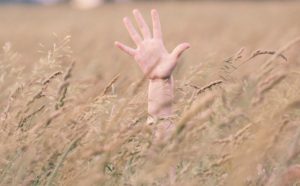
All I’m going to add to them is a brief description of what is happening in each photo for anyone who can’t see the photos I’m sharing for any reason. I look forward to seeing how you’d all react to this list and what you do with any of the images in it. Let me know if you use any of them!
A man wearing a wreath of flowers on his head and a pair of glasses that has a dandelion stuck to the middle of each frame.
A hand and forearm sticking straight up out the middle of a wheat field. It is still attached to the body of someone who is hopefully alive and well.
A person wearing contact lenses that makes their eyes glow and makeup that gives their skin a blue, purple, and red hue.
A person wearing a red hoodie, white gloves, and a mask that glows in the dark.
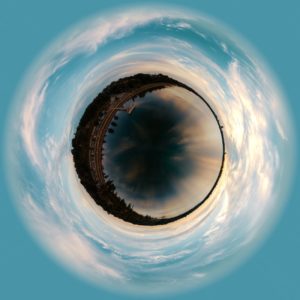
A stylized and possibly long-exposure photograph of a city landscape and sky. Everything is arranged in a circle with the landscape being the centre of the shot and the sky being wrapped around it.
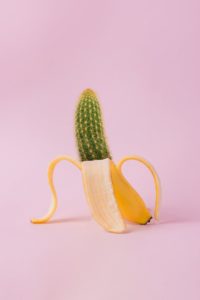
A long, thin cactus poking out of a banana peel.
A cattle skull sitting next to a decorated box filled with old-fashioned medicine.
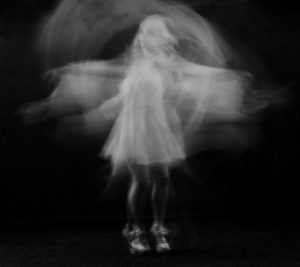
A long-exposure shot of a dancer. She has a pale, ghostly appearance due to how much she was moving during the shot.
A bluejay sitting on a polished, wooden table and sticking its head into a metal saucer filled with milk.
A naughty grasshopper smoking a cigarette while sitting on a rock and staring out at a field of grass.

 Long and Short Reviews, my favourite book review site, is celebrating their 11th anniversary this week.
 Disclaimer: I am not a doctor, and this post is in no way intended to give out medical advice. Please seek the advice of a qualified medical professional before beginning this or any other type of workout routine.

 The Lovely Bones
 The hope in this story arrived gradually. Don’t look too hard for it in the first few scenes or chapters. Just like what often happens in real life, it will take time for everyone to adjust to their new reality and for certain parts of the plot to be set into motion before you begin to realize what will await Susie and everyone who loved her.
 The Poisonwood Bible by Barbara Kingsolver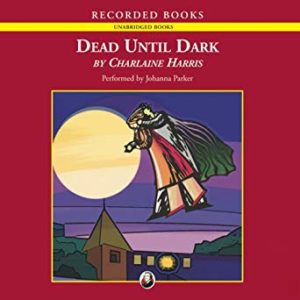
 Farewell Summer by Ray Bradbury
 Here is this week’s list of links from my favourite corners of the web. Last week’s list was a little sparse. I think I more than made up for that this time around.
 Thank you to my friend
  No, this isn’t my way of saying that I’m taking a break from blogging. I’ve done it once or twice in the past for various reasons, but I have no current plans to ever do it again.
 I do have one request for friends who find themselves needing to pull back from their regular posting schedules. If possible, I’d love to see some sort of message from them saying that they’ll be gone for a while. You don’t have to say why you’re leaving if you’d prefer not to (although I’d love to know if it’s due to something that might change again in the future if you don’t mind giving out enough details for this question to be answered).
 Here is this week’s list of links from my favourite corners of the web.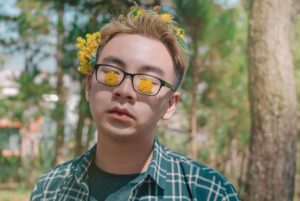
 A person wearing contact lenses that makes their eyes glow and makeup that gives their skin a blue, purple, and red hue.