Category Archives: Science Fiction and Fantasy

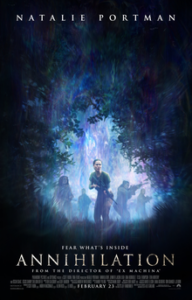
Dangerous Mutations: A Review of Annihilation

This review is spoiler-free. As always, the only time I’d share spoilers in a review would be if I needed to warn my readers about potentially triggering themes or scenes in the source material. This was one of the films I talked about wanting to watch in this post. So far, I’ve also reviewed Into the Forest from that list.

Edited on August 31, 2019 to include a link to Joy V. Spicer’s review of this film. She chose to watch and review it after reading this post. 

Annihilation is a 2018 film based on a book by the same name by Jeff VanderMeer. It’s about five military scientists who travel into the heart of a rapidly-expanding anomaly called “The Shimmer” in order to discover what caused it and why every other team of explorers who had been sent into it had disappeared without a trace.

There were a large enough group of characters that I feel the need to introduce all of them in some detail before diving into my thoughts on the story itself. I’m discussing everyone in the past tense in order to avoid accidentally giving away any hints about what happened to them or who may or may not have made it to the final scene.


The Characters

Natalie Portman as Lena.


Lena was a biologist, professor at Johns Hopkins, and former soldier. Her husband, Sergeant Kane, had disappeared on a top secret mission about a year before the events of this story took place, and she was still overcome with grief over her loss due to the fact that the military refused to tell her anything about where he’d been or what might have caused him to go missing.

She was a brave person who knew how to react quickly and appropriately in a crisis. Most of the scenes in this film were shown from her perspective.
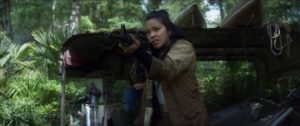
 

Gina Rodriguez as Anya Thorensen.


Gina was a paramedic from Chicago.

She was an intelligent and cautious person who always put safety of herself and her crew first. I also enjoyed her subtle sense of humour.
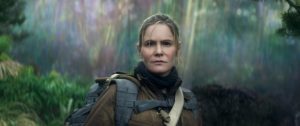
 

Jennifer Jason Leigh as Dr. Ventress.


Dr. Ventress, a psychologist, was the team leader of this group. She had been responsible for performing psychological evaluations of and assembling all of the previous groups that had been sent into “The Shimmer.”

She was a stubborn, serious, and determined person. Once she set her mind to accomplish a goal, no one could dissuade her from pressing forward to achieve it. At times, she did come across as ill-tempered to me because of how unwilling she was to listen to the concerns of the other women in her group when their mission started to go awry.

 

Tessa Thompson as Josie Radek.

Josie was a physicist.

She was an intelligent and trusting woman whose natural inclination was to assume the best of everyone she met. If you forced me to pick a favourite character in this story, Josie would be it. I only wish the adventure had been told from her point of view instead.
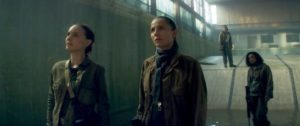
 

Tuva Novotny (in centre) as Cassie “Cass” Shepherd.


Cass was a  geomorphologist. Her responsibility on this mission was to test the magnetic fields around the boundary to determine why drones, cellphones, and other types of technology malfunctioned so often within “The Shimmer.”

She was a quiet and hardworking person who seemed to have no interest in drawing attention to everything she did for the group. There’s something I admire about that.

My Review

One of the biggest reasons why I was so excited to see this film had to do with the fact that it had an all-female cast. I have never watched anything in the science fiction genre that was so centred on the experiences of women in an unfamiliar and dangerous environment. At most, I would have expected to see two women in this sort of tale. It was thrilling to have an entire team of women hiking into “The Shimmer” to discover its secrets. If you’re listening, Hollywood, we need many more stories like this in the future!

The beginning of the mission.


The diversity of the cast only drew me into the plot more. From age to race to sexual orientation, these characters were from a wide range of backgrounds.  It was a breath of fresh air to see them working together to reach a common goal without any of these labels being a source of conflict for the plot.

The beginning was a little confusing to me due to how much it jumped around from one time period to the next without much explanation about how all of the pieces fit together.  This is the only negative thing I’ll be saying about this film, and I’m mentioning it because it’s a storytelling device that I don’t generally find appealing. The writers did an excellent job of framing all of these seemingly-disparate scenes in ways that grabbed my attention, though, and I soon decided that I simply had to know how everything fit together.

In some ways, this wasn’t necessarily a typical science fiction movie. The pacing always remained steady, but the storyline was far more interested in encouraging the audience to ask probing questions about what was really happening to the characters as they marched deeper into “The Shimmer” than it was in surprising the audience with jump scares. I loved the fact that I was expected to think instead of bracing for the next monster leaping out of the shadows.

The apprehension I felt while watching this tale grew slowly. I wasn’t as frightened as I’d normally be while watching something from the horror genre, but I was more scared than I’d typically feel in a normal science fiction environment. With that being said, I’d still hesitate to include it in the horror genre despite what I’ll say about the gore in the next section of this review. The vast majority of the plot was centred on science fiction themes instead.

“The Shimmer” was not a safe place to visit regardless of how strong one might be or how many pieces of equipment they brought in to study this phenomenon. As beautiful as this area of land was at times, it was also full of dangers that could not always be predicted or avoided. The conflict between the peaceful setting and the anything-but-peaceful things that happened in it fascinated me.
The preview at the end of this post will show you a few examples of the types of things the characters experienced once they entered “The Shimmer”. Combining the DNA of species that would normally never be combined created all sorts of living beings that have to be seen to be believed. I was fascinated by how all of this worked and how far the storytellers ran with this concept.

I can’t go into any further details about what else the characters discovered without giving away spoilers, but I will tell you that it was quite creative and like nothing I’ve ever seen before. This was one of the major reasons why I’d recommend Annihilation so highly to anyone who has the slightest interest in checking it out.

The metaphors in this story were well written. I adored the fact that it could be interpreted from so many different angles, especially since the writers didn’t feel the need to nudge the audience in any particular direction. There was material to support multiple interpretations of what “The Shimmer” could be. One of the most popular theories about what it meant isn’t actually something I thought of when while I watching it, but it made perfect sense in retrospect.

I can’t say much else about this without giving away spoilers, but I would strongly encourage everyone to pay close attention to what is happening in the plot so you can come up with your own theories before wandering around online later on to see what other people thought.

A Note on the (Brief) Gore

There were two short but graphic scenes in this film. I was glad I’d been warned about them ahead of time so I could avert my eyes once they began. As I believe I’ve mentioned in previous posts, I’ve been losing interest in violence and bloodshed in fiction this year.

I’d be happy to privately share more information about when these scenes occur with anyone who would like to watch Annihilation but who might be hesitant about the gore factor. This is something I can discuss without giving away major spoilers, although I would have to share minor ones with you.

Should You Watch It?

Yes! I would heartily recommend watching Annihilation. It was a thought-provoking film that refused to spoon-feed its audience. I loved the process of figuring out what was really happening in “The Shimmer” and coming up with my own interpretations of how certain scenes should be understood.

Annihilation is available on iTunes.
4 Comments

Filed under Science Fiction and Fantasy

Characters Who Would Have Made Great Dads

After publishing a similar list for characters who would have made great moms in a Saturday Seven post last month, I simply had to repeat the idea for male characters now that Father’s Day is nearly here.  If the Saturday Seven meme was still around, this is what I would have written for it for this week.

Like I said last month, in no way do I think having kids is the right decision for every person, fictional or otherwise. I’m happily childfree myself, but I still wonder how the lives of these characters would have changed if they could have become fathers.

Some of the people on this list died before they were old enough to have children. Others simply never found the right time to become a dad. All of them would have been good at it if the circumstances in their lives had been different, though.

1. Fred Weasley from the Harry Potter series.

Fred and his twin brother George provided a lot of the comic relief in J.K. Rowling’s Harry Potter stories. They were intelligent, mischievous and energetic teens who embraced the playful side of life.

While their antics irritated Professor McGonagall and many of the other adults in their lives at times, I think a grown-up version of Fred would have made an excellent father. He spent his entire lifetime soaking up every bit of joy he could find in the world.

Any child would have been lucky to grow up with such a positive role model in life, especially if they inherited his rambunctious and needed to be shown how to use that energy without annoying the more proper members of wizarding society too much.

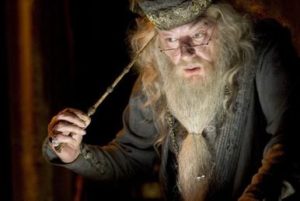
2. Albus Dumbledore from the Harry Potter series.
Wizards in the Potterverse generally live much longer than humans do. Dumbledore seemed to spend most of his adulthood focusing on his career. I completely understand why someone would want to do that, but a small part of me does wonder what his life would have been like if he’d found a nice man to settle down with and raise a few children.

If he could protect and help to educate hundreds of teenagers at work for all of the years he was at Hogwarts, I’d like to think he’d be just as patient with a few baby wizards at home.

3. Gandalf from Lord of the Rings.

One of the things I occasionally like to do when my spouse is in a quiet mood is ask him questions about parts of classic science fiction and fantasy novels that were never really explained by the original authors.

For example, I spent lost of time talking to him about the Ents in J.R.R. Tolkien’s Lord of the Rings series this past spring and winter. Where did the Entwives go? Will the Ents ever find them again? How did Ents reproduce? When did or will the last Ent die? The more I thought about this species, the more questions I had about all of the parts of their lives that weren’t revealed by the plot.

My newest obsession with this series these days has to do with the wizards. There were so few of them that I never got a strong sense of how their society worked when they weren’t fighting against Sauron. The legends about them made them seem bigger than life. I’m not even entirely sure that a wizard could have a child if he wanted one, but I do think Gandalf would have had the patience and love needed to be a good dad if he could.

I mean, he did come to care about the hobbits quite a bit, and they were about as un-wizard-like as a mortal creature could be.

4. Bilbo Baggins from Lord of the Rings.

Unlike the wizards in this series, I do know for sure that hobbits could reproduce. They didn’t seem to do it as often as humans do on average, but I think Bilbo would have made a good dad if he’d been one of the members of his people who decided to go down that route.

He loved food, music, and dancing. Storytelling was important to him, too. I’ve never met a child who didn’t find happiness in at least one of those activities, especially if their parents raise them to enjoy the simple things in life.

Also, just think of all of the stories he could tell his children about his adventures traveling to and back from the Lonely Mountain.

5. Shepherd Book from the Firefly television show and graphic novels.

For those of you who aren’t familiar with Firefly, it followed the motley crew of a space ship whose members included a sex worker, fugitives, former soldiers from a failed revolution, and other folks who lived on the margins of society.  The cargo they shipped was often stolen or illegal.

Yet they also had a Shepherd – or what we’d call a pastor – travelling with them. He lived with people whose values were radically different from his own, and he loved them all the same.

If every father had the same sort of unconditional love and acceptance for his children, our world would be a far better place.

6. Jonas from Lois Lowry’s The Giver.

The concept of parenthood – and marriage, for that matter –  in this universe wasn’t the same as you or I think of it. Jonas was born into a highly regimented society where your spouse would be selected for you based on your personalities and interests. When a couple felt ready to become parents, they applied to a committee for a baby.

The members of this society who created the children were never the same ones who raised them. Once a year, all of the healthy babies born over the last twelve months would be given to families who had been waiting for an infant. It was a cold, efficient process that I only wish had been explained in greater detail.

Due to all of this, it came as a surprise to me to see just how paternal Jonas was as a 12-year-old boy. His family was temporarily assigned to care an infant whose fate was still up in the air, and Jonas bonded with that baby quickly.

7. Captain Picard from Star Trek: The Next Generation.
(Some of the Star Trek novels were about this character. I say that’s enough to count him on this list).

When I first started watching TNG, I wondered if Captain Picard was childfree as opposed to childless. He wasn’t the sort of person who would coo over a baby, for example, and he seemed to relish sticking to the same routine each day. His demanding but rewarding job was the focus of his life. There was precious little time for anything else.

There were a few subtle hints about this character’s regrets in life later on in the series, though. “The Inner Light” showed him experiencing 40 years of life on a planet that was about to be destroyed by a nova. His four decades of experiences there included him becoming a father and grandfather.

This was a side of Captain Picard I’d never seen before. As confused as he was by how he’d managed to slip away from his current life as the captain of the Enterprise, he genuinely loved his family. Their safety and happiness meant the world to him. It was in those scenes that I realized just how much this character would have loved to have the chance to raise a child or two of his own if he could meet the right woman who was also willing to let his career take precedence over where they lived and how often they moved.

That’s a lot to ask of someone. I understand why no one ever took him up on that offer, but I also think he would have been a doting dad if his circumstances had been different.

Which of your favourite male characters do you wish could have had the chance to be someone’s father?

Leave a Comment

Filed under Blog Hops, Science Fiction and Fantasy

No More Dystopias: A Hopeful Science Fiction Reading Challenge

 I don’t know about you, but I’m getting pretty tired of the bleak, dystopian themes in a lot of modern science fiction.

For example, I used to be a huge fan of The Walking Dead. The idea of struggling to keep   one’s children alive in such a dangerous setting was appealing when I first began reading the original graphic novels before the television show was created.

Most previous zombie movies and novels I’d heard of had killed off their child characters pretty early on, so I was curious to see how Rick, the protagonist, and the other parents in this universe would break with this tradition.

While there were many things I enjoyed about The Walking Dead early on, the graphic, relentless violence and catastrophic loss of hope for key characters eventually lead me to stop watching and reading it. It was all too much for me.

I do read recaps of what is currently going on in that universe every so often. If it eventually ends on an uplifting note, I might even go back and catch up on everything I’ve missed.

For now, though, I need a very long break from these kinds of tales. The news is already overflowing with stories about miserable things happening to good people through no fault of their own. When I read fiction these days, I’m now looking for an escape from injustices that are never made right again.

One of my goals for 2018 is to find, read, and then eventually compile a long list of science fiction tales that end on a hopeful note. This post is the beginning of that journey, and I’m tentatively planning to write an entire series of posts on this topic as I find books, TV shows, and other forms of entertainment that belong in it.

What It Won’t Be

When I say I want hopeful science fiction, I don’t mean that I want to avoid serious or difficult subject matter altogether.

There may very well be wars, battles, or other violent scenes in the stuff I read for this series.

The beginnings could include descriptions of places that are no one’s idea of a pleasant place to live. I won’t necessarily be turned off by an opening scene that sounds dystopian so long as the narrator doesn’t dwell there for every single scene from that point until the end.

The good guys might not always make the right decisions. It’s okay with me if they occasionally say or do things that deeply irritate me. In fact, I strongly prefer characters who are rough around the edges as long as they’re not antiheroes.

An occasional moment of despair is completely understandable, but I don’t want to read about or watch anyone be dragged from one traumatic event or response to the next with no end in sight.

Some of the stuff I add to this list could very well include themes related to any number of different types of prejudice, from homophobia to racism to sexism.

If a key main character must die at some point to further the plot or fulfill his or her destiny, I will accept it. (See also: Harry Potter).

What It Will Be

What I will require from these books, though, is hope.

They definitely don’t have to act Pollyannaish, but the characters should have a optimistic approach to their quest or mission most of the time.

When something terrible happens, it should be written into the plot for a specific reason that will be revealed to the audience sooner rather than later.

The good guys should win in the end.

The storylines should end on a positive note.

Will You Join Me?

You might have noticed that I haven’t listed any specific titles yet here.
That was done on purpose because:

  1. I’m still researching titles that will fit my criteria, and
  2. I wanted to get reader feedback first without influencing your suggestions for me.

There are some very knowledgable and well-read people who follow this blog. If you have any suggestions of what to add to this list, will you share them?

If you’re ready for some hopeful stories, will you join me? I can’t wait to share my ideas with you as well!

7 Comments

Filed under Science Fiction and Fantasy

Classic Fantasy Films I’ve Never Seen

Last week I listed many of the classic science fiction films I’ve never seen. This week I’ll be sharing the fantasy films I’ve never seen.

When I was a little girl, my siblings and I weren’t allowed to read or watch most things that had to do with ghosts, witches, or magic. (C.S. Lewis’ Chronicles of Narnia series was one of the exceptions to this).

This rule was created for religious reasons, and our parents eventually changed their minds on that topic.  I’m just glad that they realized that stories about magic aren’t actually harmful before the Harry Potter series came out!

Generally, I’m more interested in the science fiction genre than I am fantasy, so I haven’t felt the urge to watch as many of the old fantasy flicks as I did the scifi ones. Maybe someday I will go through this list and check it out after I’ve finished my current to-watch list, though.

It’s always kind of funny when someone makes a reference to a well-known fantasy tale and I have no earthly idea what they’re talking about. This is even more true when they’re about the same age as me and assume that everyone grew up watching that stuff.

Just like I did last week, I’ll be including the year a film was published if I know that story has since been retold.

  • TIme Bandits
  • Lost Horizon
  • The Purple Rose of Cairo
  • Orlando
  • The NeverEnding Story
  • Big
  • Conan the Barbarian
  • Willow
  • Princess Mononoke
  • Jason and the Argonauts
  • Highlander
  • The Secret of Nimh
  • Ladyhawke
  • The Holy Mountain
  • The Fall
  • Clash of the Titans
  • The Adventures of Baron Munchausen
  • Wings of Desire
  • Excalibur (1981)
  • My Neighbour Toto
  • The Dark Crystal
  • Spirited Away
  • King Kong
  • Jack the Giant Slayer
  • Bridge to Terabithia
  • The Witches of Eastwick
  • Hook
  • The City of Lost Children
  • The Frighteners
  • Life of Brian (and most other Monty Python films!)
  • Life of Pi

What classic fantasy films have you never seen? Were you allowed to read and watch stories that referenced magic when you were a kid? I know my childhood was a little out of the ordinary in certain ways, so I try not to assume that everyone has had the same experiences in life.

4 Comments

Filed under Science Fiction and Fantasy

Classic Science Fiction Films I’ve Never Seen

When I was a kid, my family didn’t own a television at all for a few years there. There were other parts of my childhood when we owned a TV but didn’t have cable. The handful of channels that we could watch for free during those years almost never had science fiction reruns or content of any kind, although I did eagerly watch it whenever I could find it.
We also rarely went to the movie theatre until I was well into my teens, so I hadn’t seen a lot of well-known films in general by the time I grew up.

I’ve caught up on many of the science fiction classics since then, but there are still quite a few of them that I haven’t gotten around to checking out yet.

Today I’m going to be listing as many of the ones I haven’t seen as I can think of. Some of them have since been remade, so I’m including the year they came originally came out if there’s a newer version of it that I recognized. Often there are so many changes from the original to the remake that it’s almost as though we’re talking about two separate franchises.

Next week, I’ll be publishing a similar post about fantasy films. The lists for both categories were so long that I thought they each deserved their own post.

Will I ever watch the shows on this list? I have no idea! My current to-watch list is so long that for now I’m going to continue focusing on more modern films, but it might be fun to catch up on the old ones someday as well.

  • The Thing
  • Westworld (1973)
  • Robocop
  • The Abyss (1989)
  • Thx1138
  • Moon
  • A Clockwork Orange
  • Ghost in the Shell
  • Invasion of the Body Snatchers
  • Brazil
  • Close Encounters of the Third Kind (1977)
  • Mad Max
  • Solaris
  • The Day the Earth Stood Still
  • Forbidden Planet
  • 2001: A Space Odyssey
  • How to Train Your Dragon
  • Metropolis (1927)
  • The Day the Earth Stood Still (1951)
  • Frankenstein (1931)
  • King Kong (1933)
  • 2010
  • Fantasia
  • The Andromeda Strain (1971)
  • Flash Gordon
  • Logan’s Run (1976)
  • Dune
  • Soylent Green
  • Stalker

I was going to add the Alien and Predator series to this list, too, but I can’t remember for sure if I’ve seen any of them or not. They’re so well-known in pop culture that I know their basic plots even though I don’t know which of the films in either of these series I’ve actually seen.

What classic science fiction films have you never seen? On a humorous note, which classic science fiction films can you not remember if you’ve watched but know a few things about anyway?

6 Comments

Filed under Science Fiction and Fantasy

A Dangerous Shortcut: A Review of The Ritual

Arsher Ali as Phil, Sam Troughton as Dom, Rafe Spall as Luke and Robert-James Collier as Hutch.

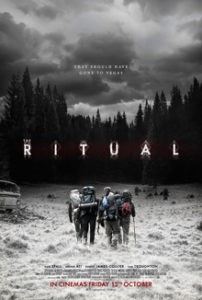
The Ritual is a British horror film based on Adam Nevill’s book by the same name. It was released on October 12, 2017 by Netflix.

This review is spoiler-free. As always, the only time I share spoilers about a movie or tv show on my site would be if I needed to warn my readers about potentially triggering material in it. There was nothing like that in this film.

The premise of The Ritual is a simple one. After losing an old university friend to a random act of violence, Phil, Dom, Luke, and Hutch went hiking and camping in a remote corner of Sweden to spend time together and honour the memory of their deceased friend.

About a day into their trip, Dom tripped and accidentally injured his knee. The group still had many kilometres to go through the mountains on their hike, and none of their cellphones could get a signal in such a remote location. The four characters decided to take a shortcut through the woods so that he could rest and get proper medical attention as soon as possible due to these factors.

A violent thunderstorm began soon after they entered the woods, so the characters sought refuge in an abandoned cabin for the night despite their deeply uneasy feelings about the property. They broke up a piece of the house to start a fire, and then settled down for a good night’s rest before hopefully continuing their journey in the morning.

As they were about to discover, they should have listened to those feelings. The cabin wasn’t abandoned after all, and the person/entity/thing who lived there wasn’t pleased by their trespassing at all. (I must be purposefully vague on this point in order to avoid giving you too many hints about who or what these characters angered).

The Characters

My main criticism of this film has to do with how similar all four of the characters were. Phil, Dom, Luke, and Hutch all had fairly outgoing, sarcastic, and jovial personalities that tended to blend into one another.

There also wasn’t a lot of information given about their backstories.  What were their occupations? Were they married or otherwise in longterm relationships? If they weren’t single, were their partners men or women? Did they have kids? The references to their adult lives were so sparse that I still don’t know the answers to these questions for all four of the main characters in this storyline. As nice as it was to have some of these questions answered for some of them, I thought it was odd that such basic information wasn’t provided for everyone.

I had a difficult time thinking of them as individuals because of this. While I’d certainly expect such a tight-knit group of old friends to share many common interests, it would have been nice to have more character development before the plot picked up so that I could remember who was who when they did make rare references to their personal lives. Sharing details about who they shared their lives with and what occupations they had would have gone a long way to separating these characters in my mind.

There’s nothing wrong with a plot-driven storyline, but I do think this one would have been even better if it had taken more time to show who the characters were before putting them into terrible danger.

The Antagonist

There isn’t much I can say about the antagonist without giving away major spoilers, but I was much happier with how this portion of the plot was handled.

The backstory was well-developed and fit into the storyline nicely. I especially liked the fact that it took the characters as long as they did to learn anything at all about what was lurking in the woods. This wasn’t a case of characters knowing in advance that a particular spot had a bad reputation and deciding to explore it anyway.

They had no idea what they were about to stumble into after the thunderstorm began, and that made the later events of the plot even more exciting than they would have otherwise been. It also provided plausible deniability for why they didn’t immediately leave the cabin they were staying in the first time something frightening happened in it.

In my opinion, horror movies are most enjoyable when the characters genuinely had no idea what they were getting into before the first bizarre things happens to them.

The Horror

One of the things I always want to know before I watch something from this genre is what sort of horror we’re talking about.

Is the plot gory? Does the fear the characters and audience feel mostly come from anticipation, or will we actually see whatever it is that seems to be roaming around in the woods and hunting them down? Do the characters react sensibly the first time they sense something is horribly wrong?

Once again, I’m dancing around spoilers here, so bear with me if I don’t fully answer all of your questions.

The first thing I’d say about the plot is that it is firmly planted in the horror genre. If you love being scared, there are plenty of spine-chilling scenes to come when you begin watching The Ritual. I had to watch a couple of scenes from the corner of my eye because of how scared I was for the characters in them.

As far as the gore goes, it definitely existed. This isn’t something I’d recommend to people who have a phobia of blood or gore even though the scenes that included those things were only a small part of the storyline overall.

I don’t like slasher movies, and this wasn’t one of them. The build up to the moment the characters realize the cabin they’ve broken into had never been abandoned at all was handled nicely. Honestly, the storyline was just as much about that moment as it was about everything that happened afterwards.

This isn’t the sort of tale that has any sort of profound messages about death, grief, or friendship woven into it. I’m not criticizing it by saying that, either. Not everything in life needs to be deep in order to be enjoyable. This is a classic horror film in every way, and the characters fit into that genre beautifully.

Should You Watch It?

If you love the horror genre and are in the mood for a satisfying scare, I would recommend this film.

Leave a Comment

Filed under Science Fiction and Fantasy

My Response to Pocket Dimension

My friend, Michael, recently posted a writing prompt about pocket dimensions. I thought it would be fun to answer his questions in the form of a blog post.

Congratulations! You have your own little world. Not just your imagination – this is a physical reality, and you can step into it at will. Maybe it’s a pocket dimension, or your own private little corner of the Fay Realms. Whatever it is, it’s yours. So…

1. What does your realm look like? Is it indoors? Outdoors? A cottage on a deserted shore? A crumbling castle at the heart of a dark forest? A broad lake with a waterfall at one end and beaches around three sides? Something else entirely?

My pocket dimension is indoors. It’s located in the library of a grand, old house that is magically well-insulated. The house is cool in the summer, warm in the winter, never dusty, and always a comfortable place to visit.

The library itself has a large fireplace on one end and floor-to-ceiling windows on the other. The wood floors have been recently swept, and all of the books are arranged neatly according to the Dewey Decimal system. Many of them are about topics humans would recognize, albeit from a strictly faery perspective instead of from a human one. Let’s just say that they weren’t a fan of the Iron Age at all.

With that being said, some of the books aren’t like anything you’d find on Earth. Some of the books have mouths and will have long conversations with you if you ask them the right questions. Others teach you how to fly as you read them, share alternate histories of Earth if one key fact had changed at a particular time and place, and a few might even be portals to other places entirely if you flip to the correct page of the right story and read it’s contents aloud.

There is a washroom and well-stocked kitchen off to either side of the library for anyone who needs them while they’re visiting. I often grab a piece of fruit and cup of tea before I begin reading.

2. Do you keep it to yourself, give a few friends access to it as well, or open it to anybody?

The library is open to anyone I trust who loves knowledge and adventure. They are free to visit it with or without me at any time of the day or night.

3. Does your realm have its own inhabitants? What are they like? Do you ever bring them across to our world?

The house is owned and maintained by faeries, but you might never run into one. They’re quite shy around most humans. Even I have only met one of them, and even that was the briefest encounter you can possibly imagine. She nodded slightly at me, cracked open the door to the library, and then never showed herself again.

I wouldn’t be strong enough to bring one of the faeries back to Earth with me even if I spotted another one and wanted to show them our world. They do whatever it is they want to do, and that’s all there is to it.

4. Does entering your personal world change you? Do you dress differently, speak differently? Are you someone else when you’re there?

You cannot enter the faery library if you’re carrying anything like iron that would hurt the faeries or if you’re harbouring any thoughts about harming them, the house, or anyone else in it. Other than that, you may speak, dress, and behave as you wish.

5. Is time the same in your realm as it is out here? Is there a steady differential, like three days there pass in only an hour of our time? Or is it stranger than that?

Time is different in the faery house. A few hours of reading there generally translates into a few minutes of time in our world, but this isn’t a straightforward rule. As with everything related to faeries, they can’t be forced to follow human rules. Anyone who wishes to visit their library should remember that and prepare for the small possibility of returning much sooner or later than they were expecting.

6. How do you get to your world? Do you have to visit a specific place? Speak a certain phrase? Or is it just a matter of will and desire?

It’s a matter of will and desire. If you wish to read in a quiet, comfortable place, have no ill intentions, and have satisfied whatever nebulous criteria the faeries have for this oasis, you stand a good chance of finding a door to this place.

How would you answer these questions? What would your pocket dimension be like?

2 Comments

Filed under Science Fiction and Fantasy

Science Fiction and Fantasy Rules That Shouldn’t Be Broken

Last spring I wrote a post for this site called Scifi and Fantasy Rules That Should Be Broken. You don’t have to read that post in order to understand this one, although I do recommend checking it out if you have a few extra minutes today.

It’s high time I wrote about the rules in these genres that shouldn’t be broken.

Read this list with a smile on your face. I’m being slightly tongue-in-cheek with some of these points, although I do think they are excellent rules to follow for anyone who isn’t an expert at blending genres or breaking the audience’s expectations in general.

Foreshadowing Should Always Pay Off

If the main character finds a gun in the first act and shudders violently at the thought of it being used to hurt someone, I expect that gun to be fired by the end of the final scene.

There was a series of novels I read years ago that did an excellent job of foreshadowing things that never ended up happening. I could have excused it once or twice, but it happened so often that I ended up being pretty disappointed with the real ending. It was nothing at all like what had been hinted at earlier on, and I was saddened by all of the loose ends that were left dangling in the plot.

Yes, this happens in other genres, too, but I’ve seen the scifi and fantasy genres receive more than their fair share of foreshadowing that fizzles out before the grand finale. I have no idea why this happens, but I’d sure like to see it stop.

There’s Science in the Science Fiction

Let me remove my tongue from my cheek before I talk about this point.

One of my biggest pet peeves in the sci-fi genre happens when characters don’t have any interest at all in figuring out what’s going on with the strange parts of the plot from a scientific point of view.

It’s especially annoying with characters who are not currently in any danger and who otherwise seem to be intelligent, curious, and at least moderately educated.

I’d give a pass to someone to stumbled across something dangerous in the first scene and has to run away before he or she is killed or badly injured. At some point, though, I would expect them to show interest in figuring out whatever it was that they’d stumbled across that was so out of the ordinary.

The fantasy genre isn’t always set in times or places where people could describe the life cycle of a dragon is in relatively believable detail or conduct tests to see what that mystery substance is that keeps appearing after the monster runs away. My expectations for these types of stories are a little more flexible because of that, but I’d still strongly prefer to meet characters who react to these events by trying to figure out how they work unless the plot was specifically written to be about someone who isn’t curious about the world around them.

Every Book Should Be a Standalone Work

To be clear, some of my favourite sci-fi and fantasy stories have been parts of long series. I’m not anti-series in the least, I simply believe that there’s something to be said for writing tales whose plots basically make sense if you accidentally start with book #2 in the series instead of the first one.

This doesn’t mean that I expect book #6 in a series to summarize everything that happened in the first five instalments in detail before moving on to whatever challenges the characters are currently facing. A brief introduction to the main characters and their major conflicts at some point during the first chapter is more than enough. I’d simply rather not read something that’s going to make me feel completely lost by the time I finish the first page.

Mixing Genres Is Okay

I’ll probably always prefer science fiction and fantasy that doesn’t have any other genres mixed into them, but I’m not a purist when it comes to my reading material. There have been multiple examples of mixed-genre books that I thought were incredibly well-written. I will continue to read and enjoy them as I find them.

While the SFF elements of a story are definitely what catch my attention first when I stumble across a new author or title, I don’t mind seeing some mystery, romance, horror, or other genres mixed into the plot if that’s what the characters or the storyline require.

When genre mixing is done correctly, it can be a fantastic tool for drawing in new audiences and introducing one’s current audience to a genre they might not have considered reading before.

However…

All Genres Should Be Labelled Correctly

Those of you who have been around for a while might remember this post from last year: We Need Less Romance in the Science Fiction and Fantasy Genres.
I still stand by everything I said in that post. There’s a huge differences between writing a sci-fi or fantasy story that has a subplot about two characters falling in love and marketing a romance novel as science fiction or fantasy because it happens to be set in space or near a dragon’s lair.

There have been multiple times now when I’ve started reading what I thought was a regular science fiction book – for lack of a better term –  only to see the characters spend a massive amount of the plot falling in and out of love. Kudos to everyone who enjoys being surprised by sex or romance when they were expecting something else entirely, but it does irritate me to see the same exact labels used for books that are 90% romance as are used for books that are all about fighting zombies, exploring faraway planets, or asking tough questions about what life will be like when robots take over human society.

Since I wrote the original rant I linked to above, I have begun to see a few publishers differentiate between romantic science fiction and regular science fiction. (We really need a better term for it).  I love the fact that these two sub-genres are finally being separated out from each other, but this still hasn’t become something common enough that I can count on it when I’m deciding what to read next.

What science fiction and fantasy rules do you never want to see broken?

2 Comments

Filed under Science Fiction and Fantasy

Saturday Seven: What to Read Next If You Loved The Handmaid’s Tale

Saturday Seven is hosted by Long and Short Reviews.

As those of you who follow me on social media have no doubt already noticed, I’m a huge fan of The Handmaid’s Tale.   I first read this Margaret Atwood book when I was in high school, and I loved it from the opening sentence:

We slept in what had once been the gymnasium.

Offred’s descriptions of what it was like to live in an abandoned school and why a group of young, fertile women had been enslaved in the first place captured my imagination. There was grief, loneliness, and pain etched into every thought this protagonist had even before I had any idea what was going on with the characters or setting.

The writers for the TV show based on this novel have done a superb job of fleshing out the storyline so far. While I’m waiting to see the next episode of this show, I’ve been thinking about books that have similar social justice themes and writing styles to this one. If you enjoyedThe Handmaid’s Tale, you might like these titles as well.

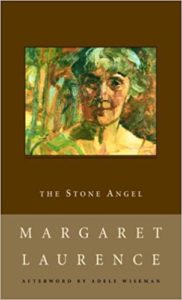
1. The Stone Angel by Margaret Laurence.

I’m tentatively planning to talk about Margaret Laurence’s work again this summer in a Canadian-themed Saturday Seven post, but I had to include her in this list as well. The main character of this book was someone whose choices in life were severely limited due to abuse, poverty, and being born into a society that had pretty limited empathy or help available for women who found themselves in difficult circumstances.

I should warn you that Hagar wasn’t an easy character to like at times. Her harsh life had shaped her into someone who could be abrasive under certain circumstances, but I still saw glimpses of the young, hopeful girl she’d once been no matter how difficult she was to love at the end of her life.

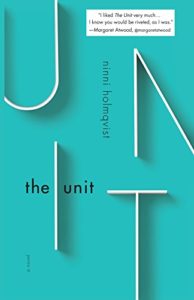
2. The Unit by Ninni Holmqvist.

Fertile women in The Handmaid’s Tale were forced to bear children for powerful infertile couples. Characters in The Unit were forced to donate their organs to strangers even if doing so lead to their immediate deaths. Both groups of people were simultaneously shunned for “sinning” against the impossibly-strict rules of their societies while also being told their suffering was worth it for the greater good of humanity.

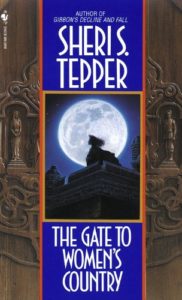
3. The Gate to Women’s Country by Sheri S. Tepper.

If you can only read one book from this list, make it this one. Fertility was controlled in The Gate to Women’s Country just as strictly as it was in The Handmaid’s Tale. The difference between the two lies in how well women are treated otherwise, who raises the children they conceive, and how (un)aware they are of what is really happening to their bodies.

4. The Fire-Dwellers by Margaret Laurence.

I read this so long ago that I’ve forgotten a lot of it. I feel compelled to reread it again soon. What I remember the most about it was the fact that two people could remember the same event so differently. There’s no doubt in my mind that Offred’s account of what happened to her wouldn’t be the same as the men who drafted the laws that made all sorts of human rights violations legal or the wives of the high-ranking members of The Republic of Gilead who ignored the abuse of women like Offred because of how much they stood to gain from the arrangement.

This isn’t to say that any of the supporting characters in The Fire-Dwellers are violent like the ones in The Handmaid’s Tale, only that empathy isn’t a skill everyone develops in life. Such a lack of empathy can show up in both small and profoundly serious ways.

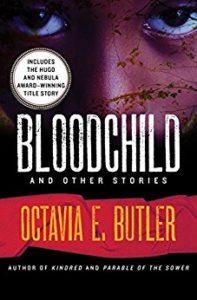
5. Bloodchild and Other Stories by Octavia E. Butler.

Honestly, I could have listed many of Ms. Butler’s books here. The things she had to say about prejudice, how power can be horribly misused, and what happens when one group of people oppresses another over a long period of time fit in beautifully with the themes in The Handmaid’s Tale.

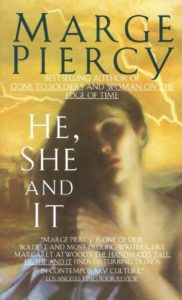
6. He, She, It by Marge Piercy.

This book didn’t arrive from the library in time for me to read it before this post went live, but I’m looking forward to seeing how the main character handles a custody dispute that’s mentioned in the blurb. It reminded me of how Offred pined for her daughter after they were ripped away from each other.

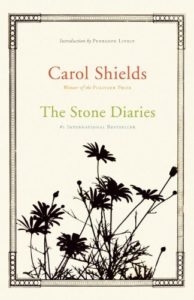
7. The Stone Diaries by Carol Shields.

Once again, this book hasn’t arrived from the library yet. I like the idea of a female character telling stories about her life that are typically the sorts of things someone wouldn’t talk about. While this narrator had a much happier and safer life than Offred did, there were still parts of it she regretted at the end. I think there’s something to be said for talking about those things openly sometimes instead of hiding them.

How many of my readers are fans of The Handmaid’s Tale? Do you enjoy books about social justice in general?

6 Comments

Filed under Blog Hops, Science Fiction and Fantasy

5 Sci-fi and Fantasy Novels About Climate Change That Everyone Should Read

Spring was technically supposed to begin in Ontario almost a month ago, but I don’t think Old Man Winter ever received that memo. The last several weeks have been filled with snow, sleet, cold temperatures, and the annoyed mutterings of millions of Canadians who are beyond ready for a proper spring now.

While we’re waiting for the snow to melt away for good and the sun to eventually peek out from behind the clouds again, I’ve been thinking about how often climate change is talked about in the SFF genre. All of the books I’m about to discuss today show what happens to a civilization (or the lack thereof) long after the weather patterns destabilized and the seasons people thought they could count on became unpredictable.

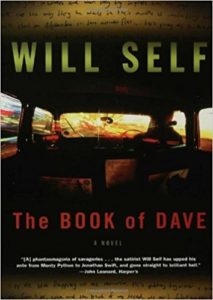
1. The Book of Dave: A Revelation of the Recent Past and the Distant Future by Will Self.

It’s easy to forget what the past was really like when a society has to struggle to survive every day. This is even more true when it comes to documents that aren’t easy to understand to begin with and when the people reading them are only barely literate at all. This tale showed what happened when the journal of an frustrated cab driver was accidentally discovered five hundred years after his death and fashioned into a harsh, new religion.
The satirical elements made me laugh, but it also made me think about how easy it is to misinterpret something that was written a long time ago in a culture that was nothing at all like your own.

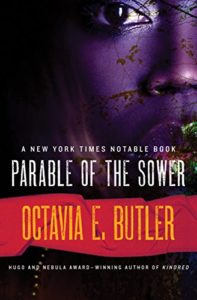
2. Parable of the Sower (Earthseed, #1) by Octavia E. Butler.

I must be honest with you here. Water isn’t something I ever worry about running out of in Ontario. It’s so abundant here that I can’t see us running out of it anytime soon.
Not everywhere on Earth is like this, though. There are places like California that are using water faster than it can be replenished. They’d be in trouble even if the climate in their area wasn’t already becoming drier than it has been before.
The characters in this book had to face the threat of running out of water at the same time their government collapsed, their home was destroyed, and their family was torn apart.
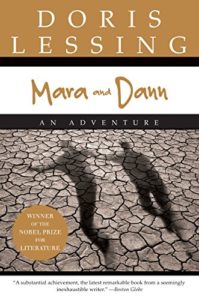
3. Mara and Dann  A Novel by Doris Lessing.
Take the crises of one country in Parable of the Sower and expand them to the experiences of millions of people across an entire dying continent in the distant future.
This was actually the first science fiction book about climate change that I ever remember reading. The fact that it was told through the perspective of an orphaned and often painfully hungry child only made her observances of how climate change can destroy entire civilizations even more poignant. Mara and her brother did nothing to deserve all of the suffering they experienced, and yet that couldn’t save their parents’ lives or fill their stomachs with food when all of the rivers dried up and the crops failed.
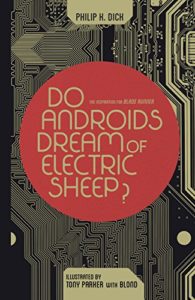
4. Do Androids Dream of Electric Sheep?  by Philip K. Dick.
Climate change has already begun driving far more species to extinction than is typical in our world. How many more species we’ll lose forever depends on many factors, and I can’t even begin to guess what the final tally will be.
The interesting thing about the setting in this book is that it happened after humans have killed off so many other species that we began making robotic versions of various animals to keep us company. There were even robotic people who had no idea they were robots because they looked, felt, and sounded exactly like biological people.
 It wasn’t addressed clearly in the plot from what I can recall, but I always wondered what everyone was eating to stay alive in this universe after all of the old ecosystems had been destroyed.
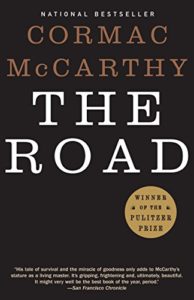
5. The Road by Cormac McCarthy.
Only read this book if you’re comfortable with very dark and disturbing plots. I’m glad I read it once, but I was so saddened and horrified by certain plot twists that I don’t think I could stomach them again.
The Road could be the logical conclusion to any of the books listed above. It was set at a time when there were no plants and animals left on Earth and the few remaining humans were all slowly starving to death. The main character, an unnamed father, must try to keep himself and his young son alive against impossible odds.
What is your favourite science fiction or fantasy novel about climate change?

1 Comment

Filed under Science Fiction and Fantasy