Category Archives: Blog Hops

Saturday Seven: Library Books I’m Reading

Saturday Seven is hosted by Long and Short Reviews.

Based on my mother’s deep love of books, I’m guessing I was a baby the first time she took me to the library. At any rate, I have no memory of life before I knew what a library was or why they’re so special. They always have been and always will be part of my regular routine.

Most of the stories I blog about here are science fiction or fantasy, but I read many more genres than those. Today I thought it would be fun to show you seven of the library books that I’m either currently reading or plan to start reading soon.
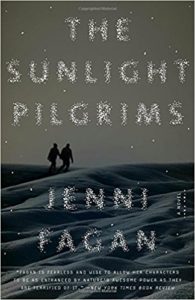
 

1. The Sunlight Pilgrims by Jenni Fagan.

Most of the climate-based post-apocalyptic stories I’ve read over the past decade have assumed the Earth is going to become unbearably hot. This one assumed it would freeze.

I haven’t started this one yet, but I’m curious to see how it will be different from the other post-apocalyptic tales I’ve read.
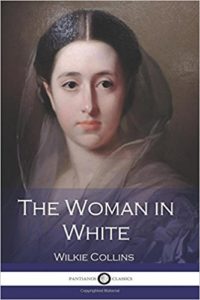
2. The Woman in White by Wilkie Collins.

I honestly know very little about Wilkie Collins as an author or the story of The Woman in White in general. It’s something I requested from the library because I’m slowly working my way through classic novels that appeal to me for the sheer fun of it.

One of the many nice things about being an adult is that you have the freedom to do this. I enjoy the classics so much more now that no one is assigning them to me or making me take quizzes about them.
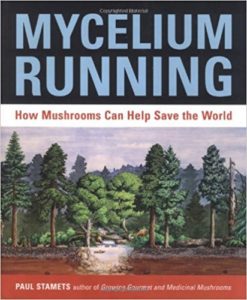
 

3. Mycelium Running: How Mushrooms Can Help Save the World by Paul Stamets.

If you haven’t seen the last few episodes of Star Trek: Discovery, stop reading this section now if you want to avoid all spoilers for it. I won’t go into any unnecessary detail here, but I have to talk about it a little bit in order to explain why someone who has no interest in having her own garden is reading a book about gardening in the chilly depths of February. (LOL!)

One of the guests on After Trek, the after-show for this series, told the fans to read Mycelium Running a few weeks ago. He said that there was something in this book that would give us a clue about what will happen next in this show.  I took his advice, and I can’t wait to see how the science in this book continues to play out on the small screen. The writers are doing an excellent job of mixing the science of mycelium networks into a fictional universe so far.
4. Mass Starvation: The History and Future of Famine by Alex de Waal.

It blows my mind to think that there are still famines happening on Earth in 2018. The historical portion of this book is definitely going to be interesting, but what I’m looking forward to even more is reading this author’s thoughts on how to end famines for good. It’s high time our species did just that.
 

5. Runaway Wives and Rogue Feminists: The Origin of the Women’s Shelter Movement in Canada by Margo Goodhand.

This is a part of Canadian history that I know absolutely nothing about. I’m looking forward to finding out how domestic violence shelters were first invented and who were responsible for all of the hard work that goes into starting something like that up.

Women’s shelters are so underfunded and overcrowded now that I can’t imagine how difficult it must have been to create them in the first place. There is still so much work to be done in this area.
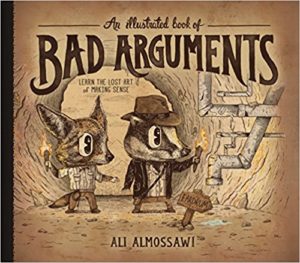
6. An Illustrated Book of Bad Arguments by Ali Almossawi.

I have a silly confession to make. Half of the reason why I requested this from my local library is because I freaking love the cover.

It also seemed like it would be a humorous break from the darker and more serious topics I generally read about.
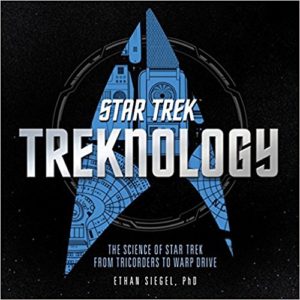
7. Treknology: The Science of Star Trek from Tricorders to Warp Drive by Ethan Siegel.

This is a book that had an exceptionally long waiting list at the library, so I was thrilled when it finally showed up for me a few days ago.

My spouse and I both enjoy Star Trek for different reasons. He likes to try to predict what is going to happen next, while I’m fascinated by all of the science and technology advancements that have been shown on the the various Star Trek series.

When I was a kid, I desperately wanted to order dinner from a Replicator and play in a Holodeck program for an hour or two.  Honestly, I still want to do that stuff! Maybe someday we’ll live in a world where such things are possible.

If you’re a library nerd like me, what books, movies, albums, or other items have you recently borrowed from there?
12 Comments

Filed under Blog Hops, Science Fiction and Fantasy

Suggestion Saturday: February 3, 2018

Here is this week’s list of blog posts, comic strips, short stories, and other links from my favourite corners of the web.
10 Sure-Fire Ways to Cope with Cabin Fever via ‪ShallRef‬. #9 is my favourite.

Feeling Sick and Snotty? I shared something similar from this site about a month ago. This is another funny reminder of how to behave if you catch a cold this winter.

Is Bugs Bunny Bisexual? While I do remember some of these scenes, I now want to rewatch them again with a fresh perspective.

Why Women’s Procreation Choices Are None of Your Business via ‪thebeasley‬. Two weeks from now I’ll be sharing another thought-provoking post from this blogger’s site. In the meantime, I hope you enjoy her detailed explanation of why it’s never okay to scold someone for having  0, 1, 10, or any other number of children.

Seven Science Fiction and Supernatural Books by Early Ontario Writers (Free Downloads). I haven’t read any of these books yet, but they sure sound interesting.

Blanket Sea via BlanketSea. If you’re living with a chronic illness, disability, or mental illness, this link is for you. Blanket Sea is a brand new literary magazine for people with these conditions that I learned about several days ago on Twitter. I’ll be keeping an eye on what they come up with, and I hope you will as well.

From Origin Story:

The last of the fairies worked in a charnel house, taking apart the beasts that came dead under her hands. In her youth, she had been the last and least of three; now she was the only living one, and even fairies must earn their keep.

At night, when the knacker men went home, she made creatures out of meat and bone and scraps of skin. It was an act of creation to balance out the destruction in her days.

From The Fall via ‪ChrisCoombs88‬:

Last week I fell out of a friend’s front door as I left an excellent afternoon of food, board games and socially acceptable levels of lunacy.


Comments Off on Suggestion Saturday: February 3, 2018

Filed under Suggestion Saturday

Saturday Seven: Series That Should Be Turned Into TV Shows

Saturday Seven is hosted by Long and Short Reviews.

A friend of mine is absolutely obsessed with Game of Thrones. I’d guess that at least a third of the conversations we have somehow include a reference to this show. Even though I’ve never actually watched Game of Thrones, I’m beginning to understand a lot of her references to it because of how much she talks about it.

The more she gushes about it, the more I think about all of the series that I’d love to see brought to the small screen. All of them are so full of dazzling details about their worlds that it would take a few seasons of a TV show to even begin to fully explore what they have to offer.


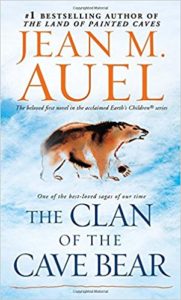
1. The Earths’ Children series by Jean M. Auel. 

This series has it all: adventure; action, mammoths, romance, unsolved mysteries, Neanderthals, and even a stubborn pet wolf that occasionally refuses to do what he’s told.

Ayla, the main character, was a human who was orphaned at the age of five in an earthquake. She was discovered and raised by Neanderthals. The Clan of the Cave Bear told the story of her highly unusual childhood. The sequels showed what happened after she was disowned by the folks who raised her and forced to eke out a living alone while she searched for signs of other humans.

Without giving away any spoilers, I was not happy with how the final book ended due to how many conflicts were still left unresolved in the last scene. If this were made into a TV show, we’d have another chance to resolve those issues for the characters.


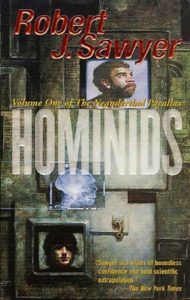
2. The Neanderthal Parallax trilogy Robert J. Sawyer.

If only all of you knew how tempted I was to talk about nothing but Neanderthals today! I love stories about them, and there are a lot of great ones out there. I might just have to blog about them on a future Saturday Seven post.

The unusual thing about this series is that it’s set in the present day. Ponter Boddit, the main character, accidentally pierced the veil between his Earth and our own early on in the plot and ended up accidentally getting transported to our universe. On his alternate version of Earth, humans died out tens of thousands of years ago while Neanderthals like him had become the dominant species.

I can’t tell you anything about the Neanderthals’ version of Earth without giving away major spoilers, but I was fascinated by all of the cultural and physiological differences between them and us. Some of them were things that I never would have thought of as a possible difference between our two species.


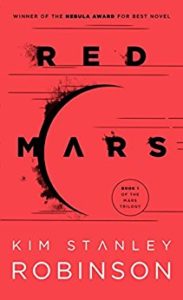
3. The Mars trilogy by Kim Stanley Robinson.

This series immediately came to mind when I saw the film The Martian a few years ago. Colonizing Mars would be an incredibly expensive and difficult endeavour for the first few generations to do it.

Based on how much audiences loved watching Matt Damon’s character figure out how to survive alone on such a harsh planet, I think there would be an audience out there who would like to see Nadia Cherneshevsky and her team struggle to create the first Martian settlement.

Future generations in this trilogy even eventually terraformed Mars into something very Earth-like with lakes, forests, and everything else you’d expect from a habitable planet. How cool would that be to see on the small screen!


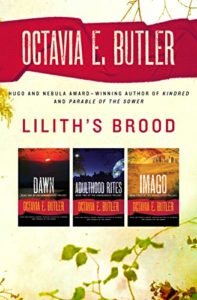
4. The Xenogenesis trilogy by Octavia E. Butler.

This series began with a massive nuclear war that (supposedly) killed every last human on Earth. The main character’s husband and son were among those dead.  When she woke up in an unfamiliar place hundreds of years later, she had no idea why or how she was still alive. It turned out that an alien species called the Oankali had intervened at the last possible moment and saved a small percentage of humanity from certain extinction.

That paragraph alone could provide enough fodder for the first season of a TV show, and that barely scratched the surface of everything that happened in this trilogy. Not only did the main character have to grieve the loss of her family, she had to figure out why the Oankali had saved a small percentage of humanity and what they wanted from us in exchange.


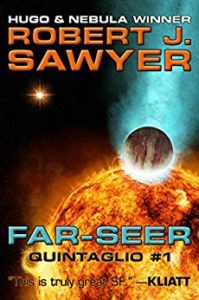
5. The Quintaglio Ascension trilogy by Robert J. Sawyer.

I have five words for you: intelligent dinosaurs who can speak.

Afsan, the main character, was about to go through a rite of passage that would make him an adult in the eyes of his society when this tale began. His species worshipped a heavenly body known as the Face of God. Every Quintaglio (which is their name for their reptilian species) must go on a quest to observe it when they become an adult.

The problem was, Afsan noticed something about the Face of God on his journey that contradicted a major tenant of his religion. He then had to decide whether to reveal this knowledge or keep it to himself.

The world building was extremely well done. Afsan had a deeply reptilian understanding of the world, and it showed in how he responded to all kinds of situations that a human would have a completely different response to. For example, the way his species treats their young is nothing at all like how humans treat their young. He would be as horrified by some of our practices as we would be of his, and that would make for must-watch television in my opinion!


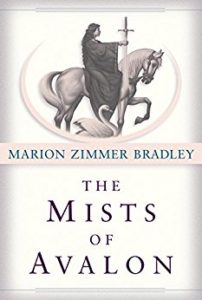
6. The Avalon series by Marion Zimmer Bradley. 

I was never particularly into any Arthurian legends, but I loved this series immediately. The Mists of Avalon retold the legend of King Arthur from the perspective of his sister Morgaine. While The Mists of Avalon was technically made into a mini-series many years ago, the next six books in the series have never received the same treatment as far as I know.

They really fleshed out this world, though, and I think it would be wonderful to finally see the entire story from beginning to end on the small screen. One of them, Ancestors of Avalon, even described how and why Stonehenge was created. Sadly, I’ve forgotten most of the plot of that book, but now I really want to reread it. I am just a little bit obsessed with Stonehenge in general, so it would be really cool to see those scenes come to life.


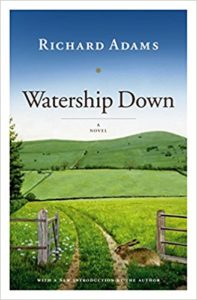
7. The Watership Down series by Richard Adams.

Anyone who has read this blog for a long time and remembers how much I love rabbits won’t be surprised by the final entry on my list at all. I can’t imagine many things more interesting than an entire TV show about a warren of rabbits who are desperately trying to find a new home.

While there were cute and fuzzy moments just like you’d expect from this species, there were also a lot of heart-pounding action scenes. Life is frightening and dangerous for prey species. This is even more true when a large group of rabbits are trying to move to a new home through completely unfamiliar and often dangerous territory. I think this book would make a fantastic TV show because of that.

Have you read any of the books on my list this week? What series do you wish would be turned into a TV show?

14 Comments

Filed under Blog Hops, Science Fiction and Fantasy

Suggestion Saturday: January 27, 2018

Here is this week’s list of comic strips, blog posts, etiquette guides, and other links from my favourite corners of the web.

ASMR: Did You Feel That Sound? via RavenHeart81. If you haven’t heard of ASMR yet, this is a well-rounded introduction to it.

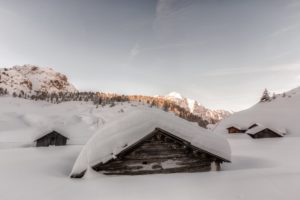
Cold. I adore this. It was the inspiration for the photo in today’s post.

Unwritten Rules of Public Transit Etiquette Written Down. This was one of the funniest things I’ve read in ages. The best part is, it was written about Toronto’s GO train!

7 Things I’m Doing to Be Mindful via nabanita21. Number six on this list was my favourite one.

The Legend of the Stone Snowman. The title gives away many details of what this comic strip is about. The final panel is quite funny, though.

The Psychology of Hunger. If you haven’t heard of The Minnesota Starvation Experiment, this article gives a nice overview of it. I can’t imagine volunteering for an experiment like this, but they did provide critical information about how starvation damages the body and why it’s so important to gradually reintroduce proper amounts of food to someone who has lived this way for a long time.

From A Love Letter to My Female Ancestors via ‪jmichaelantonio‬:

While bravery, fortitude, courage, and integrity are words usually reserved for males throughout history, I use them now to describe you. You are all true heroines to me, not in the comic book or superheroine sense, but in a far better way —in the human sense, with all of your beautiful scars and flaws.

Comments Off on Suggestion Saturday: January 27, 2018

Filed under Suggestion Saturday

Saturday Seven: Cold and Flu Season Reads

Saturday Seven is hosted by Long and Short Reviews.

We’re well into the depths of winter now here in Ontario. Cold and flu season is in full swing. I spent the last several weeks fighting and just recently finally getting over a stubborn cold myself, so communicable winter illnesses like these have been on my mind. How do you stay healthy when everyone is sniffling and coughing their way through January? Will we ever come up with a cure for the flu or the common cold?

Today I thought it would be amusing to talk about books that approach these questions from a wide variety of perspectives. My list begins with one of the most common ways that germs enter a body, explores what happens when an epidemic occurs, and ends with the one of the greatest medical discoveries of all time.

Three of these books are non-fiction, and four of them are fiction.

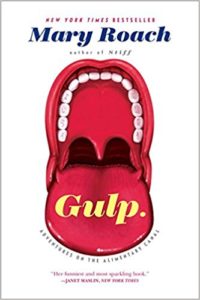
5. Gulp: Adventures on the Alimentary Canal by Mary Roach. 

One of the most common ways to catch a cold, the flu, or other diseases is to touch your face after you’ve touched someone or something that is carrying those germs. That virus then travels from your eyes, nose, or mouth into your body and begins replicating.

While this book spends most of its time talking how the digestive tract works in general, it also discusses the body’s defences against germs and how someone’s diet can affect their chances of getting sick. I was simultaneously fascinated and also a little grossed out by the author’s descriptions of how all of these things work.


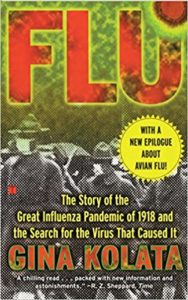
1. Flu: The Story of the Great Influenza Pandemic of 1918 and the Search for the Virus that Caused It by Gina Kolata. 

Imagine how terrifying it must have been for our ancestors to watch their loved ones die from this strain of the flu or from the secondary infections they developed as a result of it. Normally, influenza kills people who are very young, very old, or who have underlying health conditions. It must have been even more frightening to see so many young, healthy adults succumb to it.

Antibiotics and life support machines didn’t exist in 1918, so there was little the hospitals could do in general to help patients who had severe reactions to this virus. People either recovered or they didn’t. All the doctors and nurses could do was watch and wait.

What I enjoyed the most about this book was how much detail it went into why this strain of the flu was so deadly, how it disrupted the daily schedules of the people who encountered it, and why it faded away.

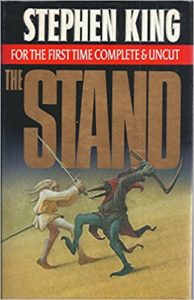
2. The Stand by Stephen King.

The Stand was the first story I ever read about a virulent strain of influenza accidentally being released and killing off 99.4% of all humans. It ignited my interest in this genre.

While the plot soon veered off in other directions, the first few chapters went into great detail about why the U.S. army weaponized this virus to be so deadly in the first place, how it ended up being introduced into the general population, and what happened once people began dying in droves.


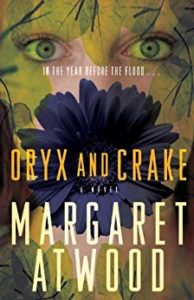
3. Oryx and Crake by Margaret Atwood. 

As regular readers of this blog know, I’m a huge fan of Margaret Atwood’s stories in general. What appeals to me the most about Oryx and Crake is how much time she spent describing what the world would be like after all but a handful of humans died in a terrible pandemic.

Some species flourished after mankind died off either because or in spite of all of the ways we bio-engineered them. Other species weren’t so capable of looking after themselves without a friendly human to feed them and keep them out of mischief. The buildings, trees, and land in general also changed in many ways as the Earth quieted down.

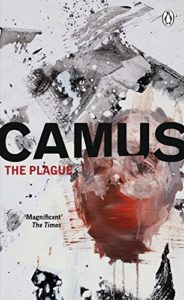
4. The Plague by Albert Camus. 

Don’t read The Plague if you’re easily grossed out by detailed descriptions of disease or what happens to a body after someone dies. The communicable disease that these characters come down with is a particularly nasty one, and there were never enough people around to take care of the ill or bury the dead.

With that being said, there are a lot of poetic passages in this book once you get past the descriptions of what happened when the characters fell ill.

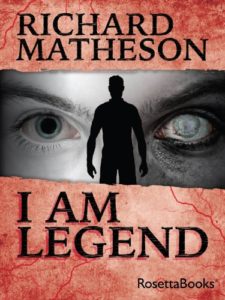
5. I Am Legend by Richard Matheson.

Most post-apocalyptic novels assume that everyone who comes down with the disease that’s destroying humanity will die. This one describes a world in which infected people remain alive but are changed into something that is no longer human. By the time the first scene began, there is only one human left in the entire world.

That’s all I can tell you about the plot without giving away spoilers, but I was fascinated by the idea of a virus that permanently and severely changes someone’s personality, habits, and ability to communicate rather than outright kills them.


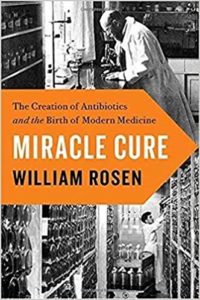
6. Miracle Cure: The Creation of Antibiotics and the Birth of Modern Medicine by William Rosen. 

Finally, we come to the idea of a cure. The introduction of antibiotics changed how modern medicine was practiced in so many positive ways. Surgery became much safer, and with the threat of infection greatly reduced we were eventually able to start performing risky procedures like organ transplants as well.

Before I read this book, I had no idea how dangerous it used to be to give birth, have surgery, or even do something as ordinary as accidentally cutting yourself and then developing an infection in that wound. No one was too young or too healthy to avoid a terrible death if the wrong strain of bacteria entered their body during one of those events. I wonder if a similar drug will ever be invented that cures the common cold or the flu?

My fingers are crossed that we’ll someday have such a thing. In the meantime, stay healthy this winter!

12 Comments

Filed under Blog Hops, Uncategorised

Suggestion Saturday: January 20, 2018

Here is this week’s list of comic strips, poems, and other links from my favourite corners of the web.

Five Good Ideas Science Fiction Teaches Us to Fear via mythcreants. I hope you enjoyed Five Bad Ideas that Science Fiction Teaches Us to Love last week. As promised, here is the follow-up to that post.

Duct Tape 101 via LenieHokansson. A certain sibling of mine is a whiz at anything related to fixing up his house. He’s constantly coming up with weekend projects to make his home even nicer than it already is. I know he reads this blog, and I wonder how many of these tricks he’s tried.

How Mr. Spock Helped a Bi Kid Learn How to Fit In. I loved this story.

Treebound. Maybe this is what really happened to the Ents long after the events of the Lord of the Rings trilogy. At any rate, I prefer it to what happened in the canon.

The Strange Case of the Dented Forehead via ‪StuartRWest‬. I really want a follow-up post to this one that explains whether Stuart really has a dented forehead and, if so, where it came from.

From The Stick Is an Unsung Hero of Human Evolution:

Sticks are probably where the story of craft begins—the point at which our very distant ancestors progressed from animalistic existences to lives materially enhanced by the objects around them.

Comments Off on Suggestion Saturday: January 20, 2018

Filed under Suggestion Saturday

Saturday Seven: Fictional Food and Drinks I Want to Try

Hosted by Long and Short Reviews.

How often do food descriptions in books make you hungry? This is something that happens to me regularly, especially if I happen to be reading a description of a delicious snack or meal right before it’s time to make my own dinner.

While most of my cravings can be satisfied by the same or similar dishes as the ones I’ve read about, some authors describe food and drinks that don’t actually exist in our universe at all. Their imaginations have created all kinds of stuff that I’m dying to taste. If only there were a way for me to really try them!

This is what I’d want to eat and drink first if I had a magic wand and could make imaginary food and drinks appear in our world.

1) Fizzing Whizzbees from J.K. Rowling’s “Harry Potter and the Prisoner of Azkaban.”

A Fizzing Whizzbee is a large sherbet ball that makes people who eat it float a few inches off of the ground.

Ever since I first read the description of this treat, I’ve been desperately wishing that our muggle society had the ability to make such a thing.

While there are non-magical versions of this snack out there, they’re obviously not going to make anyone float. A sherbet ball that doesn’t have that exciting side effect doesn’t sound quite so fun to me.

2) Lembas from J.R.R. Tolkien’s “The Fellowship of the Ring.”

There weren’t many parts of Samwise and Frodo’s perilous journey to Mount Doom that I wished I could have experienced, but eating lembas was a huge exception to this rule.

I love many of the kinds of bread that we humans are able to make, so I can only imagine how much better Elven bread would be. Imagine only needing to eat a few bites of it before you felt satisfied!

Elvish food also appeals to me quite a bit in general. I believe in choosing quality over quantity, and the elves seem to agree with me on this point. All of their feasts always sounded so high quality and delicious in the novels.

3) Tru Blood from Charlaine Harris’ “Dead Until Dark” (Book 1 of the True Blood series).

Tru Blood is a bottled, synthetic blood substitute that ethical vampires drink in this universe.

While I almost certainly wouldn’t be able to stand more than one sip of it, I’d love to know if it’s as unappetizing as certain vampires claim it is. It might taste better to a human.  Either way, I’d want to find this out for myself.

4) Pan-Galactic Gargle Blaster from Douglas Adams’ “The HItchiker’s Guide to the Galaxy.”

I haven’t tasted any alcohol in years, but I’d break that record for a small taste of this volatile and unbelievably strong drink.

The instructions for making it are as creative as they are alarming, so I would definitely stop after that first sip.

5) Ent-Draught from J.R.R. Tolkien’s “The Fellowship of the Ring.”

If only all of you knew how tempted I was to make this entire post about the meals in the Lord of the Rings trilogy!

Ent-draught is made by mixing river water with possibly magical ingredients that only Ents know about. There is one type of ent-draught that refreshes the tree people of this series and other type that nourishes them.

Merry and Pippin, two fully-grown hobbits, were once given this drink. They each grew a few inches taller after that experience, so I’m eager to see if what would happen if a human drank it.

6) Pale Purple Melon from Suzanne Collins’ “The Hunger Games.”

The reference to this melon happened briefly and only once, so I’ll quote the section that mentions it to refresh the memories of everyone who has read this book:

While the table is empty, a long board off to the side has been laid with at least twenty dishes. A young man, an Avox, stands at attention by the spread. When I ask if I can serve myself, he nods assent. I load a plate with eggs, sausages, batter cakes covered in thick orange preserves, slices of pale purple melon. –  The Hunger Games, page 87.

Would pale purple melon taste anything like watermelon, cantaloupe, or muskmelon? I’d like to think it would be every bit as delicious as all three of those fruits. After possibly being grossed out by Tru Blood and Pan-Galactic Gargle Blaster, this would also be a nice change of pace.

7) Wonka’s Everlasting Gobstoppers from Roald Dahl’s “Willy Wonka and the Chocolate Factory.”

I enjoy the real-life version of this candy quite a bit, but I’ve always wondered what it would be like to suck on a gobstopper that truly did last forever.

How about you? What fictional food and drinks do you wish you could try?

8 Comments

Filed under Blog Hops

Suggestion Saturday: January 13, 2018

Here is this week’s list of comic strips, blog posts, and other links from my favourite corners of the web.

Illegal Immigration. This is one of those links that works best if you don’t know anything about it ahead of time. Enjoy!

Five Bad Ideas Science Fiction Teaches Us to Love via mythcreants. Next week I’ll be sharing another link from this blogger about good ideas that science fiction teaches us to hate. In the meantime, go read this post from him. It’s a good one.

Oracle. Who else thinks this would make a great full-length novel?

Still Not Shutting Up via EricaVerrillo‬. I wonder how often this happens on Facebook?

The Problem with Curated Photos on Social Media. What do you all think of this? I have mixed feelings about whether or not I believe it’s actually a problem. So much depends on who you follow online and what kinds of stuff they share. Most of the people I follow post a lot of pictures of their pets, kids, and what they made for dinner. On the other hand, there have been a few times when I wished my life was as exciting as other people’s lives when they post more unusual stuff!

From How to Set Better Mental Work-Life Boundaries via ‪parentsinbiz‬:

The first thing that you need to do is to set better mental boundaries for yourself. But how do you do this? How can you make sure that you set better mental work-life boundaries and get the best of both worlds?

Leave a Comment

Filed under Suggestion Saturday

Saturday Seven: Cold Weather Reads

Saturday Seven is hosted by Long and Short Reviews.

Since this is the first Saturday Seven, I’ll explain it briefly for my readers. It’s a weekly meme for writers, bloggers, and book lovers in general. Every week you pick any book, writer, or author-related topic you’d like and make a list of seven things that fit it. Go click on the link above if you’d like to learn more about this meme or if you want to read the contributions from other bloggers.

I talk about science fiction and fantasy quite a bit here, so many of my future Saturday Seven posts will probably be related to those genres somehow. If hashtags were a thing in blogs, I’d end this paragraph with #YouHaveBeenWarned. Ha!

It’s been bone-chillingly cold here in Toronto over the past few weeks. Temperatures like -25 C (-13 F for you Americans) have often been our daytime high when you factor in the windchill. We’ve had multiple extreme weather alerts, and our city government has opened extra warming shelters to keep everyone who is living on the streets alive through this cold snap.

I feel very grateful, indeed, to have a warm, safe place to live. While we’re waiting for the weather to warm up a few dozen degrees, I’ve been thinking about books that are best read when it’s far too cold to go outside for non-essential reasons.

1. The Lion, The Witch, and the Wardrobe by C.S. Lewis.

As freezing as Ontario is at the moment, at least we know that our winter weather generally ends by April. The citizens of Narnia had no such guarantee!

2. The Valley of Horses by Jean M. Auel.

While this is the second instalment in the Earth’s Children series, they can all be read as standalone works. This tale follows the adventures of a teenage girl named Ayla who attempts to survive in a harsh Palaeolithic landscape on her own for years on end. I wasn’t even allowed to ride my bike past a certain point in our neighbourhood when I was her age, so I’m always fascinated by how someone so young survived all of the challenges that came her way.

3. The Good Earth by Pearl S. Buck.

Wang Lung and his wife struggled so hard to survive. I always enjoy reading about how closely their well-being was tied to what the climate was like and how their crops did in any particular year.

4. Jane Eyre by Charlotte Brontë.

The chapters that dealt with Jane’s years as a student and teacher at Lowood School are an especially good read on chilly days. Even something as simple as a cup of hot tea and a piece of fruit feels like a luxury when you’re in that section of the storyline.

5. Robert Frost’s Poems by Robert Frost.

“Stopping by Woods on a Snowy Evening,” “Mending the Wall,” and of course the classic “The Road Not Taken” are a few of the best poems to read from him on days like today.

6. The Secret Garden by Frances Hodgson Burnett.

While I’m not a huge fan of gardening in real life, I did enjoy the descriptions of how Mary and Colin coaxed the abandoned garden back to life in this story after winter passed. They made it sound like such a magical process.

7. The Long Winter by Laura Ingalls Wilder.

This was my least-favourite Little House book the first time I read that series. I couldn’t imagine how Laura Ingalls and her family would survive such a long, snowy, and bitterly cold winter while they were also running out of food. My subsequent readings of it were much more enjoyable, although I still always wince when I reach the scene where Almanzo risks his life to leave town and buy wheat to keep everyone alive until spring.

What are your favourite cold weather reads? I don’t host comments on this blog, but I’d love to discuss it with you on Twitter.

Comments Off on Saturday Seven: Cold Weather Reads

Filed under Blog Hops

Suggestion Saturday: January 6, 2018

Here is this week’s list of blog posts, comic strips, short stories, and other links from my favourite corners of the web.
Victorian Advice for a Dry January via MimiMatthewsEsq. I was fascinated by how much the Victorians knew about the dangers of drinking too much alcohol. I’ve always kind of assumed that their resistance to it had been for moral, not medical, reasons.

Healthy vs. Sick Goals. From what I’ve read, this flu season is worse than usual because the dominant strain of the flu is a nasty one and the vaccination is much less effective than usual. Stay healthy, readers! If you do become sick, this comic strip might help you crack a smile.

Perfectionism: The Art of Getting Stuck via ‪thinkspin‬. This blogger had some very interesting thoughts about ADHD, perfectionism, and how we should actually be speaking to ourself.

City Squirrels Prefer Organic Peanut Butter via laura_perras. I’m sharing this with you for one simple reason: it made me laugh.

Romanticizing the Hunter-Gatherer. Confession: I’ve been guilty of this for years. There is something appealing to me about living in a world where you get to spend all of your time with your loved ones working as a team to survive. I’m lucky enough to have a spouse, parents, siblings, a sister-in-law, and niblings (which I recently learned is the gender-neutral term for nieces and nephews) who are all a joy to spend time with.

How One Couple Saved Their Marriage By Asking Each Other a Simple Question. Click-bait headline aside, this article was fabulous.

From Two Years Dead:

When I opened up my OKCupid profile, I was already two years dead.

Comments Off on Suggestion Saturday: January 6, 2018

Filed under Suggestion Saturday