Click here to read everyone else’s replies to this week’s question and here to see the full list of topics for the year.
This week’s Wednesday Weekly Blogging Challenge theme complements yesterday’s Top Ten Tuesday theme beautifully. I love it when the two blog hops I participate in overlap like that.
Those of you who stopped by yesterday will remember how I do not seek out meet-and-greets with authors because I’m not into celebrity culture.
Meeting characters, though? Yes!
Here are some characters from books and shows I’ve recently enjoyed that I’d like to meet:
Erica Ortegas from Star Trek: Strange New Worlds. I love her sense of humour and how quickly she thinks on her feet in a crisis. She’s had some interesting storylines regarding her mental health, too, after she was seriously wounded on a mission. If only the writers would give her some happiness in the future, too, whether it’s in the form of her getting a longterm girlfriend, spending time with family, or something else that’s equally wholesome.
Joseph M’Benga, also from Strange New Worlds. He has a tragic backstory that I keep hoping the show will go back to with some sort of resolution arc. I also enjoy seeing how methodically he works in the sick bay, especially when an episode includes multiple people getting sick or injured in the same time period. He’s a kind and dedicated doctor. It would be nice to see him and Erica in the same room more often, too, as they’re generally working in opposite areas of their ship.
Click here to read everyone else’s replies to this week’s question and here to see the full list of topics for the year.
There are many reasons why I might stop watching a series, including:
– A hopeless storyline. I enjoyed the first few seasons of The Walking Dead, for example, but then lost interest because the characters could never gain a foothold and improve their lives. They always slid back into misery, and I really struggle to stay interested in shows that do that repeatedly.
– Prejudice that is portrayed in a positive light. That is to say I don’t watch shows or read books that encourage sexism, racism, ableism, classism, homophobia, etc. (This has thankfully become much less common now than it was in some older programs!) It’s fine if a show explores these topics, of course, and for some historical stuff it can’t be avoided easily or at all depending on which story is being told. Just don’t make hatred look normal or admirable.
– A plot that is stretched out over too many seasons. I’d rather see things end prematurely than be dragged out longer than is necessary. (See also: The Handmaid’s Tale. It should have ended after a season or two, to be honest).
– If it includes anything related to spies, the criminal justice system,* war, the military, or the police. I have extremely limited interest in these subjects at best, so a show really has to impress me to get to watch them if they include these themes. Brooklyn Nine Nine was one of my rare exceptions to this rule.
– Bad or minimal character development. I need to feel emotionally connected with at least one character in order to want to keep watching something, and this is difficult to make happen if nobody has any depth to their personality or backstory.
*Also, why did my autocorrect try to turn the criminal justice system into Cthulhu? 😂
My criteria for books is honestly mostly the same as what I wrote above. If you keep the pacing even, don’t make things too dreary, and allow your characters to be well-rounded people instead of walking stereotypes, I’m open to just about any genre even if I do prefer speculative fiction in general.
Click here to read everyone else’s replies to this week’s question and here to see the full list of topics for the year.
Oh, this is an easy one: Sesame Street.
My grandparents’ live out in the countryside. They used an antenna on their old TV to get a few basic channel back in the day and probably still do.
Depending on what age I was and where we lived, my parents either didn’t have a TV at all or did the same thing as far as not paying for cable goes for most of my childhood. We generally didn’t get to see much current stuff unless they were on PBS or other public channels. It was a lot of news, Jeopardy, and reruns of older movies or shows instead.
Luckily, Sesame Street was available when I was in the right age groups to watch it.
(The Internet was not even something on our radars back then, and what did exist of it back in those days was nothing at all like what we have today).
I have fond memories of the songs and skits they included on that show. See also: “Sunny days, chasing the clouds away.”
My favourite scenes were the ones that showed other children running around and playing outside on playgrounds or other fun places. I also enjoyed how grumpy Oscar the Grouch was and wished I could climb into his trash can and find out why he liked it so much.
Click here to read everyone else’s replies to this week’s question and here to see the full list of topics for the year.
I generally do not binge-watch shows due to my spouse’s preference for programs that involve war, pandemics, alternate history (and not the cheerful sort that imagines a better world), various sorts of apocalypses, fascist governments, etc.
Many of these shows have great storytelling…but they are also heavy. Characters die or get hurt regularly, so after one episode I’m ready to turn off the TV and go do something peaceful.
Here are a few shows that I have been able to binge-watch in the past in large part because they are either sitcoms or have enough humour in them to balance out any scary or sad scenes in them. I’m trying very hard not to repeat any answers here that I shared in a recent WWBC post about shows we’re currently watching:
The links above will take you to their respective Wikipedia articles. While I don’t have very niche tastes, I didn’t want to make assumptions about which shows my readers might or might not already be familiar with.
Click here to read everyone else’s replies to this week’s question and to read everyone else’s replies to this week’s question and here to see the full list of topics for the year.
This will be a longer list, but most of the books on it are older. I have not had as much luck seeing more recent favourites on the small screen or the big screen, but I hope that will change now that the writer’s strike has been over for a while.
Click here to read everyone else’s replies to this week’s question and to read everyone else’s replies to this week’s question and here to see the full list of topics for the year.
I have cut way back on watching TV these past several years.
When I do sit down to watch a tv show these days, I have a strong preference for lighthearted programs that do not remind me of any of the difficult stuff going on in the world or in life in general at the moment.
So what do I like to watch?
Young Sheldon. This was a prequel to The Big Bang Theory that I’m slowly catching up on. It shows what Sheldon was like as a preteen and teenager and why he behaved the way he did as an adult. I appreciate the kindness Sheldon often experiences in this show as well as all of the references to life in a small town in the 1990s.
Star Trek: Strange New Worlds. It feels like classic, episodic Star Trek to me with the characters visiting a new planet or meeting a different species of alien every week. It’s nice to see problems resolved in this universe so cleanly in most cases.
The Orville. This was originally written as a friendly parody of Star Trek, but it’s become something that honestly feels a lot more like a Star Trek show than, say, Discovery. (Which was not a bad show or anything! It simply didn’t have the time for the lightheartedness or unbridled hope for the future that I prefer in this universe). I love the optimism and humour in The Orville and am thrilled it will have another season coming out at some point.
The Simpsons. Yes, I know this show is an older one, but I’ve started slowly watching beginning from season 1 which came out many years before I was old enough for such programs. I think I’m on season 2 or 3 now, but I enjoy the silliness of it all and how, no matter what happens in an episode, just about everything will go back to the way it was by the time the next episode rolls around. The writers have “predicted “ some things in their plots that actually came true, too!
The Last of Us. This is one of the few exceptions to my preference for lighthearted, fluffy shows because it’s so far removed from any of the scary stuff happening in our world right now that I can generally watch it without being reminded of what I watch tv to try to forget. I liked the explanation of how cordyceps takes over the human body in the first season, and I’m hoping the characters will find a cure for it by the time the last episode airs. That would be such a refreshing ending for the zombie genre.
Click here to read everyone else’s replies to this week’s question and to read everyone else’s replies to this week’s question and here to see the full list of topics for the year.
Sometimes antagonists are more interesting than protagonists. I suspect it’s because, at least for some writers, villains have more freedom to say and do whatever they wish than characters who are supposed to set a good example for everyone.
Here are some villains that I liked better than the protagonists I was supposed to be rooting for in these stories and why I enjoyed them so much.
He was a creative, emotionally intelligent, and hilarious bad guy. I also enjoyed seeing his character development over the seasons as he slowly learned how to be a slightly better vampire than he’d been before thanks to the time he spent with humans he liked among other reasons.
Gollum/Smeagol from J.R.R. Tolkien’s The Hobbit and The Lord of the Rings novels
As critical as it was for his gold ring to eventually end up in other hands for plot reasons, I felt terrible for Gollum when he was separated from his Precious. He’d lost everything else important to him in life, and the magical effects of the ring had warped his mind and body beyond repair over the many years he spent with it. The poor guy.
Wile E. Coyote from the 1950s children’s cartoon Looney Tunes
I never wanted the roadrunner to be eaten, but I did wish that Wile E. could catch him just once!
Think about it. The Blair Witch went off deep into the woods to live alone and would have been perfectly content to not have any contact with the outside world at all until the protagonists of this film decided to invade her territory and steal her possessions. This happened after the main characters had been warned by local townspeople to stay out of the woods, so it’s not like they were unaware they were wandering into danger.
While I certainly didn’t want anyone to get hurt, everyone would have been better off if this camping trip never happened. There was never any need for the Blair Witch’s privacy to be invaded, and I would have been annoyed, too, if I were in her shoes!
Click here to read everyone else’s replies to this week’s question and here to see the full list of topics for the year.
I watch many excellent science fiction series, so this answer was a little surprising. A nonfiction miniseries won out over the the many works of fiction I could have selected instead!
Dogs is a Netflix miniseries that released its second season in 2021. Each episode follows the lives of different dogs as they provide companionship, work alongside their humans, or do extraordinary things.
Leland Devon Melvin is the name of the astronaut in the photo accompanying this post. His loving relationship with his two dogs was explored in-depth in one of the season two episodes as they prepared for a long and difficult hike, and it brought a tear to my eye.
It’s incredible to see just how much joy and meaning dogs bring to people’s lives. The rest of the stories in this series were also interesting for a wide variety of reasons, from the journey of a young girl who has severe epilepsy and was getting her first service dog to the tireless work of animal rescue groups who save countless lives and so much more.
This is one of those wholesome series that I think should appeal to a wide audience. There’s something for everyone in it no matter how old or young you are.
Click here to read everyone else’s replies to this week’s question and here to see the full list of topics for the year.
Watching TV is one of my spouse’s favourite things to do. Over the years, I’ve cultivated the ability to (accidentally) look away from the screen at the exact moment that something important happens that is not noted in the dialogue.
I can’t tell you how many times my spouse has needed to rewind thirty seconds so I can see a mysterious shadowy figure in the background or the note written on a sheet of paper the main character is holding that are important clues for future plot twists.
If there were any way to earn a living from this ability, I’d be a millionaire at bare minimum!
Earlier this year I learned that May is Expanded Science Fiction and Fantasy Month. This challenge is a simple one. Pick any science fiction or fantasy universe and read or watch stories that were set in it but that were not part of the original canon.
To give one example, you could read Star Trek novels that were written as continuations of that universe after The Original Series first aired.
My brain hasn’t been amenable to reading serious, full-length novels recently due to some concerns I’ve had about a friend who has Covid-19, so my first post in response to this challenge will be lighthearted and a little off the beaten path. My hope is to revisit this challenge later on this month with a response that follows the rules more closely.
There are are no spoilers in these videos unless you’re 30+ years behind on Star Trek: The Next Generation episodes and determined not to know anything about what was written about that universe in the 1980s and 1990s.
For everyone else, they’re simply good, clean fun for anyone who is looking for a pick-me-up during these trying times.
If you’ve never seen Gangham Style, I recommend watching it first. This Trekkie parody of it never fails to make me smile in large part because actual Klingons would be horrified by the frivolity and silliness of it all.
If you enjoy Frozen and Star Trek: The Next Generation, this might be right up your alley. I can oddly see Captain Picard enjoying this tune so long as no one was paying too much attention to his reaction to it. It was a short, cheerful tune that used his favourite catch phrase, after all. What’s not to like about that?
Fans of Megan Trainor’s “All About That Bass,” keep reading.
The Borg would have no use for this song, but I find it amusing. They’re by far the scariest villains in the Star Trek universe to me, so it’s nice to see them on screen without any chance of them assimilating anyone.
(Why do I keep figuring out if Star Trek characters would enjoy the songs about them? I have no idea!)
The Orville
I saved my best recommendation for last.
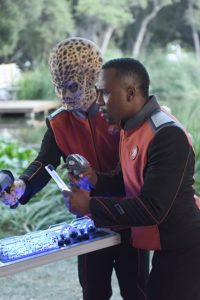
Everything else on this list was a short music video. The Orville is a TV show that lovingly parodies Star Trek: The Original Series and Star Trek: The Next Generation.
No, it isn’t set in the Star Trek universe, but it’s easy to forget that since it was written by folks who were clearly well-versed in what the storytelling was like at this point in Star Trek history and who were fans of it.
Just like the shows it gently pokes fun at, The Orville follows an ensemble cast of characters who live and work on an exploratory vessel several hundred years in the future. The diverse crew includes officers from a wide array of planets and cultures who work in close quarters a long ways from home.
While I understand the need for recent Star Trek series and films to take darker turns in order to attract new audiences and keep up with the times, one of the things I enjoy the most about The Orville is how optimistic it is.
Life isn’t perfect there by any means, but you can generally count on things to work out well for the characters no matter what problems they face. There is a sense of hope and joy in this universe that permeates almost everything.
Sometimes these near-mandatory happy endings are included in the parody aspects of the plot, but it’s always done with good intentions. There is something comforting about this that makes me look forward to the third season even more earnestly now.
If you’re participating in the challenge, I look forward to reading about which stories or videos you’ve selected for it!

 Erica Ortegas from Star Trek: Strange New Worlds. I love her sense of humour and how quickly she thinks on her feet in a crisis. She’s had some interesting storylines regarding her mental health, too, after she was seriously wounded on a mission. If only the writers would give her some happiness in the future, too, whether it’s in the form of her getting a longterm girlfriend, spending time with family, or something else that’s equally wholesome.
 There are many reasons why I might stop watching a series, including:
 Oh, this is an easy one: Sesame Street.
 I generally do not binge-watch shows due to my spouse’s preference for programs that involve war, pandemics, alternate history (and not the cheerful sort that imagines a better world), various sorts of apocalypses, fascist governments, etc.
 This will be a longer list, but most of the books on it are older. I have not had as much luck seeing more recent favourites on the small screen or the big screen, but I hope that will change now that the writer’s strike has been over for a while.
 I have cut way back on watching TV these past several years.
 Sometimes antagonists are more interesting than protagonists. I suspect it’s because, at least for some writers, villains have more freedom to say and do whatever they wish than characters who are supposed to set a good example for everyone.
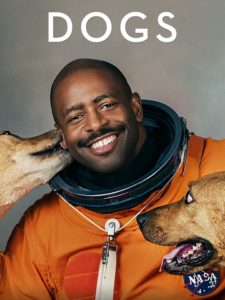 I watch many excellent science fiction series, so this answer was a little surprising. A nonfiction miniseries won out over the the many works of fiction I could have selected instead!
 Watching TV is one of my spouse’s favourite things to do. Over the years, I’ve cultivated the ability to (accidentally) look away from the screen at the exact moment that something important happens that is not noted in the dialogue.
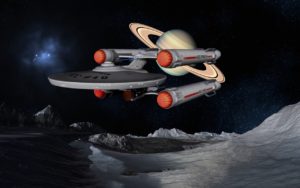 Earlier this year I learned that May is Expanded Science Fiction and Fantasy Month. This challenge is a simple one. Pick any science fiction or fantasy universe and read or watch stories that were set in it but that were not part of the original canon.
 No, it isn’t set in the Star Trek universe, but it’s easy to forget that since it was written by folks who were clearly well-versed in what the storytelling was like at this point in Star Trek history and who were fans of it.