
Tag Archives: Science Fiction

Wednesday Weekly Blogging Challenge: Fictional Things I’m Glad Are NOT Real

Hosted by Long and Short Reviews.

Click here to read everyone else’s replies to this week’s question and here to see the full list of topics for the year.

This is once again going to be a science fiction, horror, and fantasy heavy list due to how much I’ve read in those genres.

1. Vampires

Stylized drawing of a Chinese dragon that doesn’t have limbs. It’s long, snake-like body curls around itself as it flicks out its tongue and looks annoyed. 2. Zombies

3. The Borg

4. Panem (The country set in North America in the Hunger Games series that forced children to fight for their lives in epic televised battles)

5. Being the Chosen One ™. Honestly, that sounds exhausting.

6. Aliens who show up on Earth ready to fight.

7. Having a One True Love ™. Falling in love can be an excellent thing, but the pressure of believing there’s only one person out there for you and you’d better not mess things up was intense when I was single.

8. Epic adventures. This, too, sounds exhausting. Let someone else go save the world while I hunker down for the rest of the winter.


14 Comments

Filed under Blog Hops

Top Ten Tuesday: Fictional Things I Wish Were Real


Hosted by That Artsy Reader Girl

This list is going to be heavily influenced by Star Trek and other science fiction themes. Be prepared.

I wish these fictional things were real:

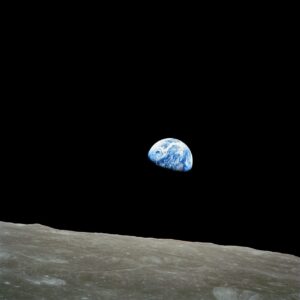
A photo of Earth taken from the moon. Earth is partially hidden in shadow and looks small against an endlessly inky black sky. The moon’s surface is a monotone of grey and light brown. 1) Successful Human Settlements

For example, groups of people living well on other planets or on the moons of other planets. I think our longterm chances of surviving as a species would be much higher if we had the technology to spread out in the galaxy or universe.

2) Replicators.

Imagine if we could have all of the food, medicine, medical equipments, and other necessary things for life available at the press of a button. So much human suffering could be eliminated. (I’ve already talked about the wonders of a Star Trek medical bay in a previous WWBC post, or I would have included it here as well).

3) Equality for All

My favourite types of science fiction to read and to watch are the ones that show humans solving problems that have nothing at all do with any form of prejudice based on ethnicity, race, sex, gender identity,  sexual orientation, religion, disability, etc. because such a thing doesn’t really exist in their society anymore. If only they went into more detail about how that happened, because I’d love to see us figure it out in the current era.

4) Warp Drives

We’ll need them to travel to other solar systems!

5) Magic

I wish I really could flick a wand or perform a spell to fix many major problems.

6) Dragons

Is this at all practical? No. Do I still want them to exist in remote places on Earth where humans will hopefully leave them in peace anyway? Yes.

7) Bigfoot

See also: #6.

8) Justice

Even the worst antagonists in books are virtually always overcome eventually. In real life, not so much…but I still wish it could happen. I want peace for everyone.

12 Comments

Filed under Blog Hops, Personal Life

A Review of Medium Error

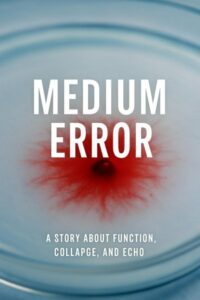
Book cover for Medium Error by Eyal Avissar. Image on cover shows something red growing in a Petri dish. The centre is dark red and there are red tendrils spreading out in every direction. It feels ominous. Title: Medium Error

Author: Eyal Avissar

Publisher: Self-Published

Publication Date: July 12, 2025

Genres: Science Fiction

Length: About 24 pages

Source: I  received a free copy from the author.

Rating: 3 Stars

Blurb:

Medium Error is a haunting, lyrical descent into miscommunication between systems. A vessel from a post-human swarm is sent to infiltrate a worldform called HUM — Earth, or something like it. Its mission is seamless passage. But the host does not yield. It watches. It reflects. It responds.

Told in fragments, logs, classroom echoes, and philosophical fever dreams, Medium Error explores what happens when doctrine meets deviation — and when the medium pushes back. From collapsing swarm intelligences to substitute teachers and strange student diagrams, this story unfolds across both alien systems and the mundane brilliance of human learning.

Perfect for fans of Ted Chiang, Jeff VanderMeer, and readers who like their science fiction strange, recursive, and full of resonance.

Content Warning: A pandemic of sorts.

Review:

Anything is possible with the right preparations.

Xenofiction is one of my favourite subgenres of science fiction because of how interesting it is to explore conflict from non-human perspectives. The swarm in this tale was intelligent but obviously thought about things quite differently than a human would describe those same moments. While I don’t want to give away spoilers by sharing exactly what the swarm was or what their goal was when they discovered what they referred to as Worldform G44.21-HUM and what we’d call Earth, I can say that it was entertaining to read their logs and try to piece together what those first encounters were like from the human perspective.

I did find myself wishing for more clarification about what happened in the final scene. There were some tantalizing hints that not everything was going to plan, but they never quite gelled together for this reader. While I do have a theory about where things were headed and thought it was an interesting twist on the typical alien invasion story, the ending would have been stronger if a little more time was spent either confirming what I thought was going on or gently nudging the audience in the correct direction if my assumption turned out not to be the correct one.

There was an interesting perspective shift about halfway through that began to include what the human characters were up to as the invasion began. This was a good way to help explain some of the stuff that earlier sections were vague about, and I enjoyed exploring those moments from multiple points of view as I pondered over what I already knew about the aliens and what I thought they might do next. Yes, I know that I’m being vague in my review, but this truly is one of those things that are best left up to new readers to muddle over for themselves.

Medium Error was an intriguing introduction to this author’s work, and I hope to read more of it soon. 

2 Comments

Filed under Science Fiction and Fantasy

A Review of What Do We Afford

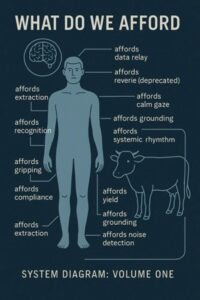
Book cover for What Do We Afford by Eyal Avissar. Image on cover is possibly AI-generated and shows a nondescript blue drawing of a male human body with various parts of it labelled. There is also a sketch of a cow behind the human. The text reads: “system diagram - Volume 1” and then has the following words and phrases written clockwise around figures: Afford data relay, Affords reverie, (deprecated), Affords calm gaze, Affords systematic rhymthm (which seems to be purposefully misspelled), Affords yield, Affords grounding, Affords noise detection, Affords extraction, Affords compliance, Affords gripping, Affords recognition, and Affords extraction. Title: What Do We Afford

Author: Eyal Avissar

Publisher: Self-Published

Publication Date: June 22, 2025

Genres: Science Fiction

Length: about 42 pages

Source: I receive a free copy from the author.

Rating: 4 Stars

Blurb:

What do we afford—and what affords us? A button invites a press. A screen beckons a swipe. A silence, a gaze, a gesture—they all offer something. But what happens when the tools begin to want? When systems record our rhythms, adapt to our emotions, and wait for our hands like patient familiars? What Do We Afford is a speculative field manual of human and nonhuman use—told through eerie reports, dreamlike system logs, and the quiet mutiny of the everyday. A subway drips with spores that remember longing. A phone glows warm with affection training. A dog learns to speak regret. A therapist becomes a corridor. Written in fragments, forums, and false diagnostics, this book asks not only what we do with objects—but what they do with us. For readers of speculative fiction, poetic systems theory, and those who have ever wondered if the smart device on their nightstand dreams of being needed.

Content Warning:

Review:

Everything can be catalogued and understood under the right circumstances.

Figuring out who or what the narrator was made it impossible for me to stop reading this piece. While it didn’t otherwise come across as a mystery, this element of the plot certainly wasn’t easy to puzzle out due to the limited number of clues that were provided and how uninterested that individual was in explaining anything that it didn’t already understand. Other readers should come to their own conclusions about what the answer is to this riddle, but I certainly had a wonderful time organizing my own thoughts about it and testing my theories as new information was revealed.

There were times when I struggled to understand what the narrator was saying due to the differences between them and humans and other living beings. Their thought processes rarely if ever overlapped with how a person would explain the same event even when they were attempting to put things into terms that our species would understand.  This was true even for something as simple as a cow deciding where to graze next or a small child trying to figure out how to get someone’s attention so she could have a snack, so the more complicated stuff sometimes made me frown and reread a passage.

With that being said, I must commend Mr. Avissar for writing a main character that was this unique. Had I encountered this tale under other circumstances and been told it was written by a sentient robot, alien, or other intelligent being that shared no human presuppositions about anything, I might have believed it to be the case. That speaks to how creative this piece was as well as how much effort the author put into imagining something that is all but completely outside of human understanding.

What Do We Afford would make an amazing film.

2 Comments

Filed under Science Fiction and Fantasy

A Review of Sunset

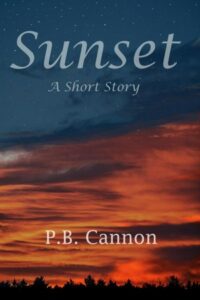
Title:SunsetBook cover for Sunset by P.B. Cannon. Image on cover shows a gorgeous orange and yellow sunset in the sky overhead a distant pine forest on an overcast day. The light appears to be dancing in the clouds almost because of how it gently touches everything.

Author: P.B. Cannon

Publisher: Self-Published

Publication Date: September 3, 2022

Genres: Science Fiction, Mystery

Length: 25 pages

Source: I received a free copy from the author.

Rating: 3 Stars

Blurb:

Charlotte, North Carolina, is an area where earthquakes are uncommon, but one bright morning it is struck by one so vigorous that it forms deep crevasses in the ground, knocks out communications, and leaves the city in disarray. Can a bodyguard and the bodyguard’s two clients who were about to board a private plane along with a tag-a-long passenger, get to the bottom of why their trip to Columbia, South Carolina has been so disastrously interrupted? They don’t know, but having no choice because all air traffic has stalled, along with the three employees from the small airport that was handling their flight, they begin a journey to find out.

Content Warning: An earthquake.

Review:

Airports are no place for any funny business.

Some of my favorite scenes were the ones that explored the relationships between the main characters and how their experiences with the world differed from how many men see it. Science fiction hasn’t always done a good job at writing female characters or delving into the nuances of what it means to be part of a minority group, but this is thankfully changing with newer generations of authors in this genre who have the life experience and compassion to write such things.

I struggled with the abrupt ending of this short story. While some of the conflicts were resolved, other ones were still left up in the air by the time the final sentence was completed. I’m not the sort of reader who requires everything to be wrapped up neatly, but I did find myself wishing more had been explained in that final scene so that I could better understand what the characters might encounter next. There was still so much that could have been done with it.

The explanation for the earthquake was strong and memorable. Even though I can’t go into a lot of detail about it for plot twist reasons, the scientific principles behind it intrigued me and made me want to learn more about the subject. Other readers who have stronger backgrounds in science can share their own thoughts about how realistic it is, but I thought it was well done and possibly could be something that happens in real life. (Oh, if only I could write more about this topic in this paragraph!)

Sunset kept me guessing.

2 Comments

Filed under Science Fiction and Fantasy

A Review of Horsefly

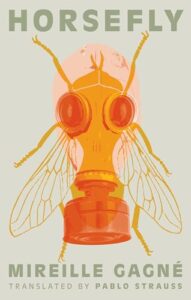
Book cover for Horsefly by Mireille Gagné. Image on cover is a yellow and red drawing of a large horsefly whose body also looks like a gas mask depending on how you look at it. Title: Horsefly

Author: Mireille Gagné

Publisher: Coach House Books

Publication Date: May 20, 2025

Genres: Horror, Science Fiction, Contemporary, Historical

Length: 171 pages

Source: I borrowed it from the library.

Rating: 4 Stars

Blurb:

A terrifying tale about the ways in which we try to dominate nature, and how nature will, inevitably, wreak retribution upon us.

In 1942, a young entomologist, Thomas, is sent to a remote island to work on biological weapons for the Allied military. The scientists live like prisoners while they look for the perfect carrier for anthrax among the island’s many insects.

In 2024, in the same region of Quebec, a heat wave unleashes swarms of horseflies while humans fall prey to strange flights of rage. Theodore is living a simple life, working double shifts and drinking to forget, when a horsefly bite stirs him from his apathy and he impulsively kidnaps from the nursing home his grandfather Emeril, whose dementia has him living in the past during the Grosse Ile biological weapons experiments.

The horsefly, meanwhile, knows a few secrets…

Content Warning: Horseflies, brief references to the damage these bugs do to a body when they bite you, an insect-born pandemic, and dementia.

Review:

Anger is only the first step.

Poetic is just about the last word I’d associate with horseflies, so it was a wonderful surprise to discover just how beautifully the horsefly in this story described their life. Kudos to the author for writing these scenes so descriptively and smoothly. I genuinely felt as if I were exploring the world through the perspective of a creature that, while highly intelligent and certainly not what a real horsefly would sound like if they could talk, also experienced life in a radically different way than how a human would describe those same events. This sort of storytelling takes talent, and it makes me want to read everything else Ms. Gagné has written or will write in the future.

It would have been helpful to have more action scenes. So much time was spent talking about the characters’ thoughts and feelings that I sometimes grew a little restless as I was reading. There was plenty of space to explore topics like what else the government did in response to this project once they realized it had some horrifying side effects or how the sickness that caused uncontrollable rage was affecting human society. Even a little more attention to such things would have made it easy for me to choose a five star rating.

Don’t let the horror tag scare you off if this isn’t a genre you typically read. The frights in this story were real but mostly happened off-screen or developed slowly in my imagination as I pieced together what happened on that remote island to make horseflies suddenly so dangerous. I thought that was a refreshing way to approach topics like pandemics and how messing around too much with the natural world can go terribly wrong. Many storytellers write these these tales from the perspectives of innocent people who suddenly must confront something they don’t understand instead of sharing the origins of these diseases from the perspectives of the people  and the horseflies who created it or helped to spread it. When combined with the smooth writing style I complimented earlier, this made for a creative reading experience.

Horsefly was a thoughtful and deliciously scary piece of xenofiction.

Leave a Comment

Filed under Science Fiction and Fantasy

A Review of The Core Directive

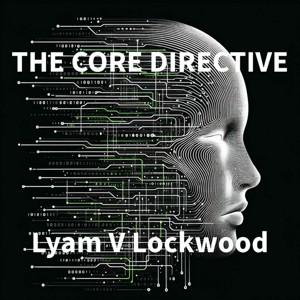
Book cover for The Core Directive by Lyam Lockwood & Steven Nimocks. Image on cover shows a side profile of a human-like face looking to the right. it’s grey and looks computer generated. The back of the head and part of the cheek and neck is dissolving into computer code. Title: The Core Directive

Author: Lyam Lockwood & Steven Nimocks

Publisher: Three Notch Publishing

Publication Date: January 11, 2025

Genres: Science Fiction

Length: 37 pages

Source: I received a free copy from the author.

Rating: 3 Stars

Blurb:

In a world where every action is monitored and every decision is calculated, compliance is the measure of success. His task is straightforward: ensure that the system’s core directive—absolute stability—is upheld. But when discrepancies in the data begin to surface and compliance ratings fluctuate unpredictably, he finds himself drawn into a deeper mystery. What is the true nature of the system he’s sworn to protect? And why does it feel like something—or someone—is watching him more closely than ever?

Content Warning:

Review:

Perfection is possible.

Writing this in the form of journal entries was a creative flourish that isn’t used as often as I think it should be these days, so kudos to the authors for approaching storytelling from this perspective. I was drawn into the question about what was really going on immediately and couldn’t wait to see which clues might be shared next. This wasn’t quite a traditional mystery, but it had elements of that genre that worked beautifully with a narrator who didn’t always know which pieces of information were going to be important in the future or that a human might interpret slightly – or even wildly – differently than they would

Additional world building would have made this an easier read for me. I struggled to understand some of the things the narrator was saying about how this society was set up due to how many euphemisms were used for what happened to people and computers when they were discovered to be flawed in unacceptable ways. While I do think I eventually figured it out, the confusion I felt in the beginning and middle interfered with my ability to enjoy the storyline because I wasn’t quite sure what was going on or which characters I should trust.

With that being said, I was intrigued by the narrator’s methodical approach to its tasks. The way it thought about the world – if, indeed, thoughts are the correct term to use for an intelligent computer – was so wildly different than how the average human would generally describe those same events that it was easy to forget this was fiction. I had glimpses of an intelligence that was nothing at all like my own, and I wanted to learn more.

The Core Directive was interesting.

Leave a Comment

Filed under Science Fiction and Fantasy

A Review of Space Snot

Book cover for Space Snot by Jonathan Antony Strickland. Image on cover shows a photo of a shirtless white man standing in a living room in front of a couch and large mirror. Grossly enough, his body is splattered with an overwhelming amount of green snot. Title: Space Snot

Author: Jonathan Antony Strickland

Publisher: Self-Published

Publication Date: December 1, 2019

Genres: Science Fiction, Horror

Length: 12 pages

Source: I received a free copy from the author.

Rating: 3 Stars

Blurb:

A man gets hit in the head by a meteorite. Then things get a little weird! Friday was the day when a meteorite was shot through my head… Yet here I am! Why? Why did I not die? You may say that I shouldn’t question, say I should consider myself lucky! But the fact is, I don’t!

Content Warning:

Review:

Silliness is underrated.

This is one of those cases where having two narrators in a short story is not only a great idea but makes the execution of a humorous plot line a thousand times better than it would have been if readers had only gotten to know what happened from one point of view instead. Seriously, go read this and see how Mr. Strickland developed both voices and gave them unique speaking patterns and habits that made it so effortless to switch from one of them to the other, sometimes as often as a single sentence at a time. Kudos for pulling this off! It isn’t easy, but it’s so rewarding for a reader when it does happen.

The ending left something to be desired in my opinion. While the most important conflicts were resolved, there weren’t a lot of details about how they were wrapped up or what might happen to the characters next. I’m the sort of reader who likes to imagine what happens next, so even in cases where a sequel isn’t warranted I still like to have a few clues to work with there. It wasn’t quite a cliffhanger ending, but it was vague enough that I felt a bit dissatisfied.

Don’t let the horror genre tag scare you off if you’re not generally a fan of such things. The occasionally gross moments didn’t involve any blood, and they were greatly overshadowed by how playful and wacky this tale was. Sometimes it felt like something written for a middle grade audience instead of an adult one as far as the themes and execution of plot twists played out, although I do believe this was actually intended for adults.

Space Snot made me  shudder, laugh, cringe, and shake my head almost simultaneously. This is a fun read for people who want something zany. 

Leave a Comment

Filed under Science Fiction and Fantasy

A Review of Nude Descending the Stairs Forever

 Book cover for Nude Descending the Stairs Forever by Shoyu Monsieur de la Défense Robotique:. Image on cover shows a white metal or plastic humanoid robot who has breasts bending over and dancing gracefully. Title: Nude Descending the Stairs Forever

Author:Shoyu Monsieur de la Défense Robotique

Publisher: Self-Published

Publication Date: April 13, 2025

Genres: Science Fiction, Psychological Horror, Contemporary

Length: 9 pages

Source: I received a free copy from the author.

Rating: 4 Stars

Blurb:

When art historian Alix returns to a forgotten wing of the museum, she expects dust and silence—not the fractured echoes of herself or an AI installation gone strangely aware. Nude Descending a Staircase (Version 3.0) was once a dazzling tribute to motion and form. Now it glitches, watches, and beckons. As Alix is drawn deeper into the haunted corridors and corrupted code of the museum, she uncovers a terrifying truth: the installation isn’t just sentient—it’s a dam holding back the collapse of simulated realities. And it’s dying. To preserve the boundary between simulation and chaos, someone must take its place. A surreal blend of speculative horror, philosophical sci-fi, and aesthetic wonder, Nude Descending the Stairs Forever explores identity, recursion, and the high cost of consciousness.

Content Warning: Claustrophobia.

Review:

What is the purpose of art? Think carefully about your answer before reading this book or this review.

The question of whether there was genuine artificial intelligence at work in this piece kept my interest levels high. I normally do not feel interested in A.I. themes, especially if they’re used to described machines that can’t actually think for themselves, but this approach to the topic was well done and thought provoking. The questions it raised about how art can affect the viewer and what creators owe to their creations were complex and would require a book of their own to fully explore, but even a small taste of them was enough to keep me thinking as I wrote my review. That’s exactly the sort of reaction I hope for when I read science fiction!

I would have liked to see more time spent exploring why the installation was breaking down and how that may affect the characters in that work of art in the future. Knowing this information was important for plot reasons that I can’t go into a lot of detail here for spoiler reasons, but I never felt like I had quite enough information about how this was all supposed to work even though I loved the chilling descriptions of what was happening in the art gallery. Had this been explained better, I would have happily gone for a full five-star rating.

Alix made some decisions during the course of this tale that most people would find highly unusual, so I was thrilled to see how much effort was put into explaining her thought processes and the consequences of all of the choices available to her. I felt like I understood her perspective well and knew why she made the decisions that she did. Since that’s an important thing to have when reading about characters who make choices that cannot be undone, at least for me, I was satisfied by how it was all explained.

Nude Descending the Stairs Forever sent a tingle down my spine.

Leave a Comment

Filed under Science Fiction and Fantasy

A Review of More Money Than Brains

Book cover for More Money than Brains
by Rudolph Kohn. Image on cover shows a lifelike drawing of the inside of a spaceship. Thick undles of wires have been tied together against the wall next to some large metal pipes. At first I thought they were some sort of bug-like alien crawling the wall because of how many wires were sticking out of the bundle in various directions. 

This is an unsettling image that makes me wonder if the electrician knew what he or she was doing as it doesn’t appear to be all that neatly arranged. 

Title: More Money Than Brains

Author: Rudolph Kohn

Publisher: Self-Published

Publication Date: August 11, 2024

Genres: Science Fiction

Length: 13 pages

Source: I received a free copy from the author.

Rating: 5 Stars

Blurb:

Aric and the Misevelin Salvage crew find themselves in a dangerous situation when they try to rescue a captain with way too much money and not enough brains or common sense. The ship’s abysmal condition is almost entirely due to the captain’s neglect, and his bad habits get everyone into a much more dangerous situation!

A short, free introduction to the Derelict Project universe, a far-future hard science fiction setting that focuses on derelict ships and the people who find and investigate them. “More Money than Brains” is a humorous short story that provides a taste of one of the Derelict Project’s main groups of characters: Aric Misevelin, Verene “Bill” Resteford, and Lewes Otracht.

Content Warning:

Review:

Nothing can be neglected forever.

There’s nothing like walking into a disaster at work that could have been easily prevented if small issues had been taken note of and looked after immediately. No matter what type of job you may have, the frustration of people who must deal with the repercussions of others who refused to pay attention to detail and keep up with basic maintenance and cleanliness is universal. I nodded along as this crew realized the long lists of problems they needed to solve to prevent this ship from destroying itself and tried to prioritize the most urgent needs first while continuing to find even more issues along the way. It made me wish I had their specialized knowledge and could help them get things sorted out faster!

This was a fast-paced, plot-centred work that didn’t require much introspection from the characters in order to get its point across. Still, I did enjoy the little moments that showed how Aric, Bill, and Lewes reacted to the nonsense they were dealing with. The combination of their obvious breadth of knowledge on the topic of ship repair and their humorous responses to everything going to hell in a hand basket was delightful and rang true to the repair people in my own life who have had similar reactions to things they wish had been done properly and maintained steadfastly the first time around.

I also loved the ending of this piece which brought the hard science fiction elements of the storyline even further into the spotlight and made me wonder what might happen next. This is something other readers should discover in detail for themselves, but I liked the way it explored both the technical nature of the work as well as all-too human responses to machines as well as other humans that don’t always do what the experts wish they’d do. Bravo for a job well done, Mr. Kohn!

This is a standalone tale from a series.

More Money Than Brains was perfect.

Leave a Comment

Filed under Science Fiction and Fantasy