Author Archives: lydias

About lydias

I'm a sci-fi writer who loves lifting weights and hates eating Brussels sprouts.

Suggestion Saturday: February 10, 2018

Here is this week’s list of comic strips, articles, studies, death notices, short stories, poems, and other links from my favourite corners of the web.

I thought it would be interesting to collect Valentine’s Day themed posts for this week because I don’t actually celebrate this holiday.  It’s fascinating to see the world through the eyes of those who enjoy it.

How to Be Comfortable Alone on Valentine’s Day via MBTTTR. This was such a thought-provoking post about relationships, marriage, and why it’s sometimes better to be single.

What the Phrase “Make Love” Used to Mean. Don’t worry! This link is far more innocent than what you’re thinking. Part of the reason why I’m sharing it with you is that there was a throwaway line in the children’s novel Anne of Green Gables about one of the character writing too many stories about people making love. I had no idea what the original meaning of this phrase was and so I was completely confused by that line. It didn’t fit the era or the characters at all, and now I know why.

Thomas the Blind, Bisexual Goose to be Buried Next to Partner Henry the Swan.Yes, this really happened. It would make a fantastic Valentine’s Day movie.

Am I ‘Normal?’ Average Sex Frequency Per Week Linked To Age. It would be interesting to see the full spread of data for the numbers. As in, is there a big group of people who rarely have sex and another group who has it much more often than average? Or do most folks truly have sex once or twice a week?

Popular Valentine’s Day Gifts I Won’t Be Buying My Valentine via AmberLeventry. I couldn’t agree with this blogger more. My spouse and I have never celebrated Valentine’s Day. It’s simply not our thing. If we ever change our minds about it, I’m sure we’d do something non-traditional for it.

Children Learn Rules for Romance in Preschool. It blows my mind that teachers still reinforce stuff like this.

St. Theophilus the Penitent. This was quite the read.

Why Do Birds Get Divorced? I never would have guessed that mating season for birds could be this complicated. Also, the title is one of the best ones I’ve seen online in ages.

Victorian Valentine’s Day Verses for Rejecting Unwanted Suitors via MimiMatthewsEsq.  Some of these made me shake my head. Wow.

Flappy Valentine. The last panel was the best one.

Dr. J Breaks Down Sex and Burning Calories. I really like it when bloggers take the time to write creative and humorous posts like this one.

From Ivory Darts, Golden Arrows:

“I’ve met other things lonelier than you. These mountains are populated by isolates. All the people keep to themselves, all the caves are filled with moaning bears, and all the nests are full of eggless sparrows. There was a war a long time ago, and now no one speaks to anyone else. If babies are born, they’re left at the post office, and I mail them off to other places.”

Comments Off on Suggestion Saturday: February 10, 2018

Filed under Suggestion Saturday

No, You Don’t Have to Finish That Book

I spend a lot of my time online talking to other people who love to read. Over and over again, I keep running into conversations about stories that someone doesn’t like for any number of reasons but forces themselves to keep reading anyway.

It’s one thing to continue reading something that’s been assigned for a class or book club, but making yourself to read something you don’t like for no reason at all doesn’t make any sense.

No, you don’t have to finish that book. It truly is okay to stop reading one sentence, paragraph, chapter, or act into the plot.

If you need more convincing, keep reading.

There Are Hundreds of Millions of Other Book in the World

As of 2010, there were 129,864,880 books in the world. (I tried to find a more up-to-date statistic than that, but I didn’t have any luck. If any of my readers know what the current number is, I’d love to hear it).

No matter what genre you’re into or how particular you are your reading material, there are far more stories floating around out there than you will ever have the time to check out before you die even if you spent every single waking moment doing nothing but reading for the next 50 years.

Why waste your time on something that doesn’t appeal to you when you could be back at the bookstore or library finding a different title that is right up your alley?

There is nothing like the feeling you get when you find a story that’s perfect for your tastes. This should happen as much as possible for everyone who loves to read. The less time you spend on “meh” book, the more time you’ll have for the ones that you really love.

Pleasure Reading Is Supposed to be Pleasurable

Yes, I know this is an obvious statement, but sometimes I think people forget that you’re supposed to enjoy the tales you pick out when you’re looking for something to fill your spare time.

It’s one thing to slog through the fine details of a contract, user manual, textbook*, user agreement, or some other form of reading that is meant to give the reader important knowledge instead of entertaining them. These reasons for reading are an unavoidable part of life, and they do serve incredibly important purposes for anyone who needs more information about when their phone contract runs out or what to do when their fridge makes that really bizarre sound.

Reading for the sheer pleasure of it is different. The only purpose of this type of reading is to give you joy. If you’re not enjoying it, you might as well go find something else that does make you happy.

*Although I will admit to reading textbooks for fun in the past, too!

You Might Like It More Later

Just because a book doesn’t appeal to you right now doesn’t mean you won’t have a different opinion of it in the future.

Not liking a specific story the first time you tried it could happen for any number of reasons. For example, you could have picked it up before you were ready for that particular tale or at a time in your life when other types of writing were more appealing to you.

The first time I read C.S. Lewis’ Till We Have Faces, I honestly didn’t know what to think of it. The scene where Orual, the main character, sees Pearl, her sister, again after assuming that Pearl had died was beautiful and poignant, but the plot flew over my head because I wasn’t familiar with the myth of Cupid and Psyche and I was a little too young for the subject matter in general.

It was only when I reread it a few years later that I started understanding the themes Mr. Lewis was exploring in it about love, selfishness, doubt, suffering, and gods whose actions don’t make any sense at all to us humans.

With that being said….

Nothing Appeals to Everyone

I may have to write a follow-up post to this post sometime, but not every author or story is going to appeal to every single reader no matter how many times you try to change your opinion of it.

It simply isn’t impossible to write something that appeals to everyone in the entire world.

I know several people who only read nonfiction. Some readers love mysteries but wouldn’t touch a horror novel with a ten foot pole. Others wants  cutting-edge science in their fiction but will run screaming from the slightest hint of romance in the plot.

This only scratches the surface of all of the different types of writing and storytelling that are out there.

There are certain authors and fictional universes that I’ve never been able to get into no matter how many times I give them another shot or how hard I try to enjoy them. This doesn’t mean that those books are bad or not worth checking out in any way. They’re simply not my cup of tea for all sorts of different reasons.

There are many other people out there who deeply love them. Some of them are wildly popular, and I’m glad that they’ve found their audience even though I’m not part of that audience.

If you struggle with putting books away without finishing them, I hope I’ve given you some food for thought. It truly isn’t necessary to keep reading something that you can’t bring yourself to like.

Do any of my readers have this problem? How often do you give up on reading a book before you finish it?

2 Comments

Filed under Uncategorised

How to Survive a Paranormal Storyline


“Cara Mujer” by Cesar Tort.

Congratulations on your new home, job, vacation spot, construction project, antique gift, or other plot device that has invited a restless spirit into your formerly-peaceftul storyline!

While most of the characters who take the time to look up what to expect in a haunting are the protagonists, I’d like to give a special shout-out to all of the supporting characters who were attentive enough to realize that something was seriously wrong with this new development in your lives. The fact that you figured this out so soon speaks well of your chances of making it to the end.

On the topic of the changes you’ve noticed, you’re not hallucinating, exaggerating, or imagining anything. Those noises you’ve been hearing late at night when no else is around are real, and the spirits are only going to amplify their attempts to grab your attention if you don’t act now.

Unlike post-apocalyptic storylines, secondary characters aren’t doomed to die in these tales, and not every protagonist is guaranteed to survive either. Sometimes everyone lives. In other cases, everyone dies. Every haunting is unique in this regard.

So much depends on what sort of spirit you’re dealing with, how quickly you figure out that they are a threat, and how intelligently you respond to the escalation in their behaviour after that.

All characters regardless of their role in the plot should follow these rules if they want to survive:

  1. Escape through one of the rare and usually obscurely-marked exit doors. If you happen to notice what is really going on before the end of the first scene and the spirits have shown themselves capable of any violent behaviour at all, this is by far your best chance for survival. This technique generally doesn’t work, though, which leads me to the rest of this list…
  2. Research the history of the haunted item or location. Visit your local historical society, library, senior centre, nursing home, or any similar place that may have first-hand accounts of how your ghost died and what he or she may needs in order to move on to the next world. If the first hints of a haunting happen when these places aren’t open to the public, looking up any information you may already have online is an acceptable substitute as long as you follow up on any leads you found first thing in the morning.
  3. Don’t tolerate any distractions until you’ve completed the previous assignment. Any character who attempts to downplay your concerns or delay your research for any reason at all is a threat to your survival. They almost certainly will not be doing this on purpose, but this doesn’t make them any less dangerous. Avoid them as much as possible until after the climax has ended (assuming they survive that long).
  4. Look for discrepancies. Sometimes newspaper articles, diaries, eyewitness testimonies, and other pieces of evidence are incomplete, accidentally inaccurate, or even purposefully fabricated for any number of reasons. If the various accounts of the spirit’s life and death are contradictory, keep digging until you’ve found more clues about what really happened. Do not discount any records immediately, but also avoid assuming that you know the whole story this early on in the plot. You almost certainly do not.
  5. Never split up the group in a haunted building. Does this even need to be said anymore? No matter how tempted you may be to speed up your exploration of the grounds, we all know that this never ends well for ghost-hunting groups that attempt it. Stick together and stay alive.
  6. Call in a psychic. Yes, I know that they aren’t always helpful in these sorts of plots. Some of them act like they’ve never met a vengeful spirit before, and others honestly don’t seem that psychically sensitive at all! I’m not saying you should take everything they say as the unvarnished truth, but they may be able to provide pieces of the puzzle that no one knew about at the time of the victim’s violent or sudden death.
  7. Listen to the psychic’s recommendations. If they tell you the spirit is violent and dangerously uncooperative, follow their instructions on how best to deal with such an entity without delay. This includes moving away from your dream home or giving up on that desperately-needed trip if that’s what they recommend. Nothing is worth risking your life over.
  8. Don’t bother throwing away or destroying haunted objects. As thrilling as it might be for readers who are brand new to this genre to see the horrified look on your face when that doll or other item magically ends up right back in your home in pristine condition, everyone else know that this is nothing but a waste of time. Call in a second psychic instead if you really insist on dragging out the rising action or climax.
  9. Burn the bones. If there’s one thing that Supernatural has taught me, it’s that the fastest way to permanently get rid of a ghost is by finding their grave and burning their remains. Make this a priority if appeasing the spirit in other ways doesn’t work the first time you attempt it.
  10. Double-check your work. Just because you think you’ve found the right grave or performed the correct ritual doesn’t mean there are no loose ends flapping around out there in this part of the plot. Don’t let down your guard until you’ve made sure that you’ve destroyed everything that’s tying the ghost to this realm and you really have reached the conclusion after all.

Final Thoughts

A few of you are probably wondering if you’re actually in one of those rare paranormal stories that involves a completely harmless spirit. The fact that you read this far means this is extremely unlikely to be true. Even the most mischievous ghost who had a truly friendly nature would stop immediately and reveal their identity if they frightened someone. It’s only a joke if everyone is laughing along!

The fact that you’re worried enough about your haunting to read this essay means that you’re not dealing with one of those rare spirits that is only rattling your dishes or opening your kitchen cabinets as a lighthearted attempt to grab your attention.

Listen to your intuition. If you do that and follow the steps listed above, you still stand an excellent chance of living long enough to either see the ghost move onto the next world or transferring to a safer place to live yourself.

Previous posts in this series: 

How to Survive a Post-Apocalyptic Storyline.

4 Comments

Filed under Science Fiction and Fantasy, Writing

Saturday Seven: Library Books I’m Reading

Saturday Seven is hosted by Long and Short Reviews.

Based on my mother’s deep love of books, I’m guessing I was a baby the first time she took me to the library. At any rate, I have no memory of life before I knew what a library was or why they’re so special. They always have been and always will be part of my regular routine.

Most of the stories I blog about here are science fiction or fantasy, but I read many more genres than those. Today I thought it would be fun to show you seven of the library books that I’m either currently reading or plan to start reading soon.


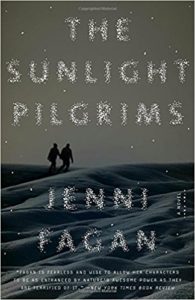
1. The Sunlight Pilgrims by Jenni Fagan.

Most of the climate-based post-apocalyptic stories I’ve read over the past decade have assumed the Earth is going to become unbearably hot. This one assumed it would freeze.

I haven’t started this one yet, but I’m curious to see how it will be different from the other post-apocalyptic tales I’ve read.

2. The Woman in White by Wilkie Collins.

I honestly know very little about Wilkie Collins as an author or the story of The Woman in White in general. It’s something I requested from the library because I’m slowly working my way through classic novels that appeal to me for the sheer fun of it.

One of the many nice things about being an adult is that you have the freedom to do this. I enjoy the classics so much more now that no one is assigning them to me or making me take quizzes about them.


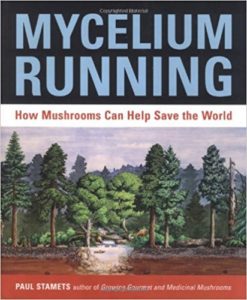
3. Mycelium Running: How Mushrooms Can Help Save the World by Paul Stamets.

If you haven’t seen the last few episodes of Star Trek: Discovery, stop reading this section now if you want to avoid all spoilers for it. I won’t go into any unnecessary detail here, but I have to talk about it a little bit in order to explain why someone who has no interest in having her own garden is reading a book about gardening in the chilly depths of February. (LOL!)

One of the guests on After Trek, the after-show for this series, told the fans to read Mycelium Running a few weeks ago. He said that there was something in this book that would give us a clue about what will happen next in this show.  I took his advice, and I can’t wait to see how the science in this book continues to play out on the small screen. The writers are doing an excellent job of mixing the science of mycelium networks into a fictional universe so far.

4. Mass Starvation: The History and Future of Famine by Alex de Waal.

It blows my mind to think that there are still famines happening on Earth in 2018. The historical portion of this book is definitely going to be interesting, but what I’m looking forward to even more is reading this author’s thoughts on how to end famines for good. It’s high time our species did just that.


5. Runaway Wives and Rogue Feminists: The Origin of the Women’s Shelter Movement in Canada by Margo Goodhand.

This is a part of Canadian history that I know absolutely nothing about. I’m looking forward to finding out how domestic violence shelters were first invented and who were responsible for all of the hard work that goes into starting something like that up.

Women’s shelters are so underfunded and overcrowded now that I can’t imagine how difficult it must have been to create them in the first place. There is still so much work to be done in this area.

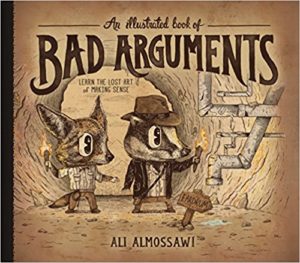
6. An Illustrated Book of Bad Arguments by Ali Almossawi.

I have a silly confession to make. Half of the reason why I requested this from my local library is because I freaking love the cover.

It also seemed like it would be a humorous break from the darker and more serious topics I generally read about.

7. Treknology: The Science of Star Trek from Tricorders to Warp Drive by Ethan Siegel.

This is a book that had an exceptionally long waiting list at the library, so I was thrilled when it finally showed up for me a few days ago.

My spouse and I both enjoy Star Trek for different reasons. He likes to try to predict what is going to happen next, while I’m fascinated by all of the science and technology advancements that have been shown on the the various Star Trek series.

When I was a kid, I desperately wanted to order dinner from a Replicator and play in a Holodeck program for an hour or two.  Honestly, I still want to do that stuff! Maybe someday we’ll live in a world where such things are possible.

If you’re a library nerd like me, what books, movies, albums, or other items have you recently borrowed from there?

12 Comments

Filed under Blog Hops, Science Fiction and Fantasy

Suggestion Saturday: February 3, 2018

Here is this week’s list of blog posts, comic strips, short stories, and other links from my favourite corners of the web.

10 Sure-Fire Ways to Cope with Cabin Fever via ‪ShallRef‬. #9 is my favourite.

Feeling Sick and Snotty? I shared something similar from this site about a month ago. This is another funny reminder of how to behave if you catch a cold this winter.

Is Bugs Bunny Bisexual? While I do remember some of these scenes, I now want to rewatch them again with a fresh perspective.

Why Women’s Procreation Choices Are None of Your Business via ‪thebeasley‬. Two weeks from now I’ll be sharing another thought-provoking post from this blogger’s site. In the meantime, I hope you enjoy her detailed explanation of why it’s never okay to scold someone for having  0, 1, 10, or any other number of children.

Seven Science Fiction and Supernatural Books by Early Ontario Writers (Free Downloads). I haven’t read any of these books yet, but they sure sound interesting.

Blanket Sea via BlanketSea. If you’re living with a chronic illness, disability, or mental illness, this link is for you. Blanket Sea is a brand new literary magazine for people with these conditions that I learned about several days ago on Twitter. I’ll be keeping an eye on what they come up with, and I hope you will as well.

From Origin Story:

The last of the fairies worked in a charnel house, taking apart the beasts that came dead under her hands. In her youth, she had been the last and least of three; now she was the only living one, and even fairies must earn their keep.

At night, when the knacker men went home, she made creatures out of meat and bone and scraps of skin. It was an act of creation to balance out the destruction in her days.

From The Fall via ‪ChrisCoombs88‬:

Last week I fell out of a friend’s front door as I left an excellent afternoon of food, board games and socially acceptable levels of lunacy.


Comments Off on Suggestion Saturday: February 3, 2018

Filed under Suggestion Saturday

Experimenting with Unguided Meditation

Today’s post is going to be a pretty short one.

As I’ve mentioned here before, I don’t believe in padding out blog posts to reach a specific word count. Sometimes I need a few hundred words to make my point, and at other times I require 1200 or more of them.

Last month I talked about why mediation was difficult for me.

I’ve spent the past few weeks experimenting with my meditation practice in a few different ways.

Morning meditation sessions worked better for me as far as my concentration during them went, but I also found myself missing meditation as part of my bedtime routine.

There is something incredibly relaxing about meditating an hour or so before bedtime. Fitting more than one meditation session into my day isn’t something I wanted to do until I was doing better with one session a day.

Last week, the meditation app I use temporarily put the guided meditation sessions that I’ve been using for a long time behind a paywall. While I was deciding whether to sign up for a paid account there again to see if I liked it all of the special features more than I did when I’d previously paid for them, I began thinking about unguided meditation.

My first meditation attempts many years ago were with unguided meditation. They didn’t work well for me back then because of how unused to this practice I was, but maybe I’d get more out of them today? It took me a couple of tries to get into the habit of weightlifting, after all. It took me even longer to cut 90% of the added sugar out of my diet as well.

This could be another case of something that took a few attempts to turn into a habit. I am tentatively planning to write a follow-up to this post in a few weeks once I have something else to say about it. It’s too soon to say much more about it, but I’m enjoying the process of trying something new.

2 Comments

Filed under Mindfulness and Meditation

6 Things I Wish My Gym Teachers Had Done Differently

The other day I had a conversation with some  friends online about our experiences in gym class when we were growing up. Most of us disliked that class quite a bit growing up, and none of us came away from it with positive feelings about sports or exercise in general.

There were many different reasons for those reactions, but the biggest ones had to do with our  complete disinterest in sports and lack of athletic prowess in general.

This is a real shame. Physical Education teachers have a golden opportunity to show students how to stay fit regardless of how coordinated or athletic they might be. I empathize with how difficult it must be to get kids interested in gym class if they show up already expecting to hate it, but I’d also argue that there are a lot of changes that could be made to the way P.E. classes are run that will make them far more appealing to kids who aren’t athletic and who don’t think of exercise as a fun activity.

Today I’ll be sharing those recommendations. If there are any gym teachers reading this blog, I’d be quite interested in hearing your response to this post. These are the six things that I wish my gym teachers had done differently when I was in their classes.

Explained Why It’s Important to Exercise

My English teachers regularly explained why it was important to know how to write a grammatical sentence or be familiar with certain authors. They used examples like writing a formal letter or understanding certain literary references that the vast majority of adults know.

My math teachers told us how equations helped you save money or solve problems as an adult. They used examples like figuring out how much a sale item will cost after the 30% discount or calculating how many gallons of paint to buy when you repaint your living room.

None of my gym teachers ever made the connection between what they taught in class and what we’d need to know in order to function well as adults. We played endless rounds of basketball, football, volleyball, and other sports without hearing a single word about how exercise strengthens your heart, builds your muscles, burns calories, or reduces your risks of many different diseases.

It was like being given an equation that didn’t make sense and then never being told what the real answer should have been.

Because I said so isn’t a persuasive or helpful response in these scenarios. Kids, and especially teenagers, are smart enough to be told why they’re being expected to do something. It might be a while before they come to fully appreciate these lessons, but I think that explaining the reasons for gym class would go a long way to encouraging reluctant students to change their habits.

Taught Us the Proper Form
I wasn’t the most coordinated kid in the world, so I’m definitely not going to lay all of the blame on the  injuries I regularly received in gym class on the teachers.

There were multiple times when I sprained fingers or got bruised up in gym class.

Yes, some of them were true accidents that could have happened to any child.

With that being said, I do think I would have been injured much less often if we’d all been taught the proper posture for the sports we were playing and if someone had corrected my posture if it still wasn’t right.

This never happened once in all of my years of attending public school. As an adult, I sympathize with my teachers for being responsible for the physical education of so many kids. I don’t think we should expect perfection from teachers in this area, but I do think they should have the support and resources to prevent as many injuries as possible.

Eliminated Dodgeball and Picking Teams

Dodgeball is the only sport I can think of where the purpose of it is to throw balls at people and purposefully hit them. I don’t know about you, but I remember feeling pain when those dodgeballs smacked me. This was not a pleasant experience in any way.

It’s one thing if a small group of friends decide to play this game at recess, but school isn’t an appropriate place to make kids to throw objects at each other.

If it happened in any other context, the kid who threw the object would be sent to the principal’s office and possibly even suspended or expelled for assault.

Picking teams is unnecessary, ripe for bullying behaviours, and a waste of time. It would be so much faster to divide the students by preassigning groups or having them count off (e.g. 1 through 4) so they could quickly be divided into four equal sections.

Spent 1/3 of the School Year on Non-Competitive Sports

Yes, I know that many schools have limited budgets for their physical education departments and therefore can only offer certain types of workouts to their students.

The schools I attended didn’t have anything fancy like swimming pools or tennis courts. We had gyms that always smell faintly of perspiration, plenty of old sports equipment, and far more wrestling mats than we knew what to do with.

With that being said, there are plenty of inexpensive and even free types of exercise out there that don’t require any competition at all.

For example, there would be little to no equipment needed at all for a P.E. teacher to teach martial arts or several different units on various types of dancing. The music for the dance classes could be piped in over the loudspeakers or played on an old boombox. Many types of martial arts don’t require any equipment at all.

Spent 1/3 of the School Year on Individual Sports

One of the reasons why I hated gym class so much growing up is that 95% of the units we did were team sports.

Basketball, volleyball, baseball, football, and hockey might be good workouts, but they didn’t appeal to me in the least. The more I played them, the less open I became to exercising at all.

While I do think it was a good idea to expose kids to team sports, I’d also argue that it’s just as important to show students the many ways they can work out that have nothing at all to do with competition or teams.

There are so many other ways to strengthen your heart and body that could easily be taught to students depending on their ages and what types of equipment are already available at the school: yoga, weightlifting, jogging, bodyweight exercises, and gymnastics to name a few.

The final third of the year could be dedicated to various team sports. Some kids honestly do enjoy those forms of exercise, so I’d be fine with keeping them as a small part of the curriculum.

Occasionally Given the Students a Say

This is by far the biggest change I’d recommend making to the way physical education classes are currently run.

My high school Spanish class was allowed to vote on which pre-approved Disney movie we wanted to watch after we’d studied that language for a while and were reading to start practicing our listening skills in real time.

One of my elementary school teachers regularly let us vote on which pre-approved book to read as a class next. This would be a little trickier to do in high school since certain authors are often required to be taught, but I could see a secondary English teacher narrowing down the choices to two or three Shakespeare plays and then seeing which one their class was most interested in studying over the next month.

Being able to have a say in those classes made me much more interested in reading those books and watching those movies.

There’s no reason why gym teachers can’t offer their students the same choice. Why not let them decide whether they’ll spend the next few weeks playing basketball or learning how to square dance? They’ll be exercising either way, and the fact that the teacher listened to them will mean a lot.

What were your experiences with gym class growing up? What could your P.E. teacher have done differently to get you more involved in that class?
4 Comments

Filed under Fitness

Saturday Seven: Series That Should Be Turned Into TV Shows

Saturday Seven is hosted by Long and Short Reviews.

A friend of mine is absolutely obsessed with Game of Thrones. I’d guess that at least a third of the conversations we have somehow include a reference to this show. Even though I’ve never actually watched Game of Thrones, I’m beginning to understand a lot of her references to it because of how much she talks about it.

The more she gushes about it, the more I think about all of the series that I’d love to see brought to the small screen. All of them are so full of dazzling details about their worlds that it would take a few seasons of a TV show to even begin to fully explore what they have to offer.


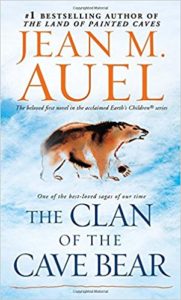
1. The Earths’ Children series by Jean M. Auel. 

This series has it all: adventure; action, mammoths, romance, unsolved mysteries, Neanderthals, and even a stubborn pet wolf that occasionally refuses to do what he’s told.

Ayla, the main character, was a human who was orphaned at the age of five in an earthquake. She was discovered and raised by Neanderthals. The Clan of the Cave Bear told the story of her highly unusual childhood. The sequels showed what happened after she was disowned by the folks who raised her and forced to eke out a living alone while she searched for signs of other humans.

Without giving away any spoilers, I was not happy with how the final book ended due to how many conflicts were still left unresolved in the last scene. If this were made into a TV show, we’d have another chance to resolve those issues for the characters.


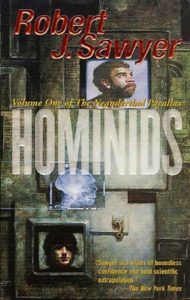
2. The Neanderthal Parallax trilogy Robert J. Sawyer.

If only all of you knew how tempted I was to talk about nothing but Neanderthals today! I love stories about them, and there are a lot of great ones out there. I might just have to blog about them on a future Saturday Seven post.

The unusual thing about this series is that it’s set in the present day. Ponter Boddit, the main character, accidentally pierced the veil between his Earth and our own early on in the plot and ended up accidentally getting transported to our universe. On his alternate version of Earth, humans died out tens of thousands of years ago while Neanderthals like him had become the dominant species.

I can’t tell you anything about the Neanderthals’ version of Earth without giving away major spoilers, but I was fascinated by all of the cultural and physiological differences between them and us. Some of them were things that I never would have thought of as a possible difference between our two species.


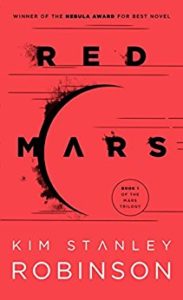
3. The Mars trilogy by Kim Stanley Robinson.

This series immediately came to mind when I saw the film The Martian a few years ago. Colonizing Mars would be an incredibly expensive and difficult endeavour for the first few generations to do it.

Based on how much audiences loved watching Matt Damon’s character figure out how to survive alone on such a harsh planet, I think there would be an audience out there who would like to see Nadia Cherneshevsky and her team struggle to create the first Martian settlement.

Future generations in this trilogy even eventually terraformed Mars into something very Earth-like with lakes, forests, and everything else you’d expect from a habitable planet. How cool would that be to see on the small screen!


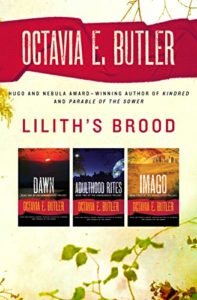
4. The Xenogenesis trilogy by Octavia E. Butler.

This series began with a massive nuclear war that (supposedly) killed every last human on Earth. The main character’s husband and son were among those dead.  When she woke up in an unfamiliar place hundreds of years later, she had no idea why or how she was still alive. It turned out that an alien species called the Oankali had intervened at the last possible moment and saved a small percentage of humanity from certain extinction.

That paragraph alone could provide enough fodder for the first season of a TV show, and that barely scratched the surface of everything that happened in this trilogy. Not only did the main character have to grieve the loss of her family, she had to figure out why the Oankali had saved a small percentage of humanity and what they wanted from us in exchange.


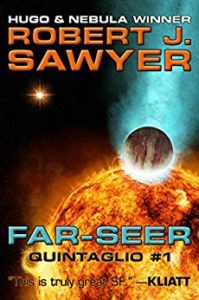
5. The Quintaglio Ascension trilogy by Robert J. Sawyer.

I have five words for you: intelligent dinosaurs who can speak.

Afsan, the main character, was about to go through a rite of passage that would make him an adult in the eyes of his society when this tale began. His species worshipped a heavenly body known as the Face of God. Every Quintaglio (which is their name for their reptilian species) must go on a quest to observe it when they become an adult.

The problem was, Afsan noticed something about the Face of God on his journey that contradicted a major tenant of his religion. He then had to decide whether to reveal this knowledge or keep it to himself.

The world building was extremely well done. Afsan had a deeply reptilian understanding of the world, and it showed in how he responded to all kinds of situations that a human would have a completely different response to. For example, the way his species treats their young is nothing at all like how humans treat their young. He would be as horrified by some of our practices as we would be of his, and that would make for must-watch television in my opinion!


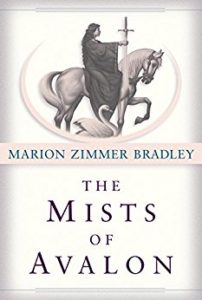
6. The Avalon series by Marion Zimmer Bradley. 

I was never particularly into any Arthurian legends, but I loved this series immediately. The Mists of Avalon retold the legend of King Arthur from the perspective of his sister Morgaine. While The Mists of Avalon was technically made into a mini-series many years ago, the next six books in the series have never received the same treatment as far as I know.

They really fleshed out this world, though, and I think it would be wonderful to finally see the entire story from beginning to end on the small screen. One of them, Ancestors of Avalon, even described how and why Stonehenge was created. Sadly, I’ve forgotten most of the plot of that book, but now I really want to reread it. I am just a little bit obsessed with Stonehenge in general, so it would be really cool to see those scenes come to life.


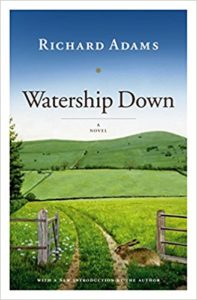
7. The Watership Down series by Richard Adams.

Anyone who has read this blog for a long time and remembers how much I love rabbits won’t be surprised by the final entry on my list at all. I can’t imagine many things more interesting than an entire TV show about a warren of rabbits who are desperately trying to find a new home.

While there were cute and fuzzy moments just like you’d expect from this species, there were also a lot of heart-pounding action scenes. Life is frightening and dangerous for prey species. This is even more true when a large group of rabbits are trying to move to a new home through completely unfamiliar and often dangerous territory. I think this book would make a fantastic TV show because of that.

Have you read any of the books on my list this week? What series do you wish would be turned into a TV show?

14 Comments

Filed under Blog Hops, Science Fiction and Fantasy

Suggestion Saturday: January 27, 2018

Here is this week’s list of comic strips, blog posts, etiquette guides, and other links from my favourite corners of the web.

ASMR: Did You Feel That Sound? via RavenHeart81. If you haven’t heard of ASMR yet, this is a well-rounded introduction to it.

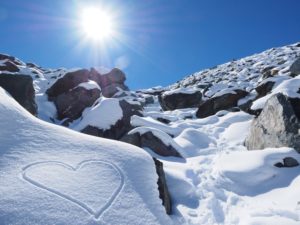
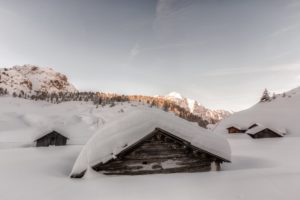
Cold. I adore this. It was the inspiration for the photo in today’s post.

Unwritten Rules of Public Transit Etiquette Written Down. This was one of the funniest things I’ve read in ages. The best part is, it was written about Toronto’s GO train!

7 Things I’m Doing to Be Mindful via nabanita21. Number six on this list was my favourite one.

The Legend of the Stone Snowman. The title gives away many details of what this comic strip is about. The final panel is quite funny, though.

The Psychology of Hunger. If you haven’t heard of The Minnesota Starvation Experiment, this article gives a nice overview of it. I can’t imagine volunteering for an experiment like this, but they did provide critical information about how starvation damages the body and why it’s so important to gradually reintroduce proper amounts of food to someone who has lived this way for a long time.

From A Love Letter to My Female Ancestors via ‪jmichaelantonio‬:

While bravery, fortitude, courage, and integrity are words usually reserved for males throughout history, I use them now to describe you. You are all true heroines to me, not in the comic book or superheroine sense, but in a far better way —in the human sense, with all of your beautiful scars and flaws.

Comments Off on Suggestion Saturday: January 27, 2018

Filed under Suggestion Saturday

Winter Worlds I’d Like to Visit

Toronto has been enjoying milder winter weather this past week or two, but it looks like our temperatures are soon going to plummet once again.

Every time this has happened during the winter of 2017-2018, my mind has drifted to the stories I’ve read about imaginary or otherworldly wintery places that appealed to me for a wide variety of reasons. Winter is my least-favourite season of the year, but it does become slightly more appealing when I think about experiencing it in places that are nothing at all like Toronto.

Narnia as It Was During the End of The Long Winter

From C.S. Lewis’ The Lion, The Witch, and the Wardrobe.

I spent four years of my childhood in Laramie, Wyoming, so C.S. Lewis’ descriptions of a world where it was always winter actually sounded kind of familiar to me.

We could experience snow there at any point between September and May. Even the brief Wyoming summers were much colder than the ones I experienced later on in life when my family moved back to the midwest.

Some kids might have been frightened by the idea of a winter that never ended. I liked the long, snowy winters of my childhood, though, and wasn’t particularly bothered by the idea of them lasting forever. (Although, now that I’m an adult, I feel very differently about this topic!)

One of the nice things about the reign of Jadis, the White Witch who cursed the land with everlasting winter, was how resourceful the creatures who lived there learned to become. The book never exactly described how they managed to find enough food to survive for so many generations in the bitter cold, so I’m going to have to assume that both magic and luck were involved.

My favourite scene in this book was the one where Lucy and Susan noticed the first sign that The Long Winter was coming to an end. I won’t give it away for anyone out there who hasn’t read this story yet, but it was a very fitting twist on what many people consider to be the best part of this season.

Alaska as It Was in 1920

From Eowyn Ivey’s The Snow Child.

Jack and Mabel, the main characters in this tale, had no idea what was happening when they first caught glimpses of a child running around in the Alaskan wilderness alone in the dead of winter.

This is the kind of story that can’t be pinned down to any one genre, and that’s one of the many reasons why I love it so much.

Is it a fantasy tale about a childless couple whose overwhelming desire to be parents magically summoned a daughter for them?

Are the main characters’ sometimes-bizarre interactions with their daughter a metaphor for how unresolved grief can pop up in all kinds of unexpected ways over the years?

Did Jack and Mabel meet a real abandoned child who had somehow figured out how to survive in a fiercely cold and unforgiving environment before they took her in?

The winter weather in Alaska could easily be used to support any of these theories. It could almost be considered a character in and of itself because of how influential it was on how the plot unfolded. While I wouldn’t want to experience that time and place for more than a few minutes, I am curious to know what it would feel like to live in a small, isolated cabin in the middle of a gigantic Alaskan forest during one of their many blizzards.

Jack and Mabel must have yearned for spring unbearably by this time of the year.

I have a very strong opinion about how this book should be interpreted based on the clues provided by the weather, the characters, and the circumstances under which the child is found, but I won’t share it publicly to avoid giving anyone spoilers for the ending.

Europe as It Was 30,000 Years Ago

From Jean M. Auel’s The Mammoth Hunters.

The Mamutoi were the first band of humans that Ayla, a human girl who was raised by Neanderthals, had ever met.

Other than the joy of seeing a herd of mammoths in person, by far the most appealing part of this book to me was how closely-knit the Mamutoi were. The climate they lived in was far too cold to allow for much outdoor time during the winter at all, so this tribe spent those months indoors working on small projects and celebrating various festivals.

The best scenes in this book showed what it was like for roughly twenty adults and children to live in a cramped space together for months on end. Yes, there were times when the introvert in me wondered if anyone ever went outside for the express purpose of having a few moments of pure silence, but there were many other times when I saw the benefits of this kind of living arrangement.

For example, the children in this tribe were doted on by everyone. They knew who their parents were, but they also all felt perfectly comfortable going to any adult for food, comfort, entertainment, or to learn new skills.

Chores like cooking, cleaning, and taking care of people who were too sick, injured, or elderly to do certain things for themselves were also shared pretty evenly. Given how lonely Ayla had been earlier in her life, this doesn’t seem like a bad way to spend a winter at all.

What winter worlds from your favourite stories do you wish you could visit?

Leave a Comment

Filed under Science Fiction and Fantasy