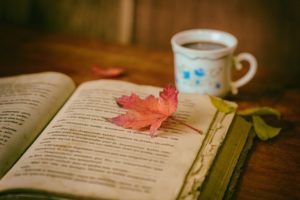
This week I had no idea what to say about any of these books, so I’m simply going to list them with links to their Goodreads pages for anyone who wants more information.
I’ve read the first nine from front to back. Someday I hope to be able to get through all of A Tale of Two Cities, too.
This post is going to be short and sweet. Not everything I write requires 1000+ words to explain.
I’ve been getting so many ideas for posts from my search term analytics lately, and this week’s topic is one of them.
As always, be sure to follow your family doctor’s advice and your own common sense when beginning or returning to an exercise routine.
What works for me might not be the best choice for everyone.
With those caveats out of the way, let’s talk about what happens when life gets in the way and you take a week off from your usual fitness routine. I know I have trouble getting all of my workouts in when I’m travelling or haven’t been getting as much sleep as usual.
The biggest problem with missing a week of workouts that I’ve noticed is that it disrupts your habits. After I’ve missed seven days of exercise, it begins to feel normal to keep my weights in their usual spot instead of jumping into another strength training session or to skip that walk I used take.
That is, it’s far more a psychological issue than it is a physical one. Your muscles, bones, and heart aren’t going to magically revert to the conditions they were in before you began working out regularly just because you missed a few sessions. But this is the point when it starts to feel easier to keep this new pattern going for weeks two, three, four, and beyond.
So the most important thing to do after skipping a week of workouts in my opinion is to get back into your regular habits.
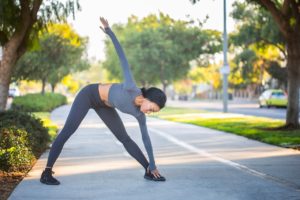
I’m the sort of person who generally responds best to easing back into a fitness routine after a break. That is, I may start off with a shorter weightlifting session or slower walking pace than I’d normally do for the first few days.
Somehow my brain adapts to my former routines better if I don’t expect A+ work on the first day.
If jumping right into your normal workouts at the same intensity you’d built up to before your break is better motivation for you, great!
The important thing is to start moving again until it once again feels normal to stick to the things you were doing before taking this break.
What other advice would you give to someone who has missed a week of workouts?
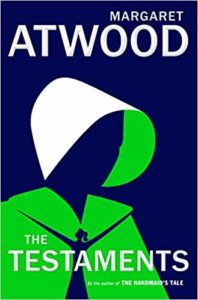
Blurb: More than fifteen years after the events of The Handmaid’s Tale, the theocratic regime of the Republic of Gilead maintains its grip on power, but there are signs it is beginning to rot from within. At this crucial moment, the lives of three radically different women converge, with potentially explosive results. Two have grown up as part of the first generation to come of age in the new order. The testimonies of these two young women are joined by a third voice: a woman who wields power through the ruthless accumulation and deployment of secrets. As Atwood unfolds The Testaments, she opens up the innermost workings of Gilead as each woman is forced to come to terms with who she is, and how far she will go for what she believes.
Review:
Content warning: sexual assault, child abuse, torture, pregnancy, childbirth, and murder. I will only make a few vague reference to these things in my review. This will otherwise be a spoiler-free post.
Be sure to finish The Handmaid’s Tale before picking up The Testaments. I’d also recommend either watching the TV show based on this universe or doing a few hours of research on the characters, themes, and plot twists featured in the small screen version of it as well.
This is something best read by people who are intimately familiar with what has already happened in this tale, and I will be assuming that everyone who continues reading is already familiar with this universe.
I’ve included non-spoiler-y quotes from this book at key points in this review.
“You don’t believe the sky is falling until a chunk of it falls on you.”
Now that those things have been addressed, let’s jump straight into my review. I’m writing this as a hardcore fan whose expectations were sky high and who had been hotly anticipating this book. The only thing I knew going into it was that it was set long after the final scene in The Handmaid’s Tale and that it had three female narrators.
Aunt Lydia was originally introduced in the first book in this series. Her role in Gilead was to help keep the female sphere of that society running smoothly, especially when it came to training and disciplining the Handmaids. Witness 369A was a young girl who grew up in Gilead as the cherished only child of a wealthy commander and his wife. She was a true believer in her childhood faith. Finally, Daisy was a young woman who lived in Canada.
“You’d be surprised how quickly the mind goes soggy in the absence of other people. One person alone is not a full person: we exist in relation to others. I was one person: I risked becoming no person.”
My descriptions of the narrators may sound incomplete. They were written that way to purposefully avoid sharing spoilers, so be careful about what you read elsewhere online if you google them.
Gilead was a violent, abusive society wrapped in the shroud of (mostly) false piety. The Testaments went into more detail about how women were treated in many different layers of society than the novel version of the first book in this series did. Having three narrators from such different backgrounds made it easy for Ms. Atwood to explore parts of this universe that Offred couldn’t have known a thing about when she originally shared her tale.
What I found most interesting about it was how different groups of women were pitted against each other and divided into small groups: fertile women, fertile women who gave birth to living, healthy children, wives of lower-ranking Commanders, wives of higher-ranking Commanders, adoptive mothers, Marthas, Econowives, Handmaids, Aunts, and more.
“It was also shameful: when a shameful thing is done to you, the shamefulness rubs off on you. You feel dirtied.”
Everyone was competing for the same vanishingly small piece of status despite the fact that there was no safe position to take. Danger lurked everywhere no matter who you were or what you did because Gilead blamed women for things they had no control over and never wanted in the first place.
Yes, this could also be interpreted as a criticism of the way women are treated in modern society. Just like The Handmaid’s Tale, the sequel is firmly inspired by and a critique of real-world events. Dystopian novels work best for me when they draw parallels between what is happening in them and what the author wants his or her readers to understand about the real world. This is something Ms. Atwood has always excelled at, and I nodded in agreement when I read the sentences that gave hints about her opinions of the current political climate in Canada, the United States, and elsewhere. They were brief and never interfered with the plot itself, but they made her position on the rights of women, LGBT+ people, and minorities unmistakeable.
The one thing I wish had been a little better explained in this story has to do with Aunt Lydia’s character development. She’s an easy character to loathe in the book and television versions of The Handmaid’s Tale. I was fascinated by the descriptions of her life before and during the rise of Gilead. There were times when I sympathized with her despite all of the horrible things she did later on in life.
“As they say, history does not repeat itself, but it rhymes.”
Finally, what surprised me the most about this book were the conclusions it made about what to do if you find yourself locked into a world that seems impossible to escape.
The Handmaid’s Tale took a fairly passive approach to this dilemma. Any shred of hope that took root there would quickly be covered up before it was trampled.
The Testaments waters that hope, fertilizes the soil, and encourages the sun to shine just enough so that hope pushes its roots into the centre of the earth and flourishes.
Yes, history sometimes rhymes. No, that doesn’t mean that we’re powerless to change how the next sentence ends.
If for no other reason, this breath of fresh air is reason enough to read it.
I blog about my favourite authors, well-known and otherwise, so often that I had to do a little thinking to come up with some new recommendations for today’s prompt. As usual, this list is going to be a little eclectic.
Chesya Burke. The only book I’ve read from her so far was Let’s Play White, but it impressed me so much that I’ve added her to the list of authors I want to read everything from in the future. She does a wonderful job of capturing a moment and then expanding it to show how a few minutes truly can change everything for a character.
Jason Arnopp. He wrote the delightfully scary, “A Sincere Warning About the Entity In Your Home.” While I’ve seriously cut back on how much horror I read, he’s still at the top of the list when people who like that genre want some fresh, new names.
Mary Oliver. So many of the people I know never read poetry. I’ve sadly lost nearly all of my interest in the genre, but I still enjoy Mary’s practical, down-to-earth approach to the subject. Her work is a wonderful introduction to poetry for people who have never gotten into it, and our world is a sadder place now that she’s no longer part of it.
Click here to read everyone else’s replies to this week’s question. The image below is the list of upcoming prompts for this blog hop.
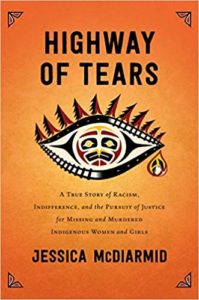
I decided to narrow this week’s topic down by only discussing books that have been or will be published in the autumn of 2019. When I actually read them depends on how long the wait lists are at my local library, but I’m hoping at least a few of these titles will become available soon.
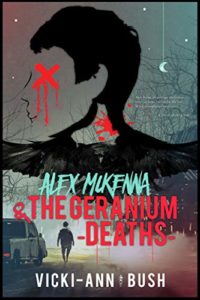
2. Title and Author: Alex McKenna & the Geranium Deaths by Vicki-Ann Bush Why I Want to Read It: A witch who can speak to ghosts? Sign me up! I’ve also been trying to read more novels about characters who are trans in general, so that addition to the plot is icing on the cake. Publication Date: Today
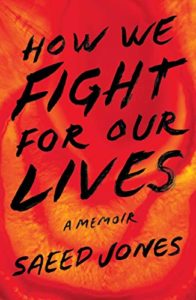
3. Title and Author: How We Fight For Our Lives by Saeed Jones Why I Want to Read It: 2019 has not been a year of reading many memoirs or autobiographies for me. I’m trying to change that before the year ends for good. Publication Date: October 8
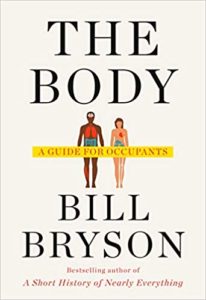
4. Title and Author:The Body: A Guide for Occupants by Bill Bryson Why I Want to Read It: I never grow tired of reading books about all of the unusual things the human body can be capable of doing. Publication Date: October 15
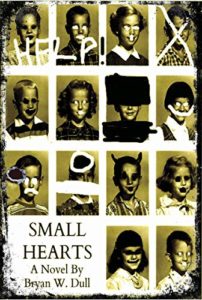
5. Title and Author: Small Hearts by Bryan W. Dull Why I Want to Read It: I’m still deciding if this is the right book for me, to be honest, but I do like the idea of reading about the aftermath of a school shooting rather than the crime itself. Publication Date: October 15
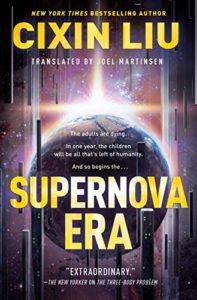
6. Title and Author: Supernova Era by Liu Cixin Why I Want to Read It: There aren’t many books out there about supernovas. I get excited every time I find another one. Publication Date: October 22
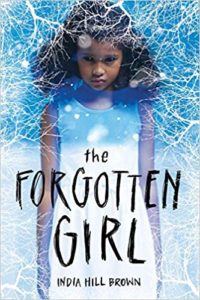
8. Title and Author: The Forgotten Girl by India Hill Brown Why I Want to Read It: So many of the books on my list this week are serious. A fun, middle-grade horror novel might be just the thing to help me relax after them. Publication Date: November 5
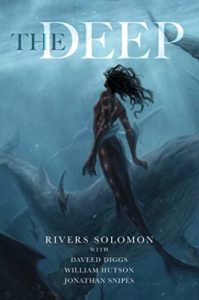
9. Title and Author: The Deep by Rivers Solomon Why I Want to Read It: I love the origin story of these characters’ ancestors. The thought that pregnant slaves who were thrown overboard ships hundreds of years ago somehow managed to thrive on the ocean floor is fascinating. Publication Date: November 5
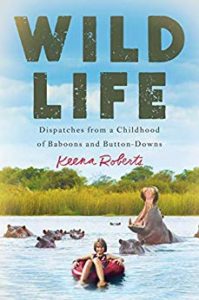
10. Title and Author: Wild Life: Dispatches from a Childhood of Baboons and Button-Downsby Keena Roberts Why I Want to Read It: The author of this memoir spent part of her adolescence in a remote part of Botswana thanks to her parents’ field work with baboons. This sounds like such a cool way to grow up that I’d love to know more about it! Publication Date: November 12
I’ve written about the winter, spring, and summer worlds I’d like to visit, so today I’ll wrap up this series by talking about the autumn worlds I’d spend some time exploring if I could.
Some of these settings weren’t necessarily the safest places to visit, but I’m going to use my authority as the author of this post to decide I’d somehow be protected while I was there. Let’s say I had a protection spell on me to ward off anyone or anything that had bad intentions.
Hill House
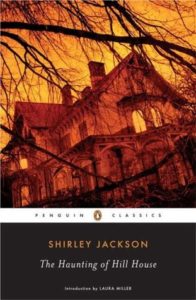
Anyone who has read The Haunting of Hill Houseby Shirley Jackson or seen the Netflix series based on it knows why I needed that protection spell. This property was filled with malevolent spirits!
The architecture of the house would be what I’d like to see, though. I’ve loved old, stately homes for as long as I can remember, especially the ones that were built during or close to the nineteenth century.
Unlike the clean, sleek styles of most modern architecture, large homes from this era are filled with small details that are easy to miss. There might be carvings around a door frame or a gothic-like spire reaching for the heavens.
Yes, meeting the friendly ghosts would be cool, too, but discovering all of the hidden details of this mansion would be even more interesting.
St. Cloud’s Orphanage
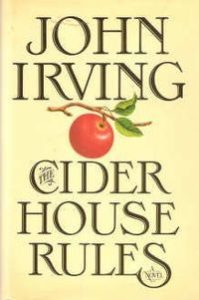
This orphanage was where the main character of The Cider House Rules by John Irving was born and raised in the first half of the twentieth century. Life was hard for many folks then, but it was especially rough for children who didn’t have parents.
There was never enough money, time, or attention to go around…and yet the doctor who ran this orphanage did an excellent job of looking after the children in his care given the standards of his time.
He was passionate about finding homes for his charges as soon as he possibly could. When a home couldn’t be found for a child, he made their lives as comfortable as he could. I’d love to take a tour of this orphanage and see how things were run in that fictional universe a century ago.
Hundreds Hall
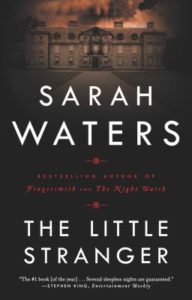
If you haven’t already noticed the pattern in this post, that is about to change. Hundreds Hall was the crumbling mansion that the main character in The Little Stranger by Sarah Waters visited in order to provide medical care for the people who lived there. Click here to read my review of the film based on it.
The cool thing about Hundreds Hall was that people were still living there. Yes, it was in need of a lot of repair work, but anyone who visited there would have heat, water, and even some basic food if they went into the kitchen and asked nicely for a snack.
I don’t know about you, but I’d rather have access to those things while on a ghost hunt than go somewhere that doesn’t have them. My goal while visiting this estate would not only involve admiring the architecture but hopefully catching a glimpse of the ghost that may have lived there, too.
Somehow seeing one ghost who may or may not even exist is a million more times exciting than seeing dozens of them hanging around everywhere like one would at Hill House.
Plumfield
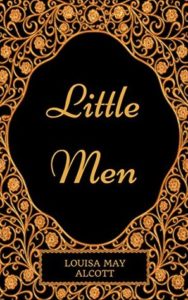
There’s something about this boys school in Little Men by Louisa May Alcott that appeals to me quite a bit. Despite being set in a time and place when women and LGBT+ people had far fewer rights than we tend to have today, it would also probably be the safest place on this list for me to visit.
My fingers would be crossed that Jo would be an accepting host. I’d like to think we could bond over our shared love of writing and literature.
It would be amazing to see what life was really like in her home. Her school was not always the most structured learning environment, but her students did have a great deal of fun between – and sometimes right dab in the middle of – their chores and lessons.
So many of my favourite memories of this book happened during the autumn, so I can’t help but to think of it as an autumn story.
If there were a way to tell her about the future without disrupting the natural unfolding of historical events, I’d also love to give Jo a glimpse of what life was like nearly 200 years after her time.
Say hello to Joy V. Spicer ! Last week I reviewed her most recent book, and now she’s the latest person to respond to my call for speculative fiction interview participants.
What was the first speculative story you ever remember reading?
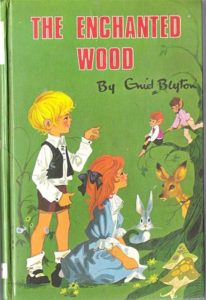
‘The Enchanted Wood’. It had a huge tree called the Faraway Tree which reached up into the clouds. All sorts of magical folk lived in the tree and right at the top, different lands would cycle through, stopping for about a week, if I remember correctly, before moving on. If you were visiting any of those lands, you’d have to make sure you left in time or be stuck on it forever.
Who is your favourite author? Why?
I don’t really have one favourite, but if its measured by the number of books I have for any one author, then it would have to be Stephen King.
What do you like most about the genre(s) you read?
My go-to genre has always been fantasy, but I also read other genres, including horror, historical fiction, thrillers and westerns. I love the worldbuilding when done well, believable characters I can relate to, and beautiful wordplay. With horror, I much prefer subtle scares, the kind that leaves you unsettled for days afterwards, like ‘The Woman in Black’, and where the story is set somewhere so ordinary, you wouldn’t expect to find anything horrifying.
More and more authors seem to be writing cross-genre stories these days. How do you feel about this trend?
It’s an interesting one, with great potential but, again, only if it’s done well.
If you could name a pet after one character, which character would you choose? Why?
My sons named their rabbits Sonic (she was fast!) and Wolverine (dopey bunny did not live up to that name). The first cats we had were named Cinder and Ashe, after a couple of comic book characters. The cats we have now aren’t named after characters. If I had a horse (wishing, hoping), I’d choose Elessar, Aragorn’s royal name; I love the way it feels when it’s said.
What fictional world would you never want to visit?
The Walking Dead! With zero survival skills, I’d have been eaten on day one!
What fictional world would you want to visit?
Middle Earth. I’d divide my time between Rivendell for its ethereal beauty and zen-like atmosphere, and Hobbiton for the food and to spend time in a hobbit-hole.
Sharing spoilers with people who haven’t read the book or seen the film/show is a hot topic on Twitter and across many fandoms. How do you feel about sharing or overhearing spoilers?
This is more for films/shows than books. I’m not a big fan, especially when no warning is given. I don’t even watch more than one trailer for a film. But if a film/show has been out for a while and I haven’t watched it yet, the onus is on me to steer clear; near-impossible with social media being so immediate.
Which series do you think should be made into a TV show or film next?
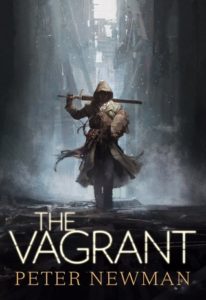
I’m always wary of books being made into films. If I had to choose, I’d say ‘The Vagrant’, but only the first book in the trilogy, which I enjoyed immensely. Sadly, the second book did nothing for me, which meant I didn’t even bother with the third.
Which TV show or film do you think should be turned into a book?
‘Grimm’. I enjoyed the series so much. I think turning that into a book series would give more scope to go deeper in exploring the characters and lore than the medium of TV allowed.
Bonus Questions
What is the most unusual or interesting way you’ve come up with an idea for one of your creative works?
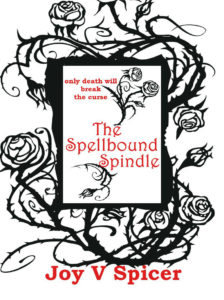
After I’d written my first book, I was convinced I didn’t have another book in me, so when the idea for my second book just popped into my head, it literally stopped me in my tracks. My subsequent projects are fairy tale retellings, like my third book, ‘The Spellbound Spindle’. I research (my most favourite part of writing!) the different variations of the tale, pick out key points then work on giving it a fresh twist.
Sometimes characters don’t do what their creators want them to do. If this has ever happened to you, how did you deal with it?
That’s something I’ve not experienced until now. Ready to start my next book, or so I thought, but I was really struggling. Until I realised this morning, the characters ‘want’ their status to be different! It is a strange feeling, realising the writer isn’t actually the omnipotent creator she thought she was.
What is your favourite trope?
To quote Stephen King, “ordinary people dealing with extraordinary situations”.
What tropes do you try to avoid in your stories?
Love triangles and insta-love. I’m positive love triangles don’t happen as often in real life as they seem to do in YA novels.
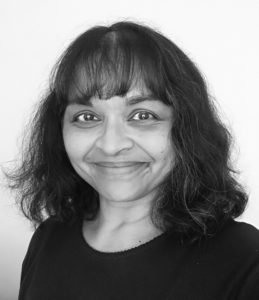
About Joy: Originally from Malaysia, I’ve lived more than half my life in the UK. I started writing as a way to alleviate the boredom of work, hiding my notebook by the till, before realising how much I enjoy creating stories. My two sons still live with me and they make me proud and inspire me (sometimes make me jealous!) with their prodigious imaginations.
I have several different superpowers. Almost all of the humorous things I was going to include on this list fit better into the Strange or Useless Talent prompt that’s coming up in November, so keep an eye out for that one. It’s going to be delightful.
1. Analyzing stuff. That is, I’m really good at picking a story apart, figuring out what did (or didn’t) work in it, and then writing a solid review about that book, TV show, or movie.
2. Working quietly behind the scenes. I’m a little too bashful to want the spotlight pointed at me, but I excel at keeping things going behind the scenes while someone else gives a speech or otherwise acts as the public face of whatever it is we’re working on.
3. Using up leftovers. I grew up in a family culture that deeply disliked waste, especially when it came to food. If there was only half a serving of rice or potatoes left, it went back into the fridge and someone would eat it before it went bad. Sometimes this means my meals are a little nontraditional, but I love the feeling of making sure that everything that is cooked is eaten. For example, I recently ate three ears of corn, two hardboiled eggs, and a slightly soft pear for dinner because that was what needed to be used up in the fridge. I like those kinds of mish-mash meals, though!
4. Seeing the best in people. If someone does something I find perplexing, I do everything I can to find a rational explanation for it. We all have off days, and I have a lot of grace for people who accidentally say or do the wrong thing.
5.Making and updating spreadsheets. This is something I’ve done for years for fun. It’s so satisfying to see neat, little rows of numbers in a document.
Click here to read everyone else’s replies to this week’s question. The image below is the list of upcoming prompts for this blog hop.
Seriously, how fun was this prompt? I had such a good time coming up with my list this week, and I’m looking forward to seeing how everyone else answered it, too.
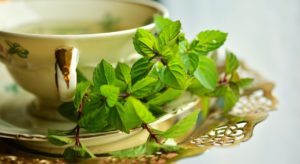
1. Mint Tea
Caffeine tends to make me anxious, so I try to stick to caffeine-free beverages and foods as much as possible. Mint tea both smells and tastes nice.
2. Vegan Yogurt
I’m not vegan, but I eat a lot of products marketed to that demographic group due to my milk allergy. Non-dairy yogurts have gotten pretty good these past few years, so thank you to the vegan community for creating a demand for them. You’re awesome.
3. Salted Pistachios or Other Mixed Nuts
Nuts are such a satisfying snack.
4. Fresh Fruit
It’s hard to remember the last time I tried a new type of fruit and disliked it. Just about any sort of fruit is delicious to me.
This is what kohlrabi looks like.
5.Crunchy Vegetables
I love crunchy vegetables like carrots, celery, radishes, or kohlrabi. It’s so satisfying to munch away at them, especially if I’m reading something a little frightening or atmospheric. Somehow having a plate of food to snack on makes me feel a bit less nervous in those circumstances.
6. Hard-boiled Eggs
I eat hard-boiled eggs with a little salt and pepper. They’re amazing. As soon as I pick up another bottle of hot sauce at the grocery store, I might try them that way next.
7. Cinnamon and Sugar Toast
This has been one of my favourite snacks since childhood. It’s even better if the toast is whole grain. My mom always bought healthy bread like that when I was growing up, so I developed a strong preference for it.
8. Grape Jolly Ranchers.
Will I eat other flavours of jolly ranchers? Absolutely, but the grape ones will always be my favourite. They are so delicious.
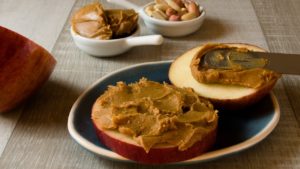
9. Almond Butter.
Honestly, any nut butter is appealing to me. it can be spread on toast, apple slices, celery, and so much more.
10. Sardines
I totally expect to be the only Top Ten Tuesday blogger who mentions this snack this week, but I love sardines. They have such a unique taste, and I find them really filling. They’re also a good source of certain nutrients like calcium and Vitamin D that I need to make sure I consciously include in my diet due to my milk allergy .
Film Content Warning: blood, hypodermic needles, animal abuse, and animal deaths. These scenes were brief and were often more implied than actually shown. As always, this otherwise will be a spoiler-free review, and I’m happy to share more details in private with anyone who requests them.
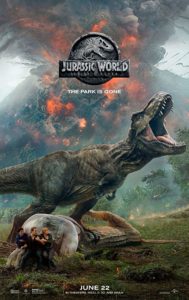
Jurassic World: Fallen Kingdom is a 2018 science fiction adventure film that is the sequel to 2015’s Jurassic World. Fallen Kingdom is set on a fictional island about 200 miles southwest of Costa Rica called Isla Nublar where all of the dinosaurs from Jurassic World were relocated from a failed amusement park before this tale began.
Isla Nublar was intended to be the permanent home for the dinosaurs. When scientists realized that the volcano on that island was soon going to erupt, the main characters in this universe had to decide how and where to relocate the dinosaurs before Isla Nublar was destroyed.
If you haven’t seen Jurassic World or the original Jurassic Park trilogy from the 90s, before, don’t worry. There are plenty of references to the earlier instalments in the later films that are fun Easter eggs for devoted fans, but everything in this franchise has worked well as standalone stories so far. I will briefly fill you in on a few important details in my character descriptions, too.
The Characters
I began discussing characters in the past tense in my first horror film review here to avoid the slightest whiff of spoilers about their fates. This is something I’ve continued doing for the sake of blog continuity and should not be interpreted in any other way.
This cast is on the larger side, but it’s important to know who everyone is before I jump into my review.
Chris Pratt as Owen Grady
Own Grady was the Animal Behaviourist hired by Ben to help round up as many dinosaurs as possible on Isla Nublar before the volcano destroyed them. He had previously worked as a Velociraptor trainer for the Jurassic World theme park in the first part of this trilogy, so he was an expert on the topic.
While he was impulsive at times, Owen was at heart a deeply kind and brave man.
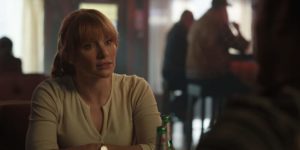
Bryce Dallas Howard as Claire Dearing
Claire was the former Operations Manager of Jurassic World. After that theme parked closed down, she became a dinosaur-rights activist and founder of the Dinosaur Protection Group. Their mission was to round up as many dinosaurs on Isla Nublar as possible and relocate them somewhere safer.
Unlike some of the men around her, Claire was both emotionally and intellectually intelligent. She knew exactly how to read subtle signals from another person and adjust her behaviour accordingly. I try to avoid picking favourite characters in my reviews, but she was the lynchpin of this film.
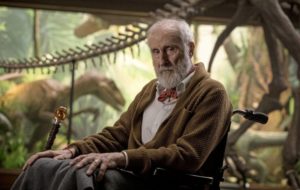
James Cromwell as Sir Benjamin Lockwood
Sir Lockwood was one of the two people who originally invented the cloning techniques that brought dinosaurs back to life approximately twenty-five years before this tale began. He was as brilliant as ever, but his attention to detail had begun to waver due to his deteriorating physical condition.
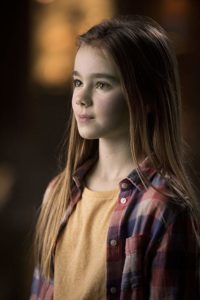
Isabella Sermon as Maisie Lockwood
Maisie was Sir Lockwood’s granddaughter and heir. She had inherited his love of dinosaurs and science.
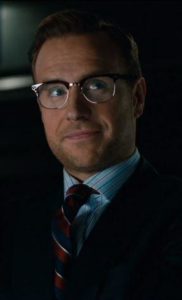
Rafe Spall as Eli Mills
Eli was Sir Lockwood’s personal assistant who required Owen and Claire to join the dinosaur rescue mission. He was an intelligent, ambitious man who was cautious about who he trusted and how much information he shared with them about his work.
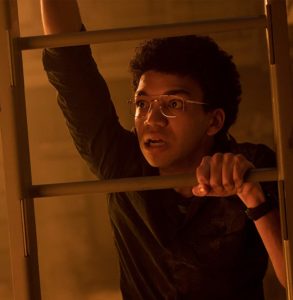
Justice Smith as Franklin Webb
Franklin was a former IT Technician for Jurassic World who now worked with Claire at the Dinosaur Protection Group. His technological knowledge was excellent, and his quirky personality brought a dash of humour to the plot.
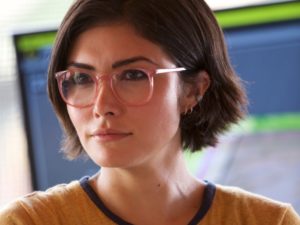
Daniella Pineda as Zia Rodriguez
Zia was the paleoveterinarian for the Dinosaur Protection Group.
She did a wonderful job of thinking on her feet in a crisis. Along with Franklin, she was a character I wish had been given more opportunity to shine in the plot. What I saw of their personalities was well-developed, and I loved the way they interacted with the rest of the rescue crew.
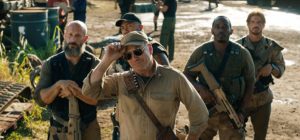
Ted Levine (centre) as Ken Wheatley. The characters behind him are his fellow mercenaries.
Ken Wheatley was a season mercenary hired by Eli Mills to provide protection for the rescue crew while they were rounding up dinosaurs.
He was a tough, assertive man who felt most comfortable when he was in charge.
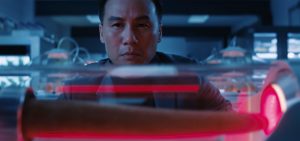
B.D. Wong as Henry Wu
Henry was the head geneticist of both Jurassic World and the original Jurassic Park. There was no one in this universe who knew more about dinosaurs than he did.
My Review
One of the most interesting things about this film was how many different conflicts it included. The first quarter of the show were spent introducing the characters, explaining a few things about the first Jurassic World flick, and seeing how various characters reacted to the idea of saving the dinosaurs instead of letting them go extinct again.
No sooner was this conflict resolved than a few more took its place as the plot sped up. This was a cycle that happened multiple times during the roughly two-hour runtime, and it occasionally made me feel like I was watching a series of short films set in the same universe instead of one long one. This was something I grew to like quite a bit once I recognized the pattern.
The humour in this film was well done, especially when it came to Franklin’s lines. I mentioned earlier wishing that he and Zia had been given more screen time, and this was a big part of the reason why. They both had quietly lighthearted approaches to their roles that worked nicely for the subject matter.
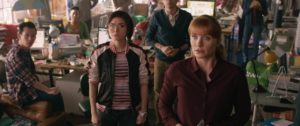
Zia and Claire at the Dinosaur Protection Group Headquarters.
Obviously, this is an action and adventure movie, so keep that in mind when reading this paragraph. One of the things I didn’t like was how little attention was paid to character development. Would I expect characters in this genre to have rich inner lives and dozens of minutes apiece to explore then? Of course not, but I would have liked to see more examples of people stepping out of the boxes they’d been places in.
The plot was fast-paced and filled with exciting explosions and scuffles, but the characters were a bit too predictable for me. There’s a difference between following the tropes of a specific genre and being chained to them. I did find my attention wandering at times due to how quickly I figured out what would happen to which character, and I’m saying that as someone who enjoys this genre in general. This was something I noticed the most with Ken Wheatley and Henry Wu.
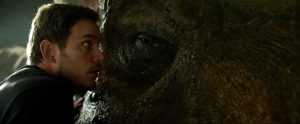
With that being said, I still had a good time watching it. The CGI and animatronics for the dinosaurs was excellent as usual, and I loved seeing how various species reacted to everything from seeing a human to being captured to encountering lava. How a carnivore reacted to these things was nothing at all like a herbivore’s reaction. What made it even more interesting was seeing how members of similar species responded to the same stimulus. Those scenes were clearly thought out and a lot of fun to watch, especially if Owen was involved in any way.
The ending was handled nicely as well. I liked the resolutions that were brought to certain conflicts as well as the new questions Fallen Kingdom asked that will hopefully be answered in the final instalment of this trilogy.

 Hosted by That Artsy Reader Girl
 This week I had no idea what to say about any of these books, so I’m simply going to list them with links to their Goodreads pages for anyone who wants more information.
 This post is going to be short and sweet. Not everything I write requires 1000+ words to explain.
 I’m the sort of person who generally responds best to easing back into a fitness routine after a break. That is, I may start off with a shorter weightlifting session or slower walking pace than I’d normally do for the first few days.
 Title: The Testaments (The Handmaid’s Tale #2)
 Chesya Burke. The only book I’ve read from her so far was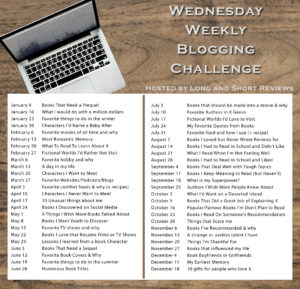
 I’ve written about the
 Anyone who has read
  This orphanage was where the main character of
  If you haven’t already noticed the pattern in this post, that is about to change. Hundreds Hall was the crumbling mansion that the main character in
  There’s something about this boys school in
  What was the first speculative story you ever remember reading?
 Sharing spoilers with people who haven’t read the book or seen the film/show is a hot topic on Twitter and across many fandoms. How do you feel about sharing or overhearing spoilers?
 What is the most unusual or interesting way you’ve come up with an idea for one of your creative works?
 About Joy: Originally from Malaysia, I’ve lived more than half my life in the UK. I started writing as a way to alleviate the boredom of work, hiding my notebook by the till, before realising how much I enjoy creating stories. My two sons still live with me and they make me proud and inspire me (sometimes make me jealous!) with their prodigious imaginations.
 What a fun prompt this one was!
 1. Mint Tea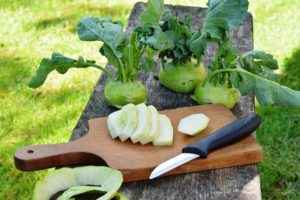
 9. Almond Butter.
 Last year I blogged about my to-watch list of science fiction and fantasy films. Since then, I’ve been periodically reviewing science fiction, fantasy, and other speculative fiction films. Previous instalments in this series include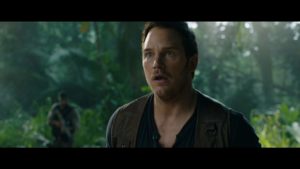
 One of the most interesting things about this film was how many different conflicts it included. The first quarter of the show were spent introducing the characters, explaining a few things about the first Jurassic World flick, and seeing how various characters reacted to the idea of saving the dinosaurs instead of letting them go extinct again.