Any science fiction film, short story, play, or book released before 1979 is eligible for this celebration of classic science fiction. Click on the links above to participate, read other entries, or for more information in general.
One of my favourite things about exploring a new science fiction universe is finding out what they eat or drink that is not available in our world (or that humans don’t generally consume for whatever reason).
This week I challenged myself to come up with as many unusual foods and drinks that were mentioned in pre-1979 science fiction stories as I could remember.
Pan-Galactic Gargle Blaster in The Hitchiker’s Guide to the Galaxy. Yes, this was from the 2005 film, but the book was published in 1978 and the idea remains the same.
I couldn’t find a copy of it online, but I was also always mesmerized by the brightly coloured food on Star Trek: The Original series. It looked so futuristic and delicious!
How many of these items would you to eat or drink? What would you add to this list?
Vintage SciFi Month was created by Little Red Reviewer and is moderated by Red Star Reviews. Any science fiction film, short story, play, or book released before 1979 is eligible for this celebration of classic science fiction.
Let’s take a walk down memory lane today.
My family didn’t have cable* for most of my childhood, and there were a few years there when we didn’t own a TV either.
Many of the shows we watched were old enough to have sold rerun rights to public TV or to channels that could be tuned into if you had a good antenna. This means that my first taste of vintage science fiction might have been a little out of the ordinary for the average kid my age.
All I knew was that I totally understood where Henry Bemis was coming from as he was distracted from reading over and over again as he went through his day.
There’s nothing like being in the middle of a good book only to have to stop and put it down when someone asks you a question, it’s time to eat, or you have some other urgent business to take care of.
Sometimes I’d grab my book, load up on snacks, and go hide underneath a piano or behind the couch so I could finish at least one more chapter without interruption. Bemis tried similar tactics, including taking his lunch hour in the vault at the bank where he worked so he could finally read in peace.
The trouble was, he picked that particular reading spot on the same day something terrible was about to happen to his city that would leave him the sole survivor.
Yes, you’ll have to watch it for yourselves to see what that tragedy was and why he survived.
What I remembered being most fascinated by was his reaction to leaving the vault and discovering his entire world had changed forever. I would have been frightened and yet he seemed oddly relieved. He finally had all of the time he could ever want to read!
If you haven’t seen this episode yet, do give it a shot. The ending was as clever as it was thought provoking. While I do see some plot holes in it that I didn’t notice as a kid, I still enjoyed the process of seeing how Henry reacted to a day in which literally nothing went the way he thought it would.
*We didn’t have Internet access either, but I grew up at a time when that was still common for non-wealthy people who didn’t work in the tech industry.
If you remember what your first taste of vintage science fiction was, tell me about it in the comment section below!
Vintage SciFi Month was created by Little Red Reviewer and is moderated by Red Star Reviews. Any science fiction film, short story, play, or book released before 1979 is eligible for this celebration of classic science fiction. Click on the links above to participate, read other entries, or for more information in general.
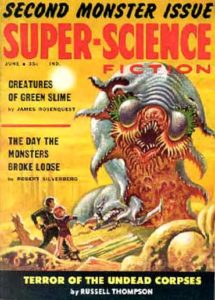
Most of my entries for Vintage Science Fiction month tend to be reviews of films, books, or TV shows. Today I thought I’d mix things up a little by sharing some interesting vintage science fiction artwork, covers, and logos I found on various parts of Wikimedia.
The book cover for “Festus, A Poem” by Philip James Bailey. This book had about 22,000 lines of blank verse poetry written across 50 scenes about the legend of Faust. It is quite hard to find these days.
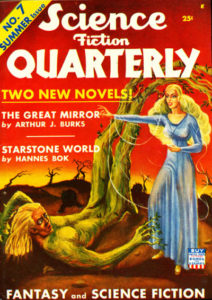
A cover of Science Fiction Quarterly from the summer 1942 issue.
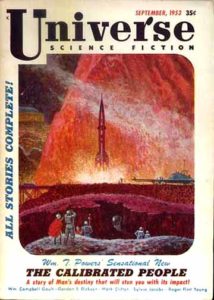
A cover of Universe Science Fiction from May 1953.
A cover of Super Science Fiction from June 1959.
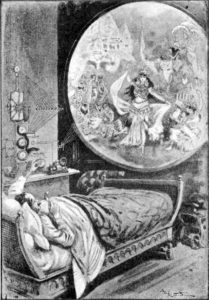
This is an illustration from Camille Flammarion’s 1894 science fiction novel La Fin du Monde. It predicted that a man could lie in bed and watch (what we would now call) television in bed in 1911.
Vintage SciFi Month was created by Little Red Reviewer and is moderated by Red Star Reviews. Any science fiction film, short story, play, or book released before 1979 is eligible for this celebration of classic science fiction.
A Trip to the Moon (Le Voyage Dans la Lun) was a short silent film released in 1902 by French film maker Georges Méliès who was assisted by his brother Gaston. In other words, don’t turn up your volume when watching it! There is no sound. This was the first science fiction tale ever filmed to the best knowledge of modern film historians. A Trip to the Moon influenced generations of storytellers in this genre.
if you’d like to watch this film before reading my thoughts about it, click on the link below or hit play. It’s just under 13 minutes long.
Everything after this sentence will contain spoilers.
As you have probably surmised from the title, A Trip to the Moon told the story of a group of men who built a space ship and visited the moon.
One of the things that first grabbed my attention about their adventures were the roles women played in them. Women appeared to be part of the planning and construction committees but did not travel with the main characters to the moon. I would have loved to sit in on the meetings that decided who would play what role in this film.
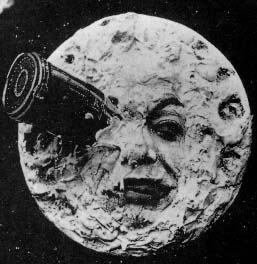
I’d seen this image floating around online for years but never knew the context of it.
It came as a delightful surprise to finally discover why the moon had a face and, more importantly, why that face had a gigantic space ship sticking out of it.
There was also something interesting about seeing what the film makers thought were important things to bring to the moon.
Granted, this was pretty soft science fiction even for the era in which it was created, but I’d never think to prioritize packing pillows of all things. I suppose that everyone needs to feel comfortable when they fall asleep on the surface of the moon!
This pattern continued throughout the thirteen minutes of lighthearted lunar adventures. While this is thought of as science fiction, I saw so many fantasy influences as well. It made me wonder if those two genres were much more tightly entwined in 1902. I’d bet they were given how many scientific advances humanity had yet to make as well as the fact that this appears to be the first speculative fiction film ever made like I mentioned above!
All of you should absolutely watch this short film. It was a whimsical glimpse into how some people thought 119 years ago. Since we can’t sit down with them and pick their minds, seeing what they created is the next best thing.
The telling or reading of ghost stories during the Christmas season was once a tradition in Victorian England. This series of books seeks to revive this tradition. Beginning this year, I hope to review all of them during the month of December for as many years as it takes to finish this project.
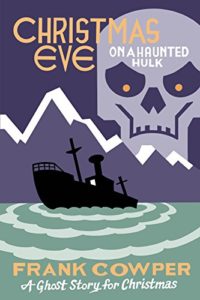
Title: Christmas Eve on a Haunted Hulk – A Ghost Story for Christmas (Seth’s Christmas Ghost Stories)
Author: Frank Cowper
Publisher: Biblioasis
Publication Date: 1925 and 2018
Genres: Paranormal, Historical
Length: 64 pages
Source: I borrowed it from the library.
Rating: 5 Stars
Blurb:
Reading a ghost story on Christmas Eve was once as much a part of traditional Christmas celebrations as turkey, eggnog, and Santa Claus.
When he finds an abandoned duck punt on Christmas Eve, a hunter rows out into the marsh and comes across a shipwreck. He climbs aboard to explore—and finds himself trapped when a surge snaps the mooring line and his punt floats away. Sleep eludes him, and soon he discovers that he’s not the only one trapped on the derelict ship.
Review:
Content warning:claustrophobic setting. I will not be discussing this in my review.
This tale was set in an era when the social classes were much more divided than they are these days. That is to say, it was a terrible faux pas to befriend people from lower or upper classes. Since the lonely, financially secure main characters lived in an economically depressed area, this essentially meant that they could hire their neighbours to work for them but could never invite them over for something sociable like dinner.
I love being near all sorts of bodies of water, but they can be melancholy places in disagreeable weather. The thought of purposefully going out exploring in a chilly, watery environment on Christmas Eve made me shake my head and wonder what on Earth the protagonist was thinking.
With that being said, the protagonist’s impulsivity and willingness to take unnecessary risks was exactly what this plot needed to push it forward. He was someone I soon grew to like quite a bit even while shaking my head at his total disregard for his own safety.
The eerie thing about this haunting was that it happened in total darkness after the main character accidentally got trapped on the abandoned ship. Imagine hearing frightening sounds, having no way to discover what was making them, and not being able to move out of fear of walking the wrong way and falling through rotten, gap-filled lumber into a freezing sea!
That imagery alone was what earned this story a horror rating. It wasn’t gory at all, but it sure was horrifying.
Strange, scary rumors are flying about the tiny, snowy town below the mountains. Some say a tiger sprang loose from a circus train and roams the snowy meadows. Some say it stalks in the wintry forests. Some say it’s a monster.
But feisty Maisie Crompton knows that can’t be true. Such things never happen in their sleepy alpine village. Or do they?
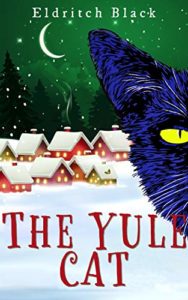
For soon, Maisie finds herself crossing the path of a spine-chilling legend. The Yule Cat; a fearsome mythical beast collecting snacks for his winter feast. And should Maisie fail in the cat-and-mouse hunt that follows, she might well become the next morsel on his menu…
From the author of Krampus and The Thief of Christmas, The Yule Cat is a short Christmas story brimming with magic, trolls, spooky mythology, and fun and festive chills for readers of all ages
Review:
Be careful what you wish for.
If only I could read that introduction to this review to Maisie! Her envious attitude in the first scene certainly gave me a strong impression of her. I sympathized with her frustration over having to count every last cent so carefully. The holidays are a tough time to be poor, especially for a kid who is watching her best friend show off an expensive new coat. I know the narrator probably wanted us to hope Maisie would learn a valuable lesson about gratitude for what one has. While I had those thoughts as well, I also hoped she’d get a wonderful Christmas gift that matched all of her dreams.
There were a few things about the climax of this story that didn’t quite make sense to me, especially when it came to exactly what Jólakötturinn (The Yule Cat) was capable of. It was never clear to me exactly what the limits of his powers were. Sometimes he seemed capable of things that he hadn’t been a scene before, so I was never sure what to expect from him. It would have been nice to have a firmer understanding of this creature as he was definitely a scary one!
The world building was handled nicely. I appreciated the fact that the author explained a little bit about the backstory of Jólakötturinn for anyone who wasn’t already familiar with that. That attention to detail continued on with the descriptions of the other characters, too. All of their histories were important in order to fully understand how Maisie ended up in such a dangerous predicament on December 23.
Let me end this review with my favourite quote from this tale. It captured the themes of it all nicely.
“He grows when he senses fear, and shrinks when he’s content.”
Someone, or possibly more than one person, keeps finding this blog by searching for creepy Christmas poems.
If they ever read this post, I hope they know it was written in direct response to the multiple queries that have popped up in my analytics.
I more or less stopped celebrating Christmas years ago when I moved far away from home, deconverted from my childhood religion, accepted a job in an industry that was always busy and stressful in December, and found myself overwhelmed by the sentimentality and consumerism of secular Christmas.
Now I sound like a grumpy character at the beginning of a Christmas movie who is about to learn a valuable life lesson, but that’s honestly not how I think about this holiday at all.
I enjoy the lights, food, and music that is traditionally shared now, and I cheer for everyone who finds meaning in the other aspects of Christmas (and/or any other winter holiday) as well.
I simply know what my limits are. Luckily, those limits include creepy Christmas poems when new readers show up here looking for them. Here are some poems that celebrate Christmas without a single ounce of sentimentality.
The telling or reading of ghost stories during the Christmas season was once a tradition in Victorian England. This series of books seeks to revive this tradition. Beginning this year, I hope to review all of them during the month of December for as many years as it takes to finish this project.
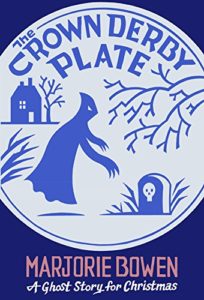
Title: The Crown Derby Plate – A Ghost Story for Christmas (Seth’s Christmas Ghost Stories)
Author: Marjorie Bowen
Publisher: Biblioasis
Publication Date: 1931 and 2016
Genres: Paranormal, Holiday, Historical
Length: 56 pages
Source: I borrowed it from the library
Rating: 3.5 Stars
Blurb: An antique collector hears of an ancient woman with a large collection of china. Hoping to complete a particular set, the collector pays a visit to the woman’s ramshackle house, where she makes a terrifying, ghostly discovery.
Review:
One of the first things that intrigued me about this short story was that was written about a single woman who was a senior citizen. The speculative fiction genre is sadly pretty short on protagonists who fit that demographic, so I’m always in the market for writers who buck that trend.
Martha, the antique collector, was the character who greedily went off in search of a Crown Derby Plate that was the only piece missing from her prized collection. She struck me as the sort of person who has memorized all of the etiquette rules and social niceties while also having a deep understanding of how to use them to quietly get exactly what she wants. While I’d never want to befriend her, I did find the combination of her impeccable manners and selfish motives to be fascinating.
The paranormal elements of the plot were ridiculously easy to figure out in advance. I’d suspect that anyone who has read more than one ghost story in their life would know where this piece was going as soon as Martha set off to visit her neighbour’s dilapidated estate. It would have been nice to have fewer clues about what was happening there.
With that being said, I loved the spooky atmosphere of the Hartley’s house. This is one of those things that can quickly make or break a ghost story, and it was done well in this case. Miss Lefain, the frail old woman who lived there, was not well enough to do even simple tasks like dusting, so Martha was in for quite a surprise when she saw how run-down the property was.
While it wasn’t specifically written for these groups, this is something that could be a fun story to read to kids or people learning English as a second language who are in the market for something short, simple, and scary.
The telling or reading of ghost stories during the Christmas season was once a tradition in Victorian England. This series of books seeks to revive this tradition. Beginning this year, I hope to review all of them during the month of December for as many years as it takes to finish this project.
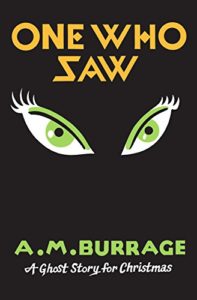
Title: One Who Saw – A Ghost Story for Christmas (Seth’s Christmas Ghost Stories)
Author: A.M. Burrage
Publisher: Biblioasis
Publication Date: 1931 and 2016
Genres: Paranormal, Historical
Length: 64 pages
Source: I borrowed it from the library
Rating: 5 Stars
Blurb:
A sensitive writer flees the clatter of London for a sleepy French city. After settling in at quiet hotel, he spies a ghostly, solitary young woman weeping in a walled garden, her features hidden from view. Compelled to see the woman’s face, he ventures forward…. Originally published on Christmas in 1931, “One Who Saw” is regarded as A.M. Burrage’s masterpiece.
Review:
Secondhand stories aren’t always correct, but in this case they just might be!
I was expecting Simon Crutchley to tell his tale to the audience directly. The fact that we learned about it through a group of his neighbours gossiping at a dinner party beginning with the opening scene came as a surprise to me, but it somehow made his experiences even more harrowing than they might have already been.
Humans are good at filling in the gaps when they have some information but not necessarily all of it. Simon’s reaction to his paranormal experience was so life-changing that it made sense his neighbours would speculate about it. While I would have loved to read this from his perspective, it did make sense that he wasn’t up for that given what his neighbours described happening to him.
Gardens aren’t supposed to be scary places, so I was intrigued by how much effort the author put into showing how a lack of sunlight can make what should be a cheerful place to sit and write into a spot that anyone looking for some peace and quiet would best avoid.
By far my favourite part of this story had to do with what happened to people who attempted to see the face of the ghost who was sitting in the sunless garden. This wasn’t something that hauntings typically include, and it added a twist to the plot that I appreciated.
One Who Saw was deliciously chilling. I’d recommend it to everyone who loves ghost stories.
Star Trek Enterprise D Transporter. Photo credit- Konrad Summers
These past few weeks I’ve been rewatching old Star Trek episodes from many different eras and series even though I have plenty of other shows that I haven’t seen for the first time yet.
I don’t know about you, but I crave certainty in uncertain times.
Star Trek has filled many niches over the years. Sometimes its stories are a reflection of controversial issues we deal with in the real world that don’t have simple solutions.
Other episodes might humorous, poignant, hopeful, silly, or any combination of these and many other themes.
There have been Star Trek characters and episodes whom I loved immediately, slowly grew to have a deep appreciation for once I got to know them better, or, in a few rare cases, honestly never connected with much at all. (Not everything appeals to everyone!)
Star Trek itself is comfort food for me, and it’s been this way since my first experiences with it through reruns of The Next Generation. No matter which episode or series you pick, there are some things that almost always remain the same in this franchise.
Hope
There are many excellent science fiction books, stories, and TV shows out there that do not necessarily hold a hopeful perspective of human nature or the future. This isn’t one of them.
While Star Trek writers have occasionally strayed from this theme in the more modern versions of it, this franchise in general takes a hopeful stance on what we are capable of and what our future might hold.
Perfection doesn’t exist in this or any other universe, but human society has changed for the better in so many different ways between our era and theirs.
Every time I see characters greet living beings from other planets, order a meal from a replicator, or be treated for an illness or injury that would be fatal in the twenty-first century, I feel another pulse of hope that we’ll someday create versions of these futuristic wonders for ourselves in the real world.
Certainty
Yes, there are plenty of obstacles along the way in just about any Star Trek story arc, and they can be difficult to resolve depending on the series and the specific conflict in question.
Sometimes these conflicts are so complex they take up multiple episodes or seasons (see also: Deep Space Nine), but viewers always know there is a solution on the way eventually if they stick with it to see what the characters do next.
That certainty is a breath of fresh air now more than ever.
Call me an idealist, but I believe there’s something to be said for losing yourself in a storyline that will be resolved satisfactorily at some point.
Humour
By far the biggest reason to think of Star Trek as comfort food is all of the humour tucked away into it. No matter which series we’re talking about, there are reasons to smile when watching all of them. Yes, even Picard and Discovery if you look closely enough!
You may have noticed that I avoided mentioning specific Star Trek episodes in this post until now. That was done on purpose in order so that I could talk about the over-arching themes of this universe. Discussing a particular episode was less important than knowing there are many options to choose from when you’re a Star Trek fan who wants something warm and reassuring to watch after a long day.
With that being said, I’ll now provide a short list of my favourite humorous Star Trek episodes and provide one reason each for watching them. If you’re also a fan of this franchise, feel free to add your own suggestions below.
Episode: The Trouble with Tribbles
Series: The Original Series
Why You Should Watch It: Not only was it the funniest TOS episode in my opinion, it’s also aged the best since first airing. The idea of Kirk being outsmarted, if only temporarily, by what are essentially extremely fertile hamster-like creatures called Tribbles makes this a must watch for anyone who hasn’t seen yet.
Why You Should Watch It: After being transported to a Robin Hood storyline, Worf dryly exclaimed, “I am not a merry man.” Watch the expression on his face below. It’s comedy gold.
 Vintage SciFi Month was created by Little Red Reviewer and is moderated by Red Star Reviews.
 Many of the shows we watched were old enough to have sold rerun rights to public TV or to channels that could be tuned into if you had a good antenna. This means that my first taste of vintage science fiction might have been a little out of the ordinary for the average kid my age.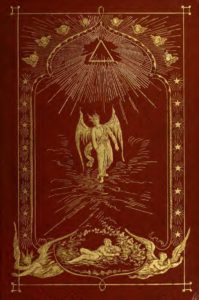
 I’d seen this image floating around online for years but never knew the context of it.
 The telling or reading of ghost stories during the Christmas season was once a tradition in Victorian England. This series of books seeks to revive this tradition. Beginning this year, I hope to review all of them during the month of December for as many years as it takes to finish this project.
  Title: The Yule Cat – a Christmas Short Story
 The telling or reading of ghost stories during the Christmas season was once a tradition in Victorian England. This series of books seeks to revive this tradition. Beginning this year, I hope to review all of them during the month of December for as many years as it takes to finish this project.
  The telling or reading of ghost stories during the Christmas season was once a tradition in Victorian England. This series of books seeks to revive this tradition. Beginning this year, I hope to review all of them during the month of December for as many years as it takes to finish this project.
 Yes, there are plenty of obstacles along the way in just about any Star Trek story arc, and they can be difficult to resolve depending on the series and the specific conflict in question.