I’ve decided to start reviewing more books on this blog. All of the rest of the titles I’ve set aside for this purpose for the foreseeable future are indie, but I thought I’d start off with something mainstream. The star rating below is out of a possible five stars.
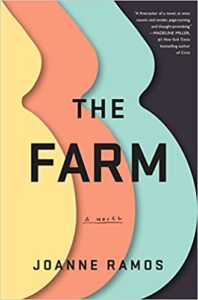 Title: The Farm
Author: Joanne Ramos
Publisher: Doubleday Canada
Publication Date: May 7, 2019
Genres: Dystopian, Contemporary, and a pinch of Science Fiction
Page Count: 326 pages
Source: I borrowed it from my local library
Rating: 3 Stars
Blurb:
Nestled in New York’s Hudson Valley is a luxury retreat boasting every amenity: organic meals, personal fitness trainers, daily massages—and all of it for free. In fact, you’re paid big money to stay here—more than you’ve ever dreamed of. The catch? For nine months, you cannot leave the grounds, your movements are monitored, and you are cut off from your former life while you dedicate yourself to the task of producing the perfect baby. For someone else.
Jane, an immigrant from the Philippines, is in desperate search of a better future when she commits to being a “Host” at Golden Oaks—or the Farm, as residents call it. But now pregnant, fragile, consumed with worry for her family, Jane is determined to reconnect with her life outside. Yet she cannot leave the Farm or she will lose the life-changing fee she’ll receive on the delivery of her child.
Gripping, provocative, heartbreaking, The Farm pushes to the extremes our thinking on motherhood, money, and merit and raises crucial questions about the trade-offs women will make to fortify their futures and the futures of those they love.
Review:
The first time I heard of The Farm was a few months ago when another reviewer compared it to Margaret Atwood’s The Handmaid’s Tale, one of my all-time favourite books. As soon as I read that line, I was hooked. Like Ms. Atwood’s famous story, this one is also about fertile, generally lower-class women being used to gestate babies for the most powerful members of society.
Unlike the characters in The Handmaid’s Tale, Jane and the other surrogates chose to become impregnated. Whether they knew what they were really consenting to is something I can’t discuss much in this review without wandering into spoiler territory. Let’s just say that the glossy description of what this job was like didn’t necessarily match Jane’s actual experiences with it.
What I would have loved to see from this book were more details. The most frightening parts of it were glossed over so much that I had to make educated guesses about how they played out. While Jane’s perspective was a limited one, it was a little frustrating as a reader to get so far into the plot only to receive the same vague hints that were contained in the blurb and early chapters.
There was a satisfying payoff for a subplot involving the woman who first introduced Jane to the idea of gestating a pregnancy at The Farm. If only the other clues at the beginning were given the same treatment. Not every dystopia is necessarily going to include a government being overthrown or other major signs that a society has gone terribly wrong. I loved the more subtle approach Ms. Ramos took with the assumptions she made about how people might respond if they couldn’t find decent paying work and selling the use of their reproductive organs seemed like the best option to make some semi-quick cash. If only she’d developed these thoughts further.
With that being said, one of the things I liked the most about this storywas how realistic it was. Yes, there were little snippets of what could be interpreted as science fiction and dystopian content in it, but everything in it is either really happening in our world today or could easily occur with a few small tweaks to how science works and what society tolerates. This is the kind of soft science fiction that grabs my attention because of how close it is to our reality.
I can sleep easily at night knowing that little green men from Mars aren’t actually ever going to invade Earth. The thought that women could so easily be coerced or enslaved into producing babies for wealthy, powerful families, on the other hand, is chilling because it has happened in the past, it is currently going on in some parts of the world, and it will almost certainly occur again in the future.
That’s frightening. Despite it’s flaws, The Farm’s no-nonsense approach to this topic is why I’ll recommend it to anyone who finds the blurb interesting.
 Last year I blogged about my to-watch list of science fiction and fantasy films. Since then, I’ve been periodically reviewing certain speculative fiction films that I enjoyed and thought you all might like, too. Previous instalments in this series include
 Someone found my blog recently by searching for games one can play while listening to audiobooks. This turned out to be a much better idea for today’s post than the one I was originally working on, so I decided to go for it.
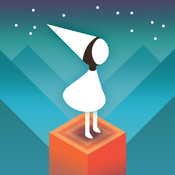 Monument Valley is a puzzle game set in a magical world where all but one member of a society has disappeared. The physics and geometry of this place isn’t the same as ours, so some of the solutions can take a while to uncover. Your goal as the player is to solve the puzzles and gradually lead Princess Ida, the main character, closer to the truth about what really happened to her people.
 Raise your hand if you loved colouring when you were a kid! I adored it so much that my grandmother kept a big stack of colouring books at her house so I’d always have something quiet and amusing to do there.
 *Creative or peaceful mode only unless you enjoy living dangerously.
 Is there anyone left on Earth who doesn’t already know what Tetris is?
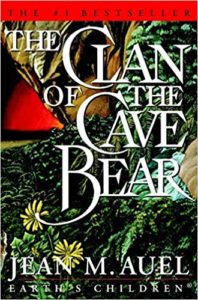 The Clan of the Cave Bear is a prehistoric novel written by Jean M. Auel in 1980 about an orphaned human girl named Ayla who was raised by Neanderthals. It has four sequels about Ayla’s life as an adult.
 Yes, this includes people who prefer, say, paranormal romances that only have the slightest touch of fantasy added to them or mysteries that are pretty hardboiled until the final scene when the audience discovers the killer was an 900-year-old vampire. TV shows and films count, too, especially if they are in any way tied to a book or graphic novel.
 How many of you have ever written a six-word story, twitterature, dribble, minisaga, drabble, or other piece of
 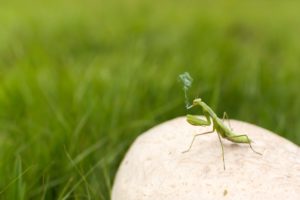 Lungless? Then how are you smoking?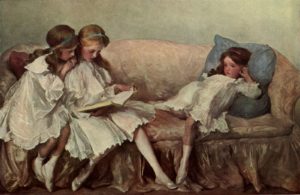
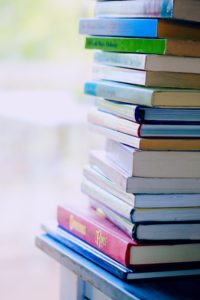 As I’ve mentioned here before, I was homeschooled for the first several years of my education. One of the best parts of that experience was being able to read after my lessons were finished. There were times when Wyoming was far too snowy and cold of a place for a child to be wandering around outside in, so I read the entire afternoon and evening away on some of those wintry days.
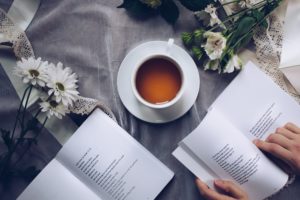 I no longer remember which genres I read during that thirty-book month, but I do remember the genre I became obsessed with shortly after that: poetry.
 Over the last decade or so, I’ve found myself gradually becoming more interested in nonfiction than I ever was before. My favourite high school English teacher used to talk about how much she enjoyed reading about things that really happened.


 Example: The creepy Fire Swamp in William Goldman’s “The Princess Bride”