Author Archives: lydias

About lydias

I'm a sci-fi writer who loves lifting weights and hates eating Brussels sprouts.

Top Ten Tuesday: Books That Became Great TV Shows

Hosted by That Artsy Reader Girl

This week’s topic was a page to screen freebie. I’ve decided to narrow down my focus to five books that were made into wonderful TV shows. I’ve left off a couple of the titles that I always discuss on this blog (*cough* The Handmaid’s Tale) so I could focus on stories I haven’t talked all of your ears off about yet.

Tomorrow’s Wednesday Weekly Blogging Challenge prompt has what turned out to be a similar theme this week, so I had to divide my answers evenly between these two hops since so many of my answers would fit into both of them. I would have otherwise written a much longer post on this topic.
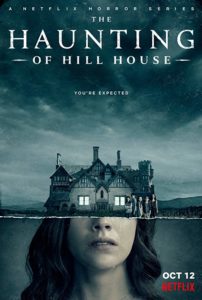
The Haunting of Hill House

Based on: Shirley Jackson’s “The Haunting of Hill House

Why I loved it: Paranormal stories always grab my attention, especially if they rely on psychological horror more than jump scares. The fact that this one had so much subtle foreshadowing on top of the psychological horror made it impossible for me to stop reading or watching it.

I also enjoyed the fact that the TV version found a fresh take on the characters while still remaining true to their personalities. That isn’t an easy thing to do…especially when some of the characters were of dramatically different ages and origins in each version!
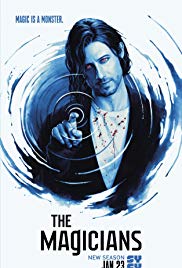
The Magicians

Based on: Lev Grossman’s Magicians series.

Why I love it: This universe feels like Harry Potter for an adult audience. I love the unpredictability of the magic in it as well as the fact that the characters deal with serious issues like drug/alcohol abuse, depression, and abortion alongside delightfully joyful moments where talking rabbits deliver important messages or centaurs randomly cross your path.

Everything else I want to say about this series is filled with spoilers, so I’ll stop talking now.
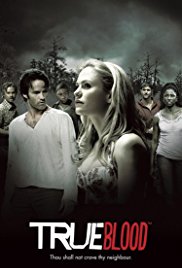
True Blood

Based on: Charlaine Harris’ Sookie Stackhouse series

Why I loved it: I spent a year of my childhood living in the south, so southern food, accents, and culture can’t help but make my ears perk up. I also enjoyed the parallels the screenwriters made between the prejudice faced by vampires and the real-life prejudice that other groups deal with every day in our world. They did a nice job of gently nudging the audience into being more accepting without ever turning their episodes into an After School Special.
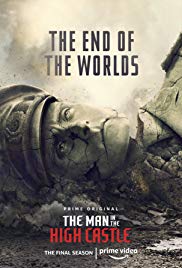
The Man in the High Castle

Based on: Philip K. Dick’s “The Man in the High Castle

Why I loved it: Imagine what the world would be like if the Nazis had won World War II and taken over North America. This definitely isn’t the right thing to read or watch if you’re in the mood for something cheerful, but it is a fantastic alternate history for anyone who has ever wondered how terribly things could have turned out in a different version of Earth.

I’m actually taking a break from this show right now because of how dark and gritty it is. It’s absolutely worth watching, though, and I do hope to return to it in the near future.
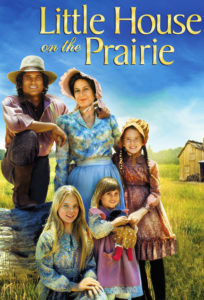
Little House on the Prairie

Based on: Laura Ingalls Wilder’s Little House series

Why I loved it: This show ended before I was even born, but the stories it told are timeless. My step-grandmother taped some of the episodes on those old-fashioned VHS tapes people once had.  I used to watch those reruns in her living room while the adults chatted in another room.

It was so interesting to see how people survived in the 1800s when women cooked every meal of the day over roaring fires, antibiotics and automobiles didn’t exist, and everyone had to work under some pretty demanding (and often dangerous) conditions from sunup to sundown if there was any hope of the family making it through the winter.

This series seemed like an adventure to me when I read it as a young child. Seeing it play out on the small screen really drove home how much easier life is for us now.


138 Comments

Filed under Blog Hops

Why I’ve Decided to Start Walking to Mordor

When I was a preteen, one of my uncles gave me copies of J.R.R. Tolkien’s The Hobbit and the Lord of the Rings. I read and enjoyed The Hobbit immediately.
The Lord of the Rings trilogy took longer to get into. The vocabulary in it kept making me pause to look up words I’d never heard of before, and the pacing was slower than I was used to in the other stories I discovered at that age.

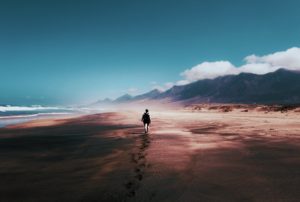
Still, reading about the roughly 3109 kilometres (1932 miles) that Frodo and Sam walked during the course of this adventure did grab my attention. I was the sort of kid who liked the outdoors in small doses before I ventured inside again to cool off and have a snack.

The thought of walking – and occasionally running –  as far as they did while being hunted down by all sorts of malevolent creatures and skipping second breakfast made me shudder.

As an adult, I wonder what it would be like to walk that distance for the sheer fun of it. There have been various points in the past when I’ve run across accounts of people who made spreadsheets that tally how far the characters walked to get to each each milestone in the plot  and when they as a fan can pretend like they’ve reached the next one based on how far they’ve walked in real life.

It was only recently that I discovered a site that keeps track of this information for you. Walk to Mordor offers free cellphone apps and also has a space on their website for people who prefer to log their miles that way instead.

The best part about this game is that it gives you notifications about what is happening in the story as the distance you’ve travelled reach specific plot points. It starts in Bag End, Frodo’s home and the opening scene for this tale, and it goes all the way through what happened in the Grey Wood after the battles had all ended. I like the thought of that.

The man who created it developed it out of his love of these books, and I’m talking about it today simply because I think it’s an incredibly cool idea that I thought some of my bookish followers who also enjoy exercising might want to check out.

As always, this blog does not feature sponsored content and I am not being compensated for this post in any way.

Why Mordor, Though?

Because it’s a challenge.

Over the past five years, I’ve been keeping track of some of my fitness-related statistics. I’ve walked an average of 9.7 kilometres (6 miles) a day since I first began recording this stuff. This includes days when I didn’t move much due to illness or injury, so that number is higher when I’m feeling well.

Weight training is my other main source of exercise. I still find it challenging, and there’s nothing I’d change about my lifting routine at the moment.

As much as I enjoy walking, it doesn’t give me that same sense of accomplishment that moving up to a heavier set of weights or noticing how my body changes when I lift weights and eat a good diet.

By no means am I bored with walking…but I do like the idea of seeing all of the distance I put in on the average day add up to something tangible.

There’s also the fact that Walking to Mordor has a definite end date. If I continue at my current pace, it will wrap up at the end of winter or beginning of spring in 2020. I like the idea of starting something new while knowing that it won’t and can’t last forever.

(Relatively) Calm Entertainment

Photo Credit: Dawn Endico

This style of storytelling appealed to me, too. I’ve been looking for a fitness app that was somehow tied to science fiction, fantasy, or speculative fiction for a while now, but I was selective about what sort of adventure I was going to be signing up for.

First of all, It needed to be something that wasn’t going to track my location in the real world or sell my personal information to other companies. There is far enough of that happening in the world as is!

I also wasn’t interested in an app that tried to get me to move faster or for longer distances because of a storyline that involved anyone being chased by zombies or other dangerous creatures.

While I can see how that would be very motivating for some players, it’s not the sort of thing that I personally find appealing. Tell me a good story, but do let me move at my own pace while everything is unfolding.

Knowing how it ends for Frodo and his many companions was yet another reason why I decided to sign up for this game. I was definitely not feeling calm the first time I read the Lord of the Rings trilogy, but there is something to be said for returning to a world you’ve visited many times before even if it’s plot isn’t exactly what most people think of as a soothing one at first glance.

I was willing to pay for what I was looking for, by the way. The fact that I found a free app that fit my criteria was icing on the cake.

Join Me

If anyone reading this wishes to friend me on Walk to Mordor, do a search for Lydia Schoch. I kept my username there simple on purpose, and I’m happy to share my journey there if we’ve talked before and you’d like to link up.

Either way, I may be blogging about this game and others like it again in the future as I move through the various scenes. The thought of turning exercise into a non-competitive game appeals to me very much!

14 Comments

Filed under Fitness

What to Read If You Liked The Clan of the Cave Bear

I’ve decided to start another series on this blog. Just like with the interviews with people who love speculative fiction that I’ll begin publishing here next week, Hopeful Science Fictionfilm reviews, Questions from the Search Engines, and Blogging Advice, this series won’t be updated on a specific schedule. Once I’ve come up with several similar titles to recommend to people who enjoyed a certain book, that post will be added to the queue.

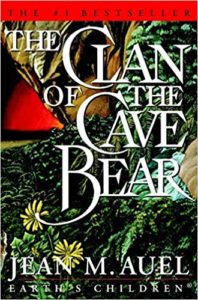
The Clan of the Cave Bear is a prehistoric novel written by Jean M. Auel in 1980 about an orphaned human girl named Ayla who was raised by Neanderthals. It has four sequels about Ayla’s life as an adult.
Part of the reason why I picked this specific tale to start this series off with is because I’ve been getting a spike of visitors coming to this site looking for information about Auel, her characters, and whether there is going to be a TV show or movie made about  the Earth’s Children books.

No, it doesn’t look like there’s anything in the works. I’ll be the first to shout it from the rooftops if that ever changes! In the meantime, why not talk about something I enjoyed quite a bit?

The Clan of the Cave Bear is one of those stories that I’ve returned to over and over again. The plot is an intriguing blend of adventure, romance, mystery, and even a touch bit of the paranormal genre at times.

Life wasn’t exactly easy for hunter-gatherers 30,000 years ago, so there were also plenty of subplots about gathering food, making weapons, preserving medicinal herbs, and doing everything else necessary to survive the cold, long winters of an ice age.

I’ve spent years on the lookout for books that are comparable to this one and its sequels. The following list is the cream of the crop of everything I’ve read so far about Neanderthals and how they might have interacted with Homo sapiens tens of thousands of years ago or in modern times.

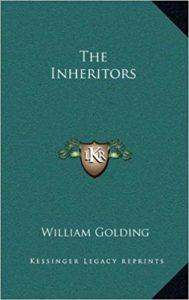
The Inheritors by William Golding

This was the first well-written book I discovered when I went to the library as a young teen in hopes of finding more storytellers like Jean M. Auel who had clearly done their research about life in the prehistoric era.

It was fascinating to see how Mr. Golding imagined Neanderthals might have behaved as their culture began to bump up against a stronger one. The Neanderthals in this world were caring, but they had trouble competing in a world where a more intelligent and dangerous type of human was beginning to move into their territory.  I’d argue that this twist says just as much about him and the era he lived in as it does about one of the possible reasons why this species might have gone extinct.

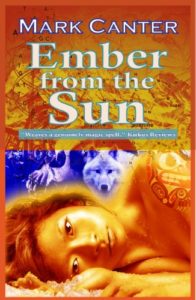
Ember from the Sun by Mark Canter 

I read this title soon after finding The Inheritors, and it’s something I’ve been recommending to likeminded readers for many years now. It’s by far the most science-fiction oriented part of this list because of how much time the narrator spent setting up the storyline and explaining why the things he imagined could possibly happen with the use of science instead of magic to explain them.

In short, the main character was a scientist who found the body of a frozen Neanderthal woman that was so well-preserved he actually found a viable embryo in her womb. (Yes, there was a somewhat-scientific reason why this was possible in this universe, but I can’t tell you specifics about that scene without revealing an important part of the plot).

He implanted that embryo into a human volunteer, named the resulting baby Ember, and raised her as his own. As she grew up, she began to explore her unusual past. She had many of the same questions that people who are transracially adopted have about their identity, and those questions lead to some very interesting developments in the plot that I still mull over to this day.

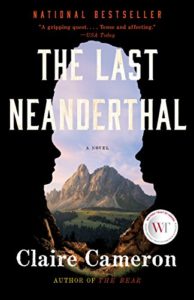
The Last Neanderthal by Claire Cameron

The title of this one gives away its subject matter. We know that eventually all of the Neanderthals died out (or interbred with a much larger group of humans until their genes almost completely disappeared). There are so many things that bones can’t tell us about an individual or their culture, however!

What was the life of the last obvious Neanderthal like? How were they different from us? I can tell you almost nothing about this protagonist other than the fact that I found her delightful. Everything else I want to say would wander too close to spoiler territory because of how long it took the author to explain some of her character’s most enduring traits.

There is a film by the same name that is currently in the works. I can’t figure out if it’s supposed to be based on this book. Either way, I’m tentatively hoping to review it when it comes out!

Shaman by Kim Stanley Robinson

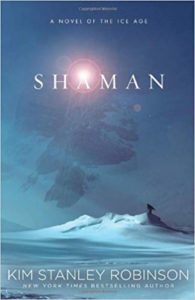
One of the things I wish had been different about the Earth’s Children books was how far they eventually strayed away from describing all of the hard work that people needed to do in order to survive in such harsh climates. This novel always stayed true to its setting in that way. Life as a hunter-gatherer is never something that should be romanticized even if there are certain parts of it I wish I could incorporate into my own urban lifestyle!

I also loved the friendships the characters in this tale developed with Neanderthals. They worked together to survive in an unforgiving climate. As much as I respected Mr. Golding’s take on this topic, I’d like to think that the past was a cooperative place.

The Neanderthal Parallex trilogy by Robert J. Sawyer

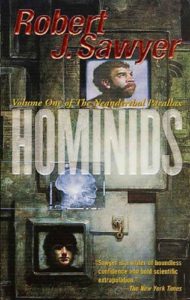
In Hominids, the first book of this series, humans from our Earth meet a modern-day Neanderthal from a parallel universe where their species survived and humans died out tens of thousands of years ago.

The cultural differences between Neanderthals and humans were vast. To give one of the least surprising examples, all of the Neanderthals in this universe are bisexual and have two spouses, one man and one woman. It was fascinating to see how these two worlds collided once the characters realized just how many assumptions they made about life didn’t fit the other society in any way.

I can’t believe no one has turned this into a TV series yet. Robert J. Sawyer has written dozens of worthwhile books, but this world in particular really needs to be shared with a wider audience. It was so thought provoking.

Respond

If any of you have recommendations for other prehistoric tales or a request for a book I should feature next in this series, do speak up. I’m always open to suggestions.

24 Comments

Filed under Science Fiction and Fantasy

Wednesday Weekly Blogging Challenge: Books I Want Youth to Discover

Hosted by Long and Short Reviews.

I’d never tell a kid that they must read a specific book. Just because a story was meaningful to me at a certain age doesn’t mean every child or teenager would want to read it then. People grow at different rates, and we obviously all have different interests as well.

What I would do is leave copies of these books lying around where little, and not-so-little, hands can reach them. My hope would be that young people would eventually read these titles whenever they were ready for them.

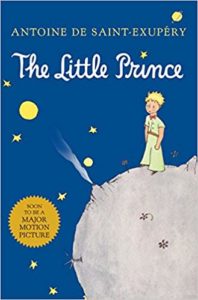
The Little Prince by Antoine de Saint-Exupéry

The full meaning of this story didn’t become clear to me until I was an adult, but I think it’s message about valuing love, friendship, and beauty over the mindless accumulation of material possessions is something that should be introduced to everyone early on in life.

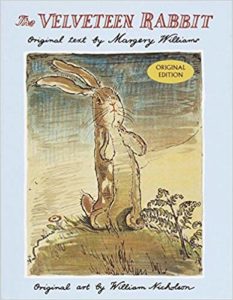
The Velveteen Rabbit by Margery Williams

I’d like to confess that I’ve never been able to read this story without wiping away a tear. It’s such a beautiful, timeless story. When I became an aunt years ago, this was the first book I bought for our nephew. I wanted him to have the opportunity to enjoy it just like I did!

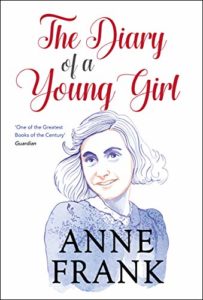
The Diary of a Young Girl by Anne Frank

When I was a kid, I didn’t like the units my teachers had us do on World War II every year because of how much time we spent studying a war that I struggled to understand.  I had a great deal of sympathy for everyone who was killed in the Holocaust, but I had trouble condensing all of that horror into something my young mind could better grasp.

The wonderful thing about The Diary of Anne Frank was that it was written by a real child. I connected with her as I read her diary entries, and learning that she did not survive the concentration camps helped me to understand a very small piece of all of the suffering innocent people endured in that war.

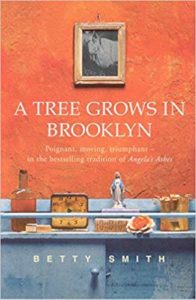
A Tree Grows in Brooklyn by Betty Smith

It amazed me to see how much I related to the characters in this book when I read it in the 90s. The characters lived in the 1910s, yet so many of their struggles were the same ones my family dealt with eighty years later. For example, both they and us were concerned with stretching out a food budget, dealing with social class prejudice, and finding creative ways to get good educations for everyone.

Some of the details of how daily life plays out have obviously changed over the last century, but I think a lot of modern teens could relate to this tale far more than they might have guessed at first glance.

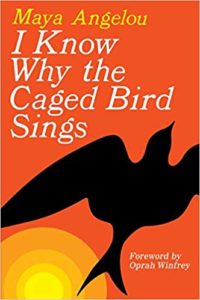
I Know Why the Caged Bird Sings by Maya Angelou

I had no idea who Maya Angelou was before I picked up this book as a teenager, but I loved reading about her childhood and how she learned to persevere through truly difficult circumstances including being separated from her parents at age three and later being sexually abused. This is definitely something I think mature teens should read.

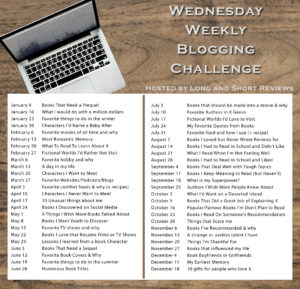
Click here to read everyone else’s replies to this week’s question. The image below is the list of upcoming prompts for this blog hop.

20 Comments

Filed under Blog Hops

Top Ten Tuesday: Characters That Remind Me of Myself

Hosted by That Artsy Reader Girl

My answers this week will be a mixed bag of books, TV shows, and films. This topic was a little challenging for me, but I enjoyed brainstorming for it. Let’s see if I can come up with the full ten answers!

1. Karana from Scott Odell’s Island of the Blue Dolphins

While we grew up in completely different environments, we were both pretty independent kids. When I was in the fourth grade, I randomly decided to try walking home from school on a different route one day so I could see some new houses. After I got lost,* I asked a friendly-looking stranger to walk me back to my elementary school, went home the proper way, and then didn’t tell my parents this story for 20+ years.

*This happened before cellphones were something the average family owned, so it’s not like I could call home or my parents could see where I was through GPS tracking.

2.Amélie from the French film Amélie.

The protagonist of this movie was a shy, young woman who decided to perform random acts of kindness for the people around her for the sheer joy of it. I see a lot of myself in her.

3. Willow Rosenberg from the TV series Buffy the Vampire Slayer

Willow was the nerdy, bookish best friend of the Buffy, the main character in this series. I identified so strongly with Willow’s love of learning and occasionally awkward moments. The fact that we both came out of the closet after high school only made me adore her more.

4. Luna Lovegood from J.K. Rowling’s Harry Potter series

Luna was such a creative free-thinker. I wish she’d gotten more of a chance to shine in this series! I sure thought she was delightful, and many of the fanciful things she said reminded me of stuff I’ve thought and sometimes said out loud myself.

5. Alice from Claire Kann’s Let’s Talk About Love

Alice’s love of the library is what originally drew me to her. I dreamed about working at a library for a long time, and I see so many similarities between us when it comes to how we like to temporarily lose ourselves in a world of books (in a good way).

6. The Hsu, Jong, St Claire, and Woo families from Amy Tan’s The Joy Luck Club

Being an immigrant is such an interesting experience. You transition from “belonging” to one culture to feeling equally part of two (or more) of them and switching between the mindsets you develop for each one. It can be tricky to explain how this can change your perspective on life to people who haven’t been through it, but I found so many similarities between these characters and my own life.

7.  Joanna from Jaye Robin Brown’s Georgia Peaches and Other Forbidden Fruit

This is a book I’m currently reading about the queer daughter of a pastor. Not only do Joanna and I have those two things in common, we both seem to have quirky personalties as well. She seems like she’d be a great person to hang out with.

8. Jane Eyre from Charlotte Brontë’s Jane Eyre

Jane and I are honest, dignified people who love learning practical and impractical things. She also struck me as someone who was quite skilled at avoiding gossip, and I truly respect that about her. I try to act just like her when a conversation begins to turn in that direction.

9. Lily from Lisa See’s Snow Flower and the Secret Fan

Lily had such a sweet, gentle personality. She reminded me a lot of how I behave when I’m trying to make a good impression on people. Her strong creative streak also reminded me of myself.

10. Shasta from C.S. Lewis’ The Horse and His Boy

Fair warning: this book contains some language and descriptions that modern audiences would rightfully describe as xenophobic. I believe you can love a story while also acknowledging its flaws, and I’d like to think that C.S. Lewis would have written it very differently if he’d lived in our era.

With that caveat out of the way, I’ve always enjoyed the way Shasta reacted to the thought that talking horses might really exist. He was skeptical at first, of course, but he accepted it a bit faster than other people might have. I think I would have done the same thing at his age! His wary sense of adventure also reminded me of myself.

We enjoy them…but we also would be perfectly content to sit at home and eat dinner instead. Ha!

105 Comments

Filed under Blog Hops

If You Love Speculative Fiction, I Want to Interview You

I’ve decided to try something new on my site. This was loosely inspired by what Downright Dystopian started doing with her interviews earlier this spring. I’m hoping I’ll be able to tap into a new audience since I’m focusing my questions on people who like speculative fiction and have multiple social circles that don’t seem to overlap much with Krystianna’s sphere of influence at all.

What do I mean by speculative fiction? Well, if you read about, watch, listen to, or write about:

  • Fantasy
  • Science Fiction
  • Fables, Fairy Tales, and/or Folklore
  • Alternate History
  • Superheroes
  • Myths
  • Horror
  • Monster Movies
  • Utopians
  • Dystopians
  • Magical Realism
  • Supernatural/Paranormal Tales

Or any combination of these types of stories, I want to hear from you.

Yes, this includes people who prefer, say, paranormal romances that only have the slightest touch of fantasy added to them or mysteries that are pretty hardboiled until the final scene when the audience discovers the killer was an 900-year-old vampire. TV shows and films count, too, especially if they are in any way tied to a book or graphic novel.
Everyone is welcome.

If you’re interested in being interviewed, I’ll need the following things from you:

 Answers to the Following Questions

  1. What was the first speculative story you ever remember reading?
  2. Who is your favourite author? Why?
  3. What do you like most about the genre(s) you read?
  4. More and more authors seem to be writing cross-genre stories these days. How do you feel about this trend?
  5. If you could name a pet after one character, which character would you choose? Why?
  6. What fictional world would you never want to visit?
  7. What fictional world would you want to visit?
  8. Sharing spoilers with people who haven’t read the book or seen the film/show is a hot topic on Twitter and across many fandoms. How do you feel about sharing or overhearing spoilers?
  9. Which series do you think should be made into a TV show or film next?
  10. Which TV show or film do you think should be turned into a book?

If you are an author or other creative person, feel free to substitute some of these questions for a few of the ones above or answer them all for extra credit:

  1. What is the most unusual or interesting way you’ve come up with an idea for one of your creative works?
  2. Sometimes characters don’t do what their creators want them to do. If this has ever happened to you, how did you deal with it?
  3. What is your favourite trope?
  4. What tropes do you try to avoid in your stories?


A Short Biography 

Tell us who you are in a few sentences. Feel free to drop links to your website/blog, social media accounts, or similar pages if you’d like to.

A Photo 

Send a photo of yourself, the cover of a book you’ve written (if applicable), the logo from your site, or any other bookish subject matter.

Submit your answers through the contact form on this site.

This post was edited on September 24, 2019 to change the submission instructions. The email address I had originally provided for this purpose has been inundated by spammers and shady marketers, so I’m trying a different approach now.

There is no time limit on this offer. I will share your submissions once they begin to arrive and continue on for as long as there continues to be interest in this project.

These interviews have tentatively been assigned to Thursdays, although this may change depending on how many of them are sent in.

I’m looking forward to seeing what you all come up with!

13 Comments

Filed under Interviews, Science Fiction and Fantasy

The Joy of Writing Six-Word Stories

How many of you have ever written a six-word story, twitterature, dribble, minisaga, drabble, or other piece of flash fiction?
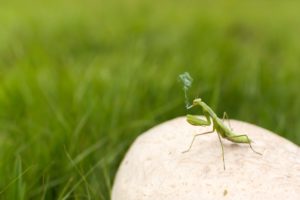
What all of these terms share in common is the idea of fitting a full-formed story in a much smaller amount of space than is generally used for even short forms of storytelling.

It might be six words or a thousand, but it can easily be read in one sitting. Often it can be finished in a minute or two depending on your reading speed and the length of it!

I’m especially intrigued by six-word stories because of how challenging it can be to fit a twist into such a limited amount of space. This is a type of writing I’ve been playing around with as I slowly continue to work on that still-untitled, full-length science fiction novel.

There’s something fascinating to me about writing something this compact. I love the idea of condensing everything down to the bare minimum an audience needs to know in order to understand what’s going on while also hopefully surprising them in some way.

Here are a few famous examples of these types of tales:


For sale: Baby shoes. Never worn. —Ernest Hemingway (maybe).

Longed for him. Got him. Shit. —Margaret Atwood

All those pages in the fire. —Janet Burroway


In keeping with the spirit of micro-fiction, I purposely wrote this post so that it would contain fewer than 400 words. A 1000+ word post about this sort of topic simply doesn’t make sense to me.

Here are some of the six-word stories I’ve come up with this week.

Lungless? Then how are you smoking?

That door was a wall yesterday. 

The wind whispered until I answered. 

Last human. Lived happily ever after. 

Called my dog. He hung up. 

Sneezed. “bless you,” said my pillow.

Neanderthals survived, but so did humans. 

I hope you all enjoyed them. If you’ve ever written a six-word story or other very short piece of fiction like this, I’d sure like to read it.

8 Comments

Filed under Science Fiction and Fantasy, Writing

Wednesday Weekly Blogging Challenge: 5 Things I Wish More Books Talked About

Hosted by Long and Short Reviews.

This week’s prompt was a little tricky for me. How easy was it for the rest of you to come up with your lists?

1. People Who Aren’t Beautiful or Handsome

If a main character has average or below-average looks I get excited. This doesn’t happen as often as it should in most genres, but I really like reading about people who are wonderfully ordinary in this way.

2. Chronic but Nonfatal Health Problems

I’ve read about many characters who had advanced forms of cancer or other diseases that were going to kill them soon. It would be nice to read more stories about people living with diabetes, HIV, chronic pain, arthritis, or other illnesses that someone can live with for decades.

3. Failure

Of course I want every character I meet to succeed in the end so long as it suits the course of their plot, but I find it so interesting to see how people react when their hard work doesn’t give them the results they were hoping for. You can learn a lot about real and fictional people that way.

4. Happy Longterm Relationships

One of my literary pet peeves is how often characters who have been with their spouse or partner for many years are described in negative terms. I’d sure like to see more stories about couples who have been together for a long time, are still in love, and genuinely enjoy spending time together.

5. Intelligent, Sensible Characters

There are so many tropes out there that rely on characters ignoring the advice of others or their own gut feelings about a situation. I’d love to see more examples of characters who avoided danger by listening to these warnings.

Yes, this might make it a little trickier for the author to gently prod them into plot lines they’ll need to follow, but I love it when characters are as cautious and smart about new things in their lives as I would be in the same situation.

For example, I love paranormal stories.  I do not enjoy tales about characters who do silly things like ignore a neighbour’s stern warning about the violent history of the spooky house they just bought or knock over headstones in a graveyard for the sheer fun of it. It’s so much more interesting to me when a protagonist accidentally stumbles into a haunting through no fault of their own.

Click here to read everyone else’s replies to this week’s question. The image below is the list of upcoming prompts for this blog hop.

27 Comments

Filed under Blog Hops

Top Ten Tuesday: Inspirational/Thought-Provoking Book Quotes

Hosted by That Artsy Reader Girl

Here are some of my favourite inspirational and thought-provoking quotes. I honestly have no idea what else to write in the introduction to this post, so let’s move on to the quotes!

1. “Fairy tales are more than true: not because they tell us that dragons exist, but because they tell us that dragons can be beaten.”  – Neil Gaiman, Coraline

2. “I like to imagine that the world is one big machine. You know, machines never have any extra parts. They have the exact number and type of parts they need. So I figure if the entire world is a big machine, I have to be here for some reason. And that means you have to be here for some reason, too.”  – Brian Selznick, The Invention of Hugo Cabret

3.  ““What you imagine as overwhelming or terrifying while at leisure becomes something you can cope with when you must-there is no time for fear.”   – Rebecca Solnit, A Paradise Built in Hell: The Extraordinary Communities That Arise in Disaster

4. There is a crack in everything. That’s how the light gets in.”  – Leonard Cohen, Selected Poems, 1956-1968

5. “Amateurs sit and wait for inspiration, the rest of us just get up and go to work.”  – Stephen King, On Writing: A Memoir of the Craft

6. “Whatever comes,” she said, “cannot alter one thing. If I am a princess in rags and tatters, I can be a princess inside. It would be easy to be a princess if I were dressed in cloth of gold, but it is a great deal more of a triumph to be one all the time when no one knows it.”  – Frances Hodgson Burnett, A Little Princess

7. “Adversity is like a strong wind. It…tears away from us all but the things that cannot be torn, so that afterward we see ourselves as we really are, and not merely as we might like to be.” – Arthur Golden, Memoirs of a Geisha

8. “Be yourself; everyone else is already taken.”  – Oscar Wilde, The Wit and Wisdom of Oscar Wilde

9. “There is hope, even when your brain tells you there isn’t.”  – John Green, Turtles All the Way Down

10. “But remember, boy, that a kind act can sometimes be as powerful as a sword.” – Rick Riordan, The Battle of the Labyrinth

138 Comments

Filed under Blog Hops

The Evolution of My Reading Habits

My reading habits have evolved a lot over the years. In today’s post, I’m going to start with my earliest memories and share some stories about how my interests and habits have changed over time.

Most of these genres are still things I like to read at least occasionally. With that being said, I do not read the older ones as often as I once did.

Nursery Rhymes and Fairy Tales

“A Fairy Tale” by J. H. F. Bacon

The first genres I ever fell in love with were nursery rhymes and fairy tales.

My uncle had a book of fairy tales that he left behind when he went off to college. I read that collection every time I visited my grandmother’s house, and it made me yearn for more stories about dragons, royalty, and people who were rewarded for the good things they did when they thought no one was paying attention.

The tales in my uncle’s collection were the sorts of things you’d see in a Disney movie. They were missing the dark endings that they’d often originally had.

A few years later, I began stumbling across fairy tales that didn’t always end happily ever after. For example, the original version of “The Little Mermaid” ended with the main character’s death instead of her wedding.

I did go back to preferring the more cheerful spins on these stories after a while, but I appreciated having those glimpses into what had happened to them before they were cleaned up for modern audiences.

30 Books in a Month

As I’ve mentioned here before, I was homeschooled for the first several years of my education. One of the best parts of that experience was being able to read after my lessons were finished. There were times when Wyoming was far too snowy and cold of a place for a child to be wandering around outside in, so I read the entire afternoon and evening away on some of those wintry days.
All of this reading time had an interesting effect on me once I started public school and people who weren’t my parents or siblings began noticing my habits.

My fourth grade teacher once gave us an assignment to read three books a month. We were supposed to turn in little slips of paper with the title and author of what we read to her so she could keep track of them for us.

Reader, I didn’t finish three books that month. I read thirty of them.

Those three slips of paper we’d been given were almost immediately replaced by notes from my mother listing everything else I’d read after I fulfilled the original requirements.

When our teacher announced the number of books each student had read that month a few weeks later, most of my classmates were in the single digits. It was pretty funny to see how they gasped when they realized I’d quietly blown everyone out of the water.

A Passion for Poetry

I no longer remember which genres I read during that thirty-book month, but I do remember the genre I became obsessed with shortly after that: poetry.
My fifth grade teacher did a unit on the many different types of poems out there, and I took to this topic  immediately. A lot of the stuff she had us read reminded me of the nursery rhymes I’d loved a few years earlier.

Shel Silverstein was the first poet I loved, but I quickly moved on to poets who wrote for adult audiences like Emily Dickinson and Langston Hughes.

The thought of compressing what could be an entire story into a few short lines impressed me. I was always excited to find poets who could create strong imagery of what they were describing to the audience while using as few words as possible.

There was about a decade there when poetry was regularly part of what I read for fun. For a long period of time after that, I still returned to it regularly when I needed a break from other genres.

I’m slowly losing interest in this genre, and that makes me a little sad. I wish I could find the same thrill in it I did twenty years ago.

Science Fiction and Fantasy

“Martians vs. Thunder Child” by Henrique Alvim Corrêa.

My interest in the science fiction and fantasy genres has always been intertwined with the other things I’ve read. Long before I entered high school they became genres I returned to over and over again.

While I do take breaks from science fiction and fantasy to recharge sometimes, those feelings have remained constant to this day. No other genre has managed to keep me coming back for more for as long or as consistently as these two have.

There is something so interesting about taking a modern trend and extrapolating it to some distant future where robots really do run the world or when climate change has altered our planet so much that future generations can no longer imagine what life was like in a cooler, more stable climate.

I’ve come to prefer hopeful speculative fiction over the darker, apocalyptic stuff, but I think I’ll continue reading some sort of sci-fi or fantasy for many years to come.

Leaning Towards Nonfiction

Over the last decade or so, I’ve found myself gradually becoming more interested in nonfiction than I ever was before. My favourite high school English teacher used to talk about how much she enjoyed reading about things that really happened.

I didn’t understand why she’d say that at the time, but now I relish the opportunity to read books about history, astronomy, archeology, ecology, medicine, the biographies or autobiographies of people who have accomplished all sorts of things, and many other topics.

We live in a world that is filled with more information than any one person can digest in a lifetime. I accept the fact that I can’t learn everything, but I also want to be exposed to as much knowledge as possible in this lifetime.

How have your reading habits evolved over time? If anyone decides to borrow this topic and blog about it, I’ll edit this post to include a link to your response if you’re interested in that.

Edited on May 5 to add Bjørn Larssen’s response.

4 Comments

Filed under Personal Life, Science Fiction and Fantasy